How to Prune Herbs in Your Garden to Grow Fresh Herbs with Proper Trimming and Harvest
Published on
January 12, 2026
Author
Zuri Khumalo
Zuri's frequent journeys to South Africa in her youth ignited her fervor for environmental science, gardening, and sustainable living. These travels deepened her connection with nature, inspiring her to contribute to conservation efforts in her own meaningful ways.
Growing Grapevines Q&A
How long does it take for a grape plant to produce fruit?
Most young vines need two to three years after planting before they set a full crop, though a few clusters may appear in year two. Patience pays off — established vines can keep producing for 40 years or more.
Do I need more than one vine to grow grapes?
No. Since most grape varieties are self-fertile, one plant is enough to produce fruit on its own. Planting a second variety nearby is optional and mainly helps with cross-pollination in a few less common types.
Can grape vines grow in containers?
Yes, though grape vines grow best planted directly in the ground, where the root system has room to spread. A large container works for a year or two, but expect to transplant once the vine outgrows the pot.
Why aren't my grapes ripening?
Grapes ripen slowly compared to many fruits, and cool weather, too much shade, or overcrowded canes can all delay the process. Give the vine full sun, thin the clusters, and be patient through the growing season.
What's the difference between table grapes and wine grapes?
Table grapes are bred for fresh eating, with thinner skins and fewer seeds, while wine grapes tend to have thicker skins, more seeds, and higher sugar content suited to fermentation.
Are grape vines toxic to pets?
Grapes and grape leaves are not toxic to people, but grapes and raisins are toxic to dogs and can cause kidney damage, so keep fallen fruit cleaned up if pets have access to the vineyard.
Bee Garden Q&A
What flowers attract the most bees to a garden?
Bees are generally drawn to flowers that are blue, purple, yellow, or white, and that offer easy access to nectar and pollen. Lavender, bee balm, sunflower, and coneflower are some of the most reliable plants that attract bees to a home garden.
Do I need to avoid pesticides in a bee-friendly garden?
Yes, whenever possible. Insecticide and pesticide products can harm adult bees and their larva, even in small amounts. Choosing natural pest control methods helps keep your garden safe for visiting bees.
Can a small home garden still support pollinators?
Absolutely. Even a few containers of zinnias, salvia, or crocus on a balcony can offer pollen and nectar for local bees. Bees will travel between small garden spaces, so every bit of habitat helps.
Do bees need more than just flowers?
Yes. Bees also need nesting sites and water. Ground-nesting bees need patches of bare soil, while a shallow bee bath gives bees a safe spot to drink, especially in hot weather.
Will planting a pollinator garden really help save the bees?
It genuinely can. As natural habitat shrinks, home gardens have become an important food source and shelter for bees, including many native bee species. A well-planned bee garden supports pollination for your own flowers and vegetables while helping the wider bee population.
What is the best USDA zone for growing a bee garden?
There is no single best zone. Most of the plants above grow well across USDA zones 4 through 9, and gardeners in colder or warmer zones can simply choose varieties suited to their climate, or grow warm-season bees favorites like sunflower and zinnia as annuals.
Hypoallergenic Plants Q&A
Do houseplants cause allergies?
Yes, certain indoor plants can trigger a plant allergy through loose pollen, scented flowers, sap, dust, or damp soil. Allergies and houseplants are highly individual: one person may sneeze near peace lilies while another has no response. Overwatering lets mold produce a spore that may become airborne. If symptoms begin after adding plants in your home, isolate each pot, clean the area, and discuss persistent allergy symptoms with a qualified clinician.
Which plants to avoid?
Plants to avoid include strongly fragrant flowers, visibly dusty specimens, and wind-pollinated garden plants brought inside while shedding. Male palms can release pollen if they flower, and wet potting mix can make allergies worse. The best and worst choices depend on the person, so remove any plant that appears to cause pollen allergy symptoms or contact irritation.
Can indoor plants purify air?
Claims about indoor plants that purify come largely from controlled chambers. Although some air-purifying plants can take up chemicals, ordinary air purifying plants are not fast enough to replace ventilation or air cleaners in a real room. Plants can improve air quality mainly by supporting comfort and encouraging care for the space; they should not be presented as houseplants for clean air that reliably remove formaldehyde. To improve indoor air quality, control sources, ventilate safely, and use proven filtration.
How does the ogren scale work?
The Ogren Plant Allergy Scale system, also called OPALS, rates a plant's potential allergenicity from 1 to 10. It considers pollen, fragrance, and contact reactions, but the likelihood a plant will cause a reaction still depends on the individual and exposure. A high score does not prove a particular plant will cause pollen allergy, and a low score is not a medical guarantee.
Can plants help you breathe?
Allergy-friendly plants may make an indoor space calmer, but they do not treat disease or guarantee allergy relief. For people with allergies, clean leaves, dry saucers, fresh potting mix, and steady air circulation matter more than labels such as hypoallergenic plants. These indoor plants that are allergy-safe can help you breathe easier only by limiting likely triggers; they cannot help you breathe during an asthma attack.
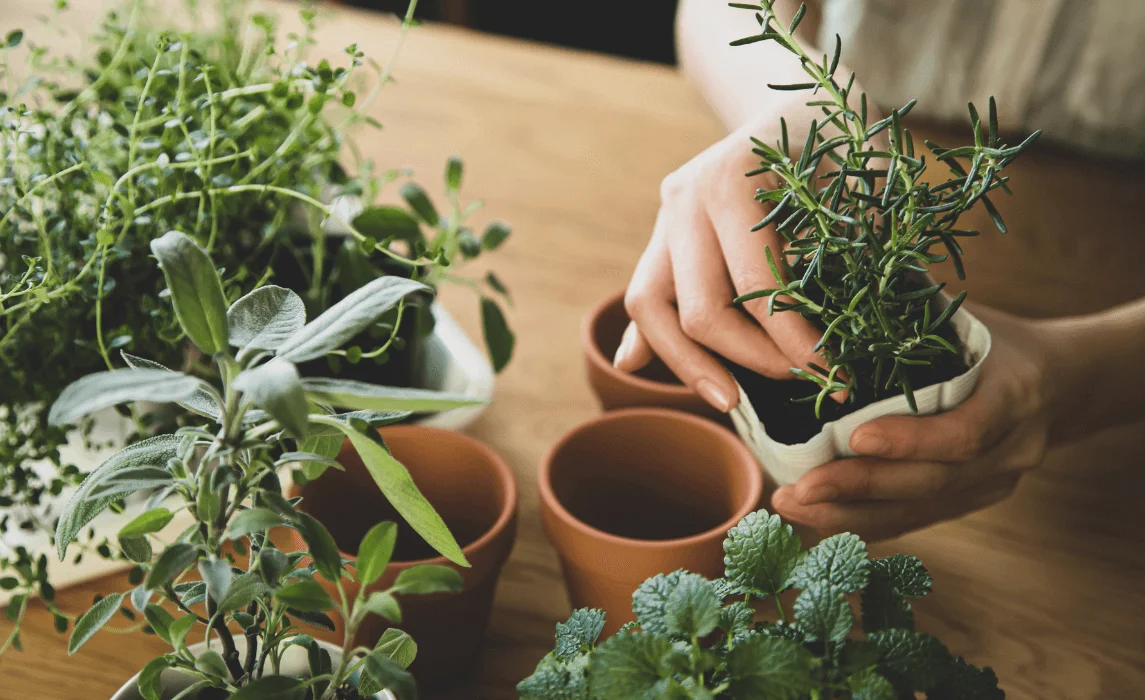
Pruning herbs is one of the simplest yet most effective ways to keep your garden healthy, productive, and full of fresh flavor. Knowing how to prune herbs in your garden helps encourage new growth, prevents plants from becoming woody or leggy, and ensures a steady supply of fresh herbs throughout the growing season. With proper trimming and timely harvest, you can help your herbs grow stronger, fuller, and more aromatic, whether you’re tending a small container garden or a full herb garden outdoors.
In this guide, you’ll learn the basics of pruning herbs correctly, when to trim different types of herbs, and how harvesting fits into a regular garden routine. By using the right pruning techniques, you can extend the life of your plants, improve their overall growth, and enjoy fresh herbs whenever you need them—straight from your garden to your kitchen.
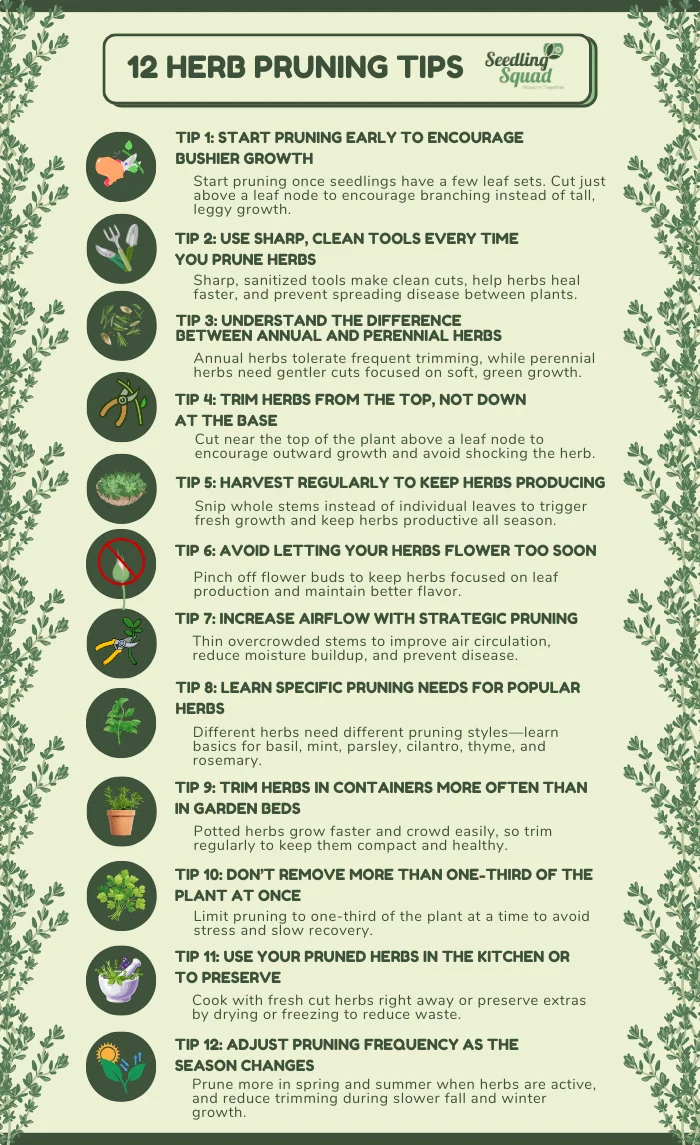
12 Herb Pruning Tips
Tip 1: Start Pruning Early to Encourage Bushier Growth
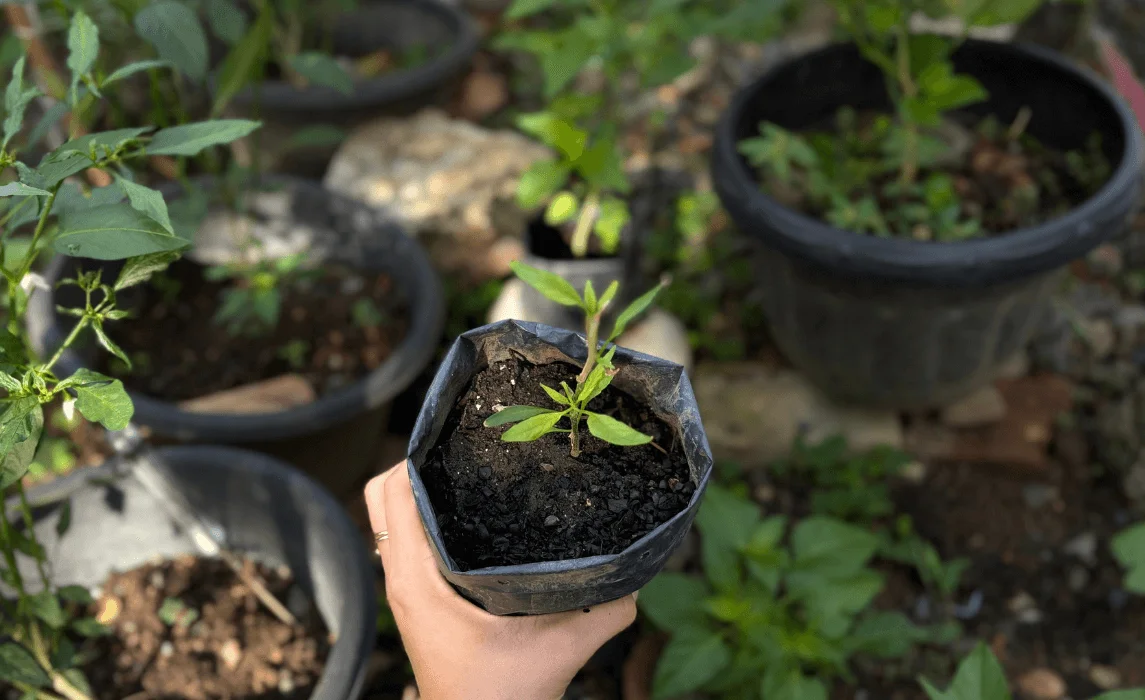
When your herb seedlings first develop a couple of sets of leaves, it’s time to prune. Early pruning, even on tender young plants like basil and parsley, encourages branching. Instead of letting the herb grow tall and leggy, snip just above the top set of leaves. This simple action signals the plant to put energy into multiple stems rather than one tall stalk, helping the herb become bushier and produce fresh herbs more quickly. In your garden or pot, look for soft green growth and use clean snips to cut about half an inch above a leaf node—the point where leaves emerge from the stem.
Tip 2: Use Sharp, Clean Tools Every Time You Prune Herbs
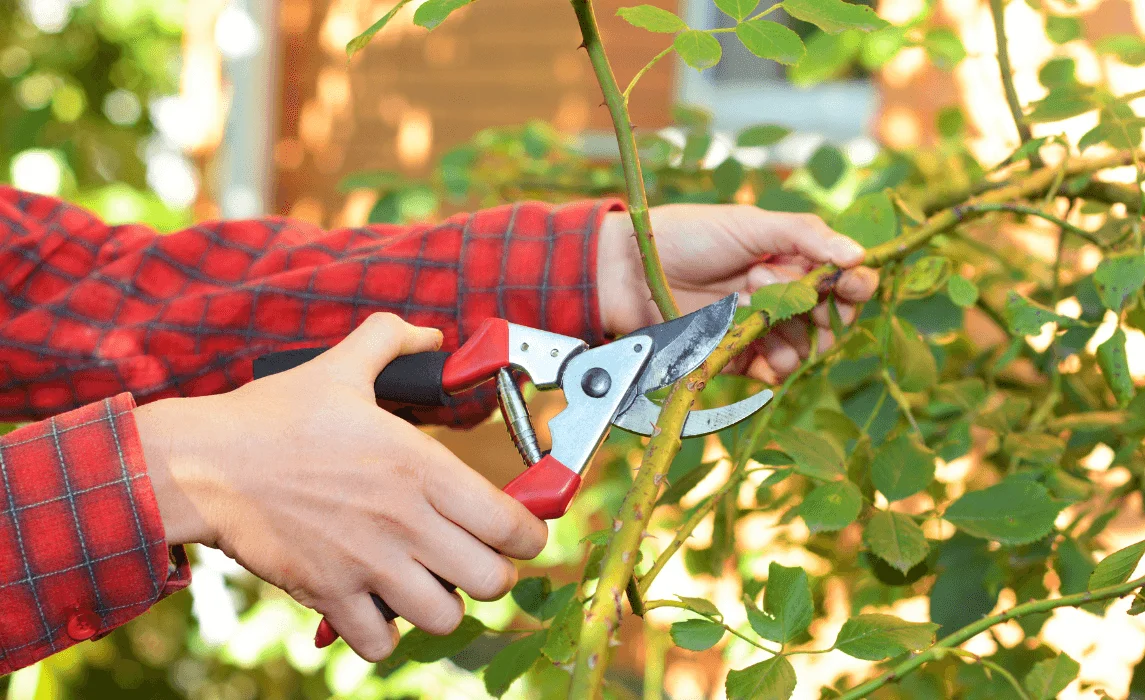
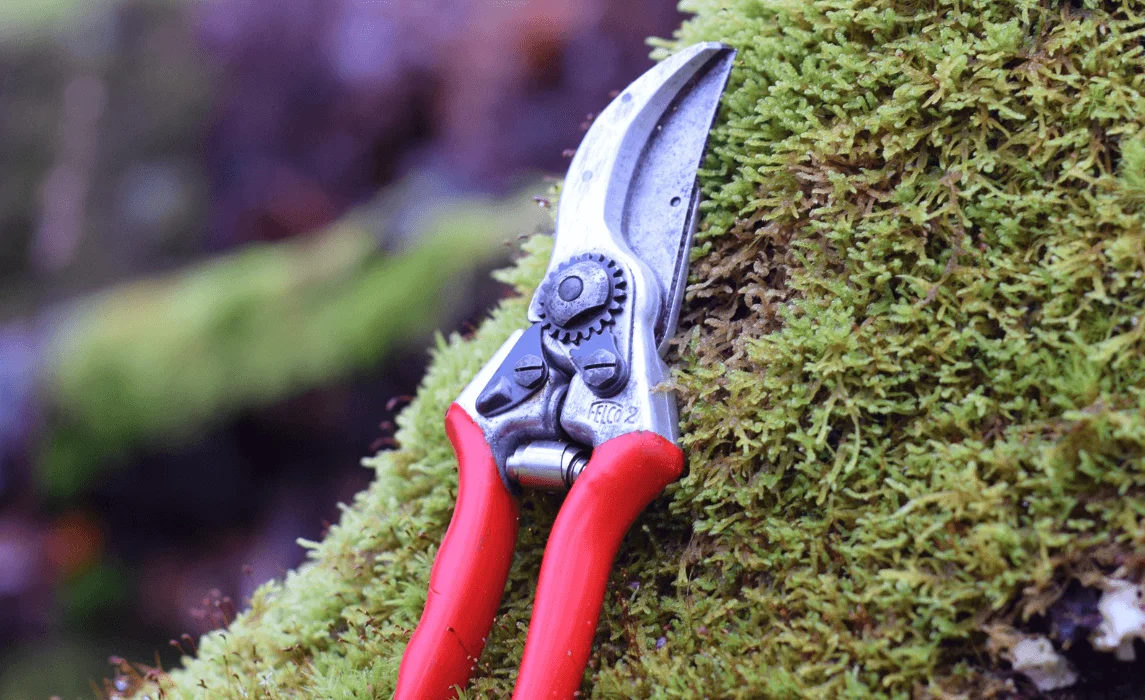
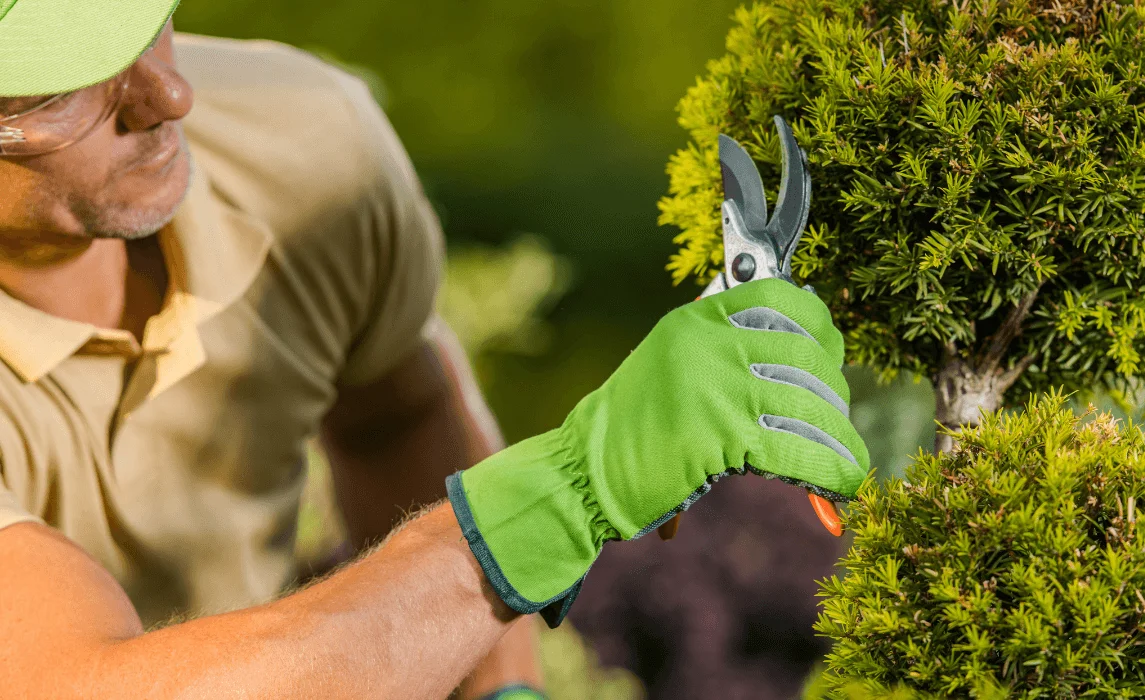
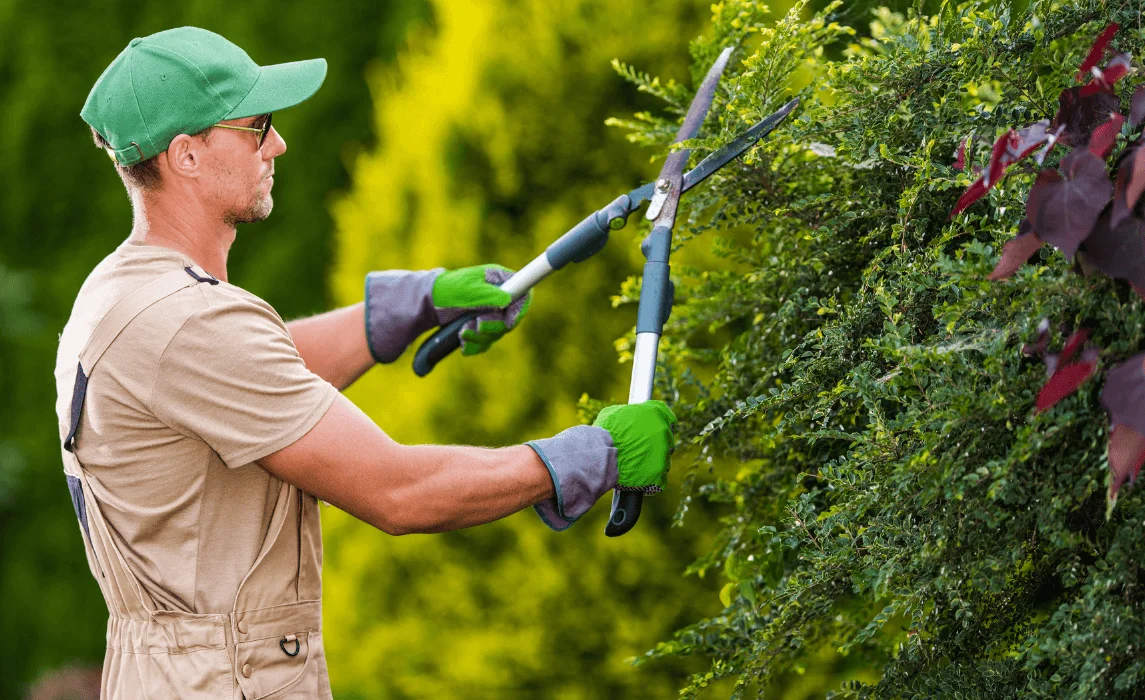
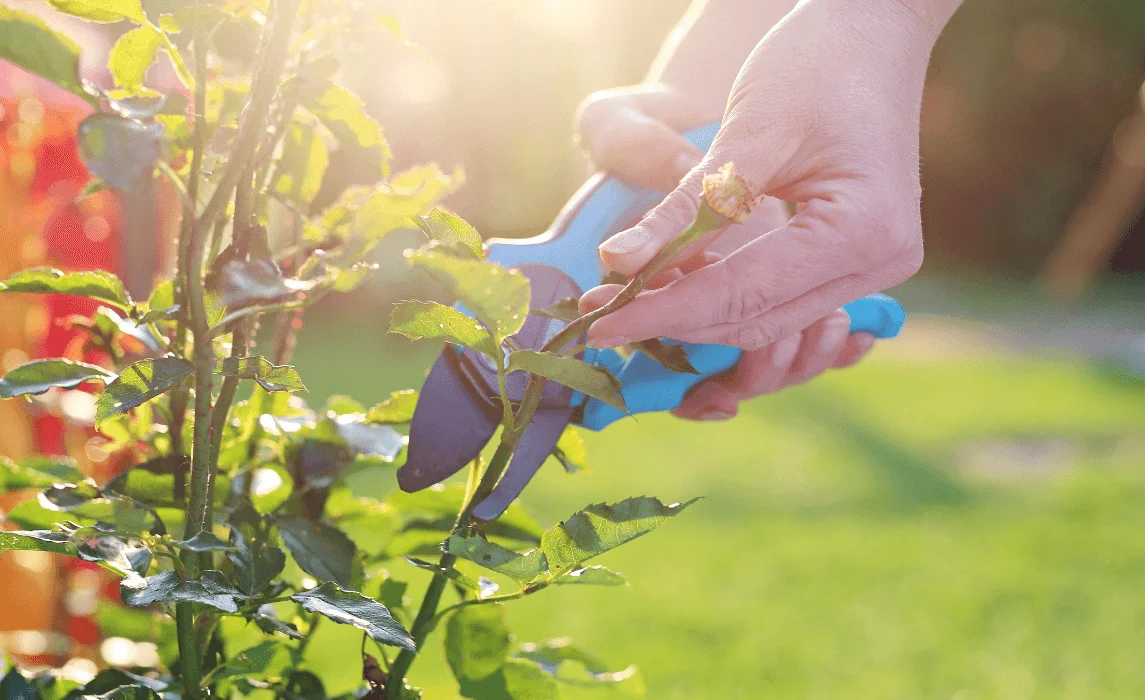
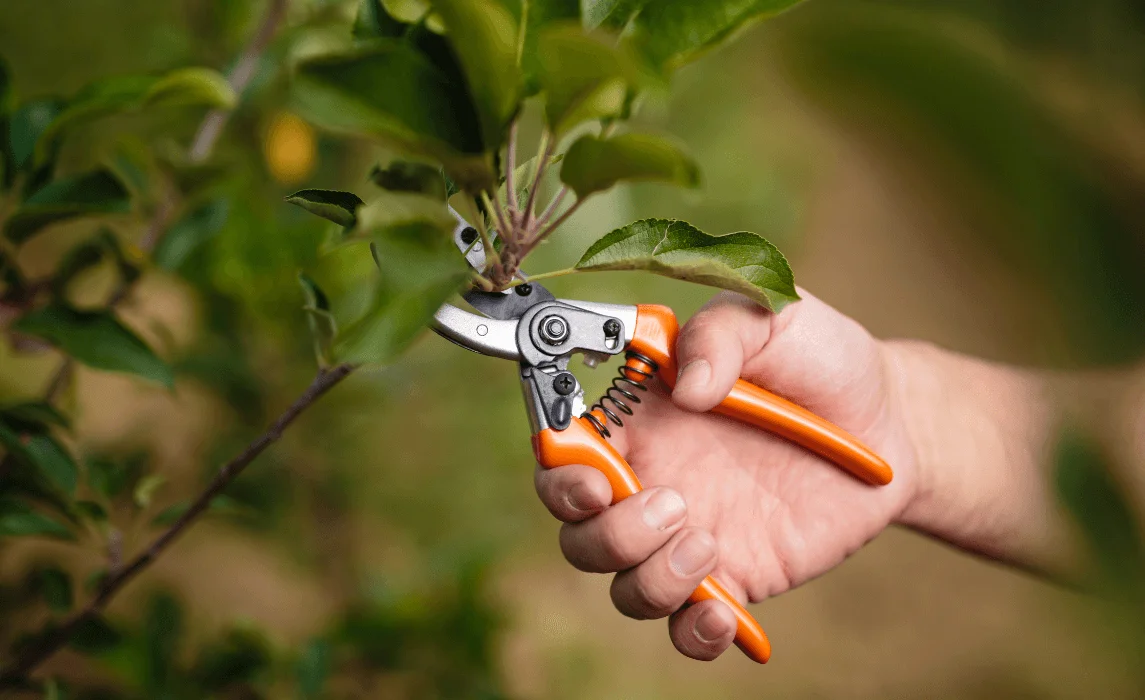
Before you embark on trimming herbs like mint, cilantro, or dill, make sure your pruning tools are sharp and clean. Dull blades crush stems instead of cutting them, which can stress the plant and slow growth. Wiping your pruner blades with rubbing alcohol between sessions prevents the spread of disease from one plant to another in your herb garden. When you prune herbs, focus on making a clean cut just above a set of leaves or leaf node. This helps the plant heal quickly, reduces the chance of disease, and makes it easier for the herb to send energy into new growth.
Tip 3: Understand the Difference Between Annual and Perennial Herbs
Knowing whether your herbs are annual herbs or perennial herbs changes how you prune. Annuals like basil, cilantro, and dill complete their life cycle in a single growing season. These herbs benefit from frequent, heavier trimming throughout the season to sustain continuous harvest herbs sessions and to prevent them from bolting (flowering and going to seed prematurely). On the other hand, perennial herbs like thyme, oregano, rosemary, and sage live for years. Pruning them too hard can remove older woody stems that help the plant survive. For perennial herbs, trim gently by snipping soft green growth and avoid cutting back into older woody parts unless you’re shaping the plant in early spring.
Tip 4: Trim Herbs From the Top, Not Down at the Base
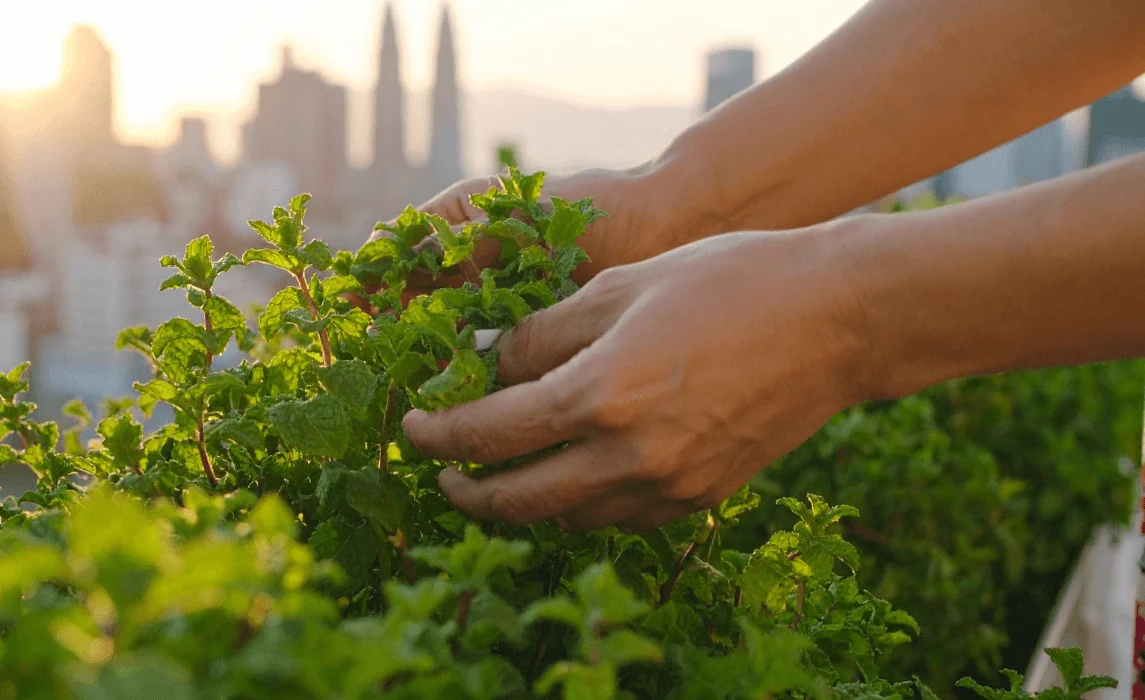
When trimming herbs such as basil or mint, always make your cuts near the top of the plant and not all the way down at the base. Cutting at the base removes entire stems and can shock the plant. Instead, focus on cutting just above a leaf node near the top third of the plant. This simple practice encourages the herb to grow outward instead of stretching upward. Within a few days, you’ll notice new growth emerging from just below where you made the cut. This method keeps your herb garden fuller and provides a steady supply of fresh sprigs for cooking or drying.
Tip 5: Harvest Regularly to Keep Herbs Producing
Pruning and harvesting go hand in hand. You’ll get the most from your herb garden when you make harvesting part of your regular pruning routine. For tender herbs like basil, parsley, chive, and cilantro, snip whole stems rather than picking individual leaves. By cutting whole stems just above a leaf node, you encourage the plant to replace what was removed with brand-new stems and leaves. Doing this several times throughout the growing season ensures your herbs stay lush and productive. As you harvest herbs, use them right away in your meals or dry them for later — both methods help you enjoy that fresh garden flavor all year.
Learn how to grow fresh peppermint and other mint varieties indoors all year long with easy, practical tips.
Tip 6: Avoid Letting Your Herbs Flower Too Soon
While flowers can look pretty in your herb garden, flowering often signals that the plant is switching from leaf production to seed production. When this happens, herbs like basil, cilantro, and dill can lose some of their flavor. Inspect your herbs regularly and prune off tiny flower buds as soon as you see them forming. This keeps the plant focused on producing leaves, which is what you want when you grow herbs for cooking. For perennial herbs like rosemary, occasional flowers are normal and even beneficial for pollinators, but on annual herbs, early flower removal helps you enjoy edible leaves longer.
Tip 7: Increase Airflow With Strategic Pruning
Dense, overcrowded herbs can trap moisture and become vulnerable to fungus and disease. To improve airflow in your herb garden, remove interior stems that are crossing or rubbing together. For herbs like thyme and oregano, which naturally grow in clumps, thin out older stems from the center to open up space. This will allow air to flow around the plant and reduce humidity around the foliage. As you prune, imagine creating a little “window space” inside each herb plant so air and light can reach the leaves more evenly. Proper airflow supports stronger growth and helps your herbs stay healthy throughout the season.
Tip 8: Learn Specific Pruning Needs for Popular Herbs
Different herbs have different pruning needs. Knowing these makes your garden care easier and more effective.
Basil: Trim often and remove flower buds early to keep it producing tender leaves.
Mint: Snip mint back to just above a leaf node to promote a bushier plant and prevent it from flowering and fading in flavor.
Parsley: Harvest outer stalks first; leave the inner crown to keep the plant going strong.
Cilantro and Dill: These herbs grow fast and bolt fast, so harvest and prune often. When they bolt, harvest what you can, then replace with fresh seeds.
Thyme and Oregano: Light trimming throughout the season keeps them compact; only trim woody parts when new green shoots are present.
Rosemary and Sage: These woody herbs like gentle shaping rather than heavy cuts; focus on soft new growth at the tips.
Understanding each herb’s pruning preferences gives you confidence to prune smarter and grow healthier plants.
Tip 9: Trim Herbs in Containers More Often Than in Garden Beds
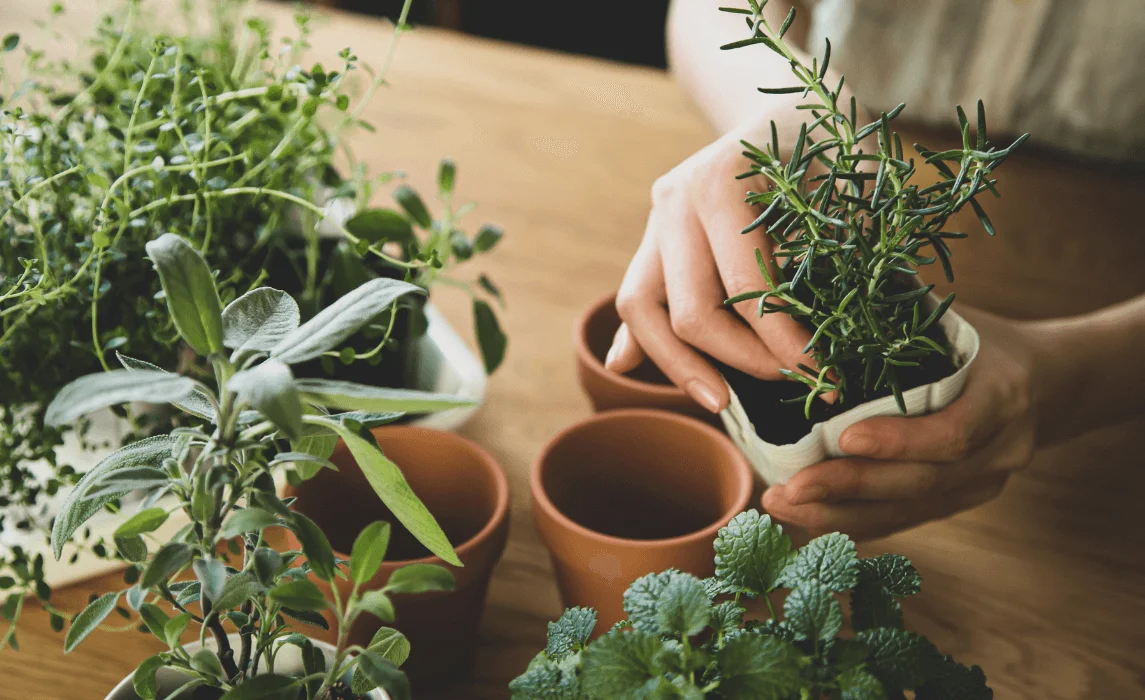
Herbs grown in pots and containers often need more frequent trimming than those in garden beds. Limited space means roots fill up the pot quickly, and plants can become crowded. Regular trimming helps herbs like basil, chives, and parsley stay compact and vigorous rather than tall and top-heavy. If you’re growing herbs in small containers or in systems like an Aerogarden, snip back stems every time the plant gets a few inches taller than you like. Focus on cutting just above leaf nodes so herbs respond with fresh lateral branches. This simple container pruning trick keeps your herbs productive and prevents leggy, weak growth.
Tip 10: Don’t Remove More Than One-Third of the Plant at Once
A common error beginner gardeners make is over-pruning. Avoid removing more than one-third of a herb plant at any single pruning session. Cutting back too much can stress the plant and slow growth. Instead, prune in stages — a little now and a little later — to keep the plant robust. For example, if your rosemary looks overgrown, first trim back the top leafy tips, then a week or two later remove a few more stems if needed. By limiting each pruning session to about one-third of total growth, herbs recover faster, maintain stronger roots, and produce more flavorful leaves over time.
Find creative indoor gardening ideas perfect for making the most of small living spaces.
Tip 11: Use Your Pruned Herbs in the Kitchen or to Preserve
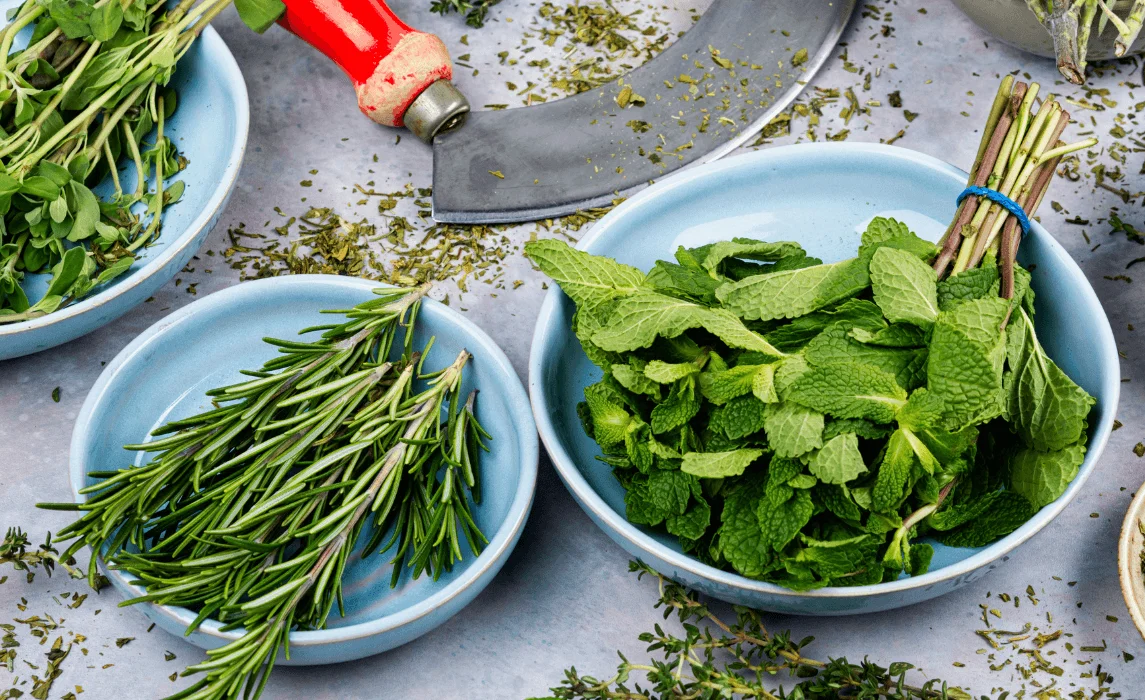
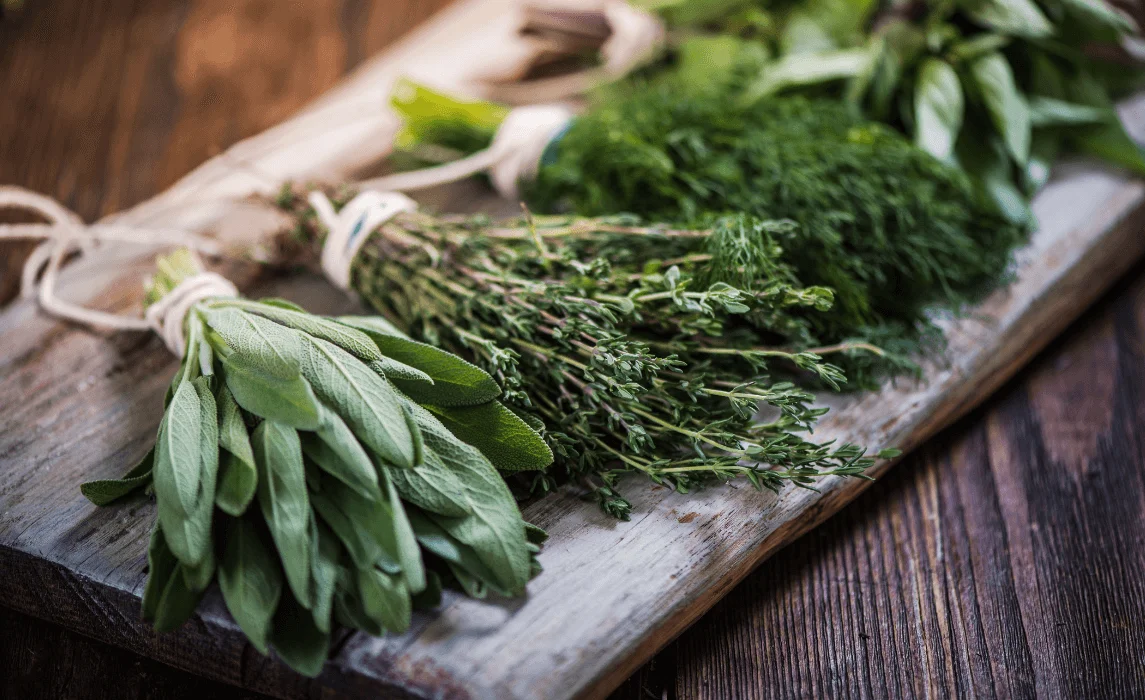
One of the most rewarding parts of pruning herbs is putting your fresh cut herbs to use. After trimming, take your sprigs to the kitchen for pesto, salads, soups, or garnishes. If you have more than you can use right away, consider drying or freezing them. Dry hardy herbs like rosemary, thyme, and oregano by hanging small bundles upside down in a dry place. Tender herbs like basil can be frozen in olive oil. Not only does this reduce waste, but it ensures you enjoy a supply of fresh herbs even after the growing season ends.
Tip 12: Adjust Pruning Frequency as the Season Changes
Herbs grow differently throughout the seasons. In spring and summer, herbs are actively producing new shoots and benefit from frequent pruning. In fall and winter, growth slows — especially outdoors — so reduce your pruning frequency to avoid stressing the plant when it’s less active. If you’re growing indoors during the cooler months, continue light trimming to maintain shape and encourage some new growth. By paying attention to seasonal growth patterns, you’ll know when to prune more often and when to ease off.
Frequently Asked Questions:
Q: How often should I prune my herbs?
A: Most herbs benefit from trimming every 1–2 weeks during active growth. Fast growers like basil and mint can be pruned more often, while woody herbs like rosemary need lighter, less frequent trimming.
Q: Can I prune herbs if they are flowering?
A: Yes — especially annual herbs. Remove small flower buds quickly to keep the plant producing leaves. If the herb has already fully flowered and gone to seed, harvest what you can and consider replanting new seeds.
Q: Should I prune herbs in winter?
A: Only if they are actively growing indoors. Most outdoor herbs slow down in winter, so minimal pruning reduces stress. Focus on light shaping and removing dead or brown stems.
Q: What tool should I use to trim herbs?
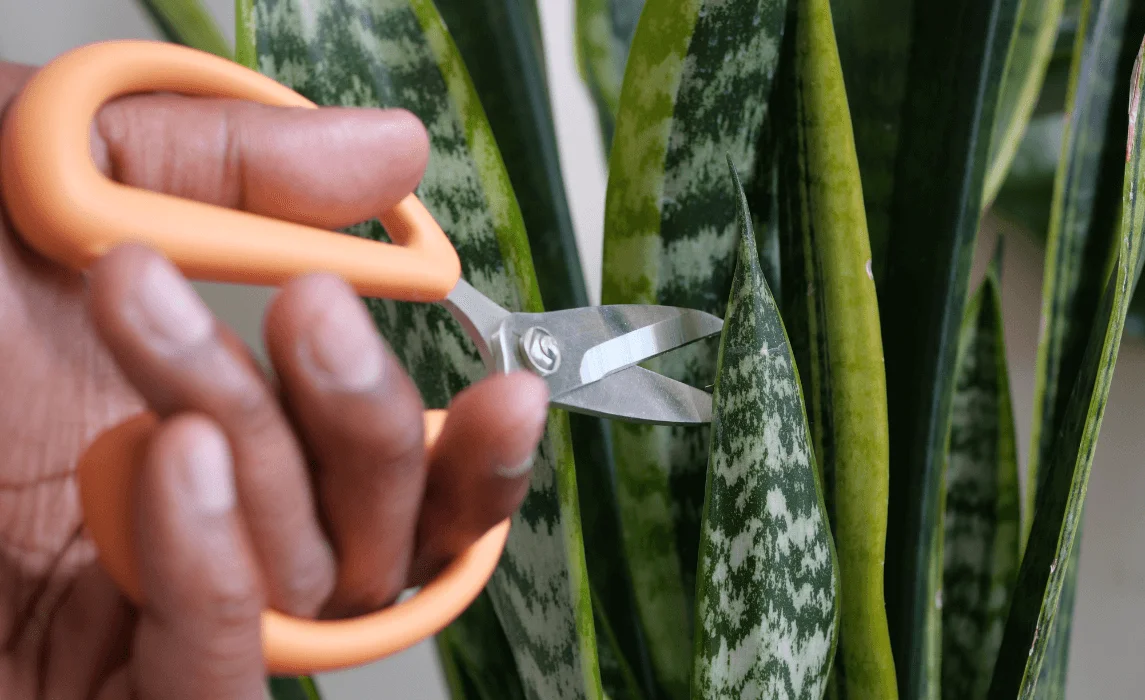
A: Use clean, sharp pruning shears or scissors. Keeping tools sanitized prevents disease transmission and helps make clean cuts that heal faster.
Q: Will pruning make my herbs grow back bigger?
A: Yes! Correct pruning encourages plants to produce more lateral shoots, resulting in bushier, healthier herbs with more stems and leaves.
Related posts
Here are some articles you might be interested in.