Zuri's frequent journeys to South Africa in her youth ignited her fervor for environmental science, gardening, and sustainable living. These travels deepened her connection with nature, inspiring her to contribute to conservation efforts in her own meaningful ways.
Growing Chia Plants Q&A
Can I grow chia from the chia seeds I buy at the store?
Yes. Organic chia seeds from the grocery store will often germinate, though germination can vary. Fresh seed from a garden supplier is more reliable.
How long does it take to grow chia?
Seeds sprout in about a week. The plant needs 100 to 150 days to mature before you can harvest the seeds.
Is chia a California native plant?
Salvia hispanica is native to central Mexico and Guatemala. However, Salvia columbariae, sometimes called California chia, is a California native plant.
Can I grow chia indoors?
You can grow chia sprouts and microgreens indoors easily. A full-size chia plant needs strong light and rarely sets a good seed crop indoors.
Why won't my chia flower?
Chia flowers when days get shorter. Plants in cooler regions or those lit at night may bloom late or not at all.
How to Grow Pumpkins Q&A
Can I grow pumpkins in a small home garden?
Yes. Choose bush or miniature varieties, grow vines on a trellis, or use raised beds. Plan on one or two plants per hill and prune vines when space is tight.
When should I plant pumpkins for Halloween?
Plant seeds in late May or early June in most climates. Count back from your first frost date and allow for 90 to 120 days of growth.
Why does my pumpkin plant have flowers but no fruit?
Male flowers appear first, so early flowers will not set fruit. If female flowers open but fail to fruit, you probably have too few bees. Pollinate by hand in the morning.
What causes pumpkin leaves to turn white?
This is usually powdery mildew. Improve airflow, water at the base, remove infected leaves, and apply a fungicide or neem oil.
Can I eat the pumpkin I grew for carving?
Yes, though carving types are stringy and bland. Pie pumpkins are sweeter, but the seeds from any pumpkin can be roasted.
Growing Grapevines Q&A
How long does it take for a grape plant to produce fruit?
Most young vines need two to three years after planting before they set a full crop, though a few clusters may appear in year two. Patience pays off — established vines can keep producing for 40 years or more.
Do I need more than one vine to grow grapes?
No. Since most grape varieties are self-fertile, one plant is enough to produce fruit on its own. Planting a second variety nearby is optional and mainly helps with cross-pollination in a few less common types.
Can grape vines grow in containers?
Yes, though grape vines grow best planted directly in the ground, where the root system has room to spread. A large container works for a year or two, but expect to transplant once the vine outgrows the pot.
Why aren't my grapes ripening?
Grapes ripen slowly compared to many fruits, and cool weather, too much shade, or overcrowded canes can all delay the process. Give the vine full sun, thin the clusters, and be patient through the growing season.
What's the difference between table grapes and wine grapes?
Table grapes are bred for fresh eating, with thinner skins and fewer seeds, while wine grapes tend to have thicker skins, more seeds, and higher sugar content suited to fermentation.
Are grape vines toxic to pets?
Grapes and grape leaves are not toxic to people, but grapes and raisins are toxic to dogs and can cause kidney damage, so keep fallen fruit cleaned up if pets have access to the vineyard.
If you have always wanted to bring a touch of nature indoors but worry you lack a green thumb, you are exactly in the right place. Starting an indoor garden in your indoor space with potted plants does not have to be a stressful or time-consuming chore. The secret to success is simply choosing the right resilient varieties, understanding basic care, and knowing how to keep alive the easiest plants. Finding plants to take care of is simple when you focus on ease of care.
This guide will walk you through exactly how to grow house plants without the guesswork, showing that anyone can grow an indoor plant. We will cover the best low-maintenance options and break down the specific care for easy houseplants for beginners, giving you the confidence to build a thriving, vibrant indoor jungle with zero stress. These are easy plants to grow and perfect for beginners looking for easy-to-care-for plants and easy indoor plants. This list of easy, popular indoor plants will help you find the best plant to grow.
10 Best Easy Houseplants
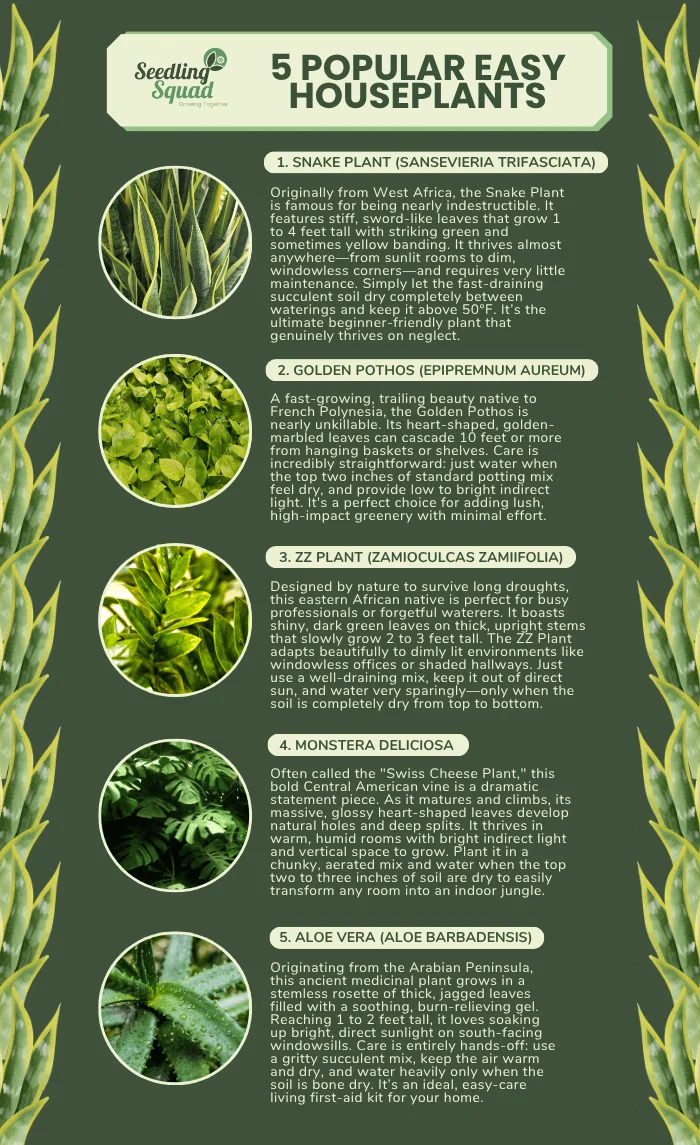
1. Snake Plant (Sansevieria trifasciata)
The Snake Plant, originally native to tropical West Africa, has long been celebrated as one of the most indestructible indoor plants available. It is one of the easiest houseplants to grow and easiest to care for among easy-care plants. It features stiff, sword-like vertical leaves that can grow anywhere from 1 to 4 feet tall indoors, though some leaves can grow up to 18 inches in smaller varieties, showcasing striking bands of dark green, light green, and sometimes yellow margins. While it rarely blooms indoors, under stress, it can produce delicate, strongly scented greenish-white flowers. This hardy succulent thrives almost anywhere, from bright, sunlit living rooms to dim, windowless office corners, because it can handle low light expertly. To care for it, water only when the soil is completely bone dry, use a fast-draining cactus or succulent soil, provide indirect light (though it handles low light expertly), and maintain average household temperatures and humidity, ensuring it never sits in a cold draft below 50°F. Since it requires low water and has simple care needs, this plant is easy to take care of and easy to maintain. We highly recommend this forgiving plant to absolute beginners, frequent travelers, or anyone who claims to have a "black thumb," as it truly thrives on neglect and is one of the easiest houseplants to keep alive.
Soil: Fast-draining cactus or succulent mix
Water: Every 2-4 weeks; dry 100% completely
Light: Bright indirect to very low
Humidity: Low to average (30-50%)
Fertilizer: Spring & mid-summer, half-strength
Temperature: 65-85°F
USDA Zone: 9-11 (indoors)
2. Golden Pothos (Epipremnum aureum)
Native to the Society Islands of French Polynesia, the Golden Pothos is a trailing plant universally loved for its rapid growth and nearly unkillable nature. It is a lush trailing plant featuring heart-shaped leaves heavily marbled with golden-yellow and green, capable of growing vines 10 feet long or more indoors; it virtually never blooms as a houseplant. It thrives cascading from high bookshelves, draping out of hanging baskets, or climbing up a moss pole in a living room or bedroom as it loves to trail. Care is straightforward: water thoroughly when the top two inches of soil feel dry (the leaves will dramatically droop and wilt when plants are thirsty), plant it in standard indoor potting mix, give it bright indirect light to maintain its golden variegation, and keep it in standard room temperatures. They grow best and can grow large in optimal light conditions. We recommend this plant to interior decorators or beginners who want a fast-growing, highly visual trailing aesthetic without the high-maintenance routine. It is one of the easiest plants to care for, and you can easily propagate plants to make new plants.
Soil: Standard, well-draining mix
Water: Every 1-2 weeks; top 2 inches dry
Light: Bright indirect to low
Humidity: Average to high
Fertilizer: Monthly in spring & summer
Temperature: 60-85°F
USDA Zone: 10-12 (indoors)
3. ZZ Plant (Zamioculcas zamiifolia)
Hailing from drought-prone regions of eastern Africa, the ZZ Plant is an evolutionary marvel designed to survive long periods without care. It boasts incredibly shiny, dark green, oval-shaped leaves arranged symmetrically on thick, upright fleshy stems that slowly grow 2 to 3 feet tall; mature plants may occasionally produce a small, pale green spathe flower near the soil line. It thrives in dimly lit environments like windowless office cubicles, north-facing bedrooms, and shaded hallways, adapting well to indoor conditions. To keep it happy, water it very sparingly (only when the soil is completely dry from top to bottom, as the plant likes to stay dry), use a well-draining mix, keep it out of direct scorching sunlight by providing indirect sunlight, and maintain average household warmth and humidity. This plant is also among the easiest easy-care houseplants. This plant is the ultimate recommendation for busy professionals, frequent flyers, and forgetful waterers who want a structured, modern-looking plant that demands almost nothing and is an incredibly low-maintenance plant.
Soil: Well-draining mix with perlite
Water: Every 3-4 weeks; drought tolerant
Light: Low to bright indirect
Humidity: Average
Fertilizer: 1-2 times in spring/summer
Temperature: 60-85°F
USDA Zone: 9-10 (indoors)
4. Spider Plant (Chlorophytum comosum)
The Spider Plant, native to tropical and southern Africa, has been a staple of indoor gardening for decades due to its fun, fountain-like growth habit. It features long, arching, grass-like leaves—usually bordered or striped with white and green—that grow about 1 to 2 feet long, and it famously produces long cascading stems that yield tiny white star-shaped flowers and miniature baby plants called "spiderettes." It thrives in brightly lit bathrooms, kitchens, or hanging baskets near east or west-facing windows. Care requires keeping the soil lightly moist but never waterlogged, using standard potting mix, providing bright but indirect sunlight, and offering average to slightly higher humidity, while protecting it from extreme cold. The plant grows quickly when care requirements are met. We highly recommend the Spider Plant to generous gardeners and families, as the constant production of baby plants makes it incredibly easy to propagate and share with friends, making it a favorite among popular indoor plants.
Soil: Standard, well-draining mix
Water: Every 1-2 weeks; keep slightly moist
Light: Bright indirect
Humidity: Average to high
Fertilizer: Every 2-4 weeks (growing season)
Temperature: 55-80°F
USDA Zone: 9-11 (indoors)
5. Cast Iron Plant (Aspidistra elatior)
Native to the forest floors of Japan and Taiwan, the Cast Iron Plant earned its tough name during the Victorian era when it survived the harsh, dark, and fume-filled conditions of early modern homes. It forms dense clumps of broad, dark green, lance-shaped leaves that grow 2 to 3 feet tall directly from the soil rhizomes; its blooms are tiny, purple, and uniquely hidden right at the soil surface, rarely noticed indoors. It thrives in drafty entryways, shaded corners, and rooms with wildly fluctuating temperatures where other tropicals would perish. Care involves watering thoroughly but allowing the top half of the soil to dry out completely before the next drink, planting in standard soil, providing low to medium light, and leaving it in standard room humidity. This is a remarkably low-maintenance houseplant. This is the perfect recommendation for gardeners with older, drafty homes or those struggling to find an easy houseplant capable of surviving in their darkest, coldest corners.
Learn beginner-friendly indoor plant care tips including watering, lighting, humidity, and maintenance to help your houseplants thrive year-round.
```
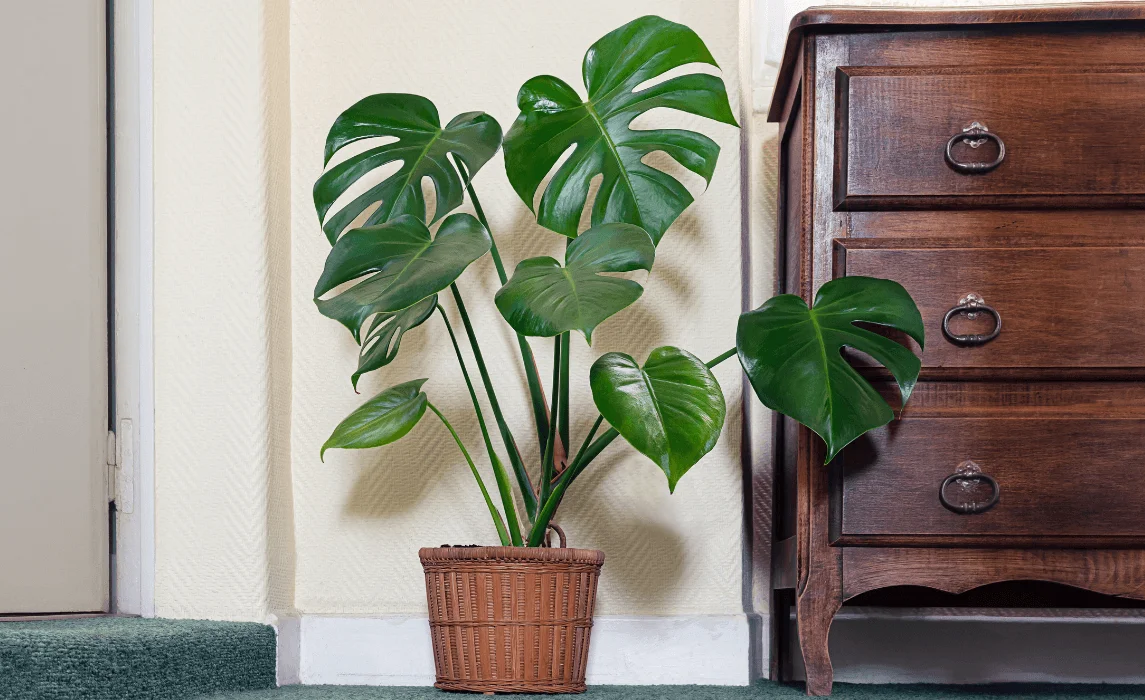
6. Monstera Deliciosa
Native to the tropical rainforests of southern Mexico and Central America, the Monstera Deliciosa—often called the "Swiss Cheese Plant"—is a bold, architectural vining plant. It produces massive, glossy, heart-shaped dark green leaves that can exceed two feet across, famously developing natural holes and deep splits (fenestrations) as the plant matures and climbs; while mature plants outdoors produce a white spathe flower and edible fruit, indoor blooming is exceptionally rare. It thrives in warm, brightly lit living rooms or sunrooms where it has vertical space to climb a moss pole or trellis. Care requires watering when the top two to three inches of soil are dry, using a chunky, highly aerated soil mix (like orchid bark mixed with potting soil), placing it in bright indirect light, and providing warm temperatures and ideally higher humidity. Because plants prefer warm conditions, this easy-to-grow beauty will reward you. We recommend this plant to enthusiastic beginners who want a fast-growing, dramatic statement piece that transforms a room into an indoor jungle with these houseplants that are easy to manage.
Soil: Chunky, well-draining mix
Water: Every 1-2 weeks; top 2-3 inches dry
Light: Bright indirect
Humidity: High preferred, tolerates average
Fertilizer: Monthly in spring & summer
Temperature: 65-85°F
USDA Zone: 10-12 (indoors)
7. Peace Lily (Spathiphyllum)
Native to the tropical rainforest floors of the Americas and Southeastern Asia, the Peace Lily is beloved for its lush foliage and elegant, recurring blooms. It features a dense clump of arching, dark green, glossy leaves growing 1 to 3 feet tall, contrasted by striking white, hood-like spathes (modified leaves) that surround a pale yellow spadix, blooming most heavily in the spring. It thrives in medium-light environments like bedrooms, shaded living rooms, or interior offices away from harsh windows. Care requires keeping the soil consistently moist—this plant is famous for dramatically drooping its leaves to the floor when thirsty, only to spring back up hours after a good watering—using rich potting soil, keeping it out of direct sunlight, and providing warm, draft-free temperatures with high humidity. Many plants of this type are excellent indoor houseplants. I recommend the Peace Lily to highly attentive gardeners or chronic over-waterers who enjoy easy-care plants that actively communicate exactly when they need a drink.
Soil: Rich, well-draining mix
Water: Every 1-2 weeks; keep consistently moist
Light: Low to medium indirect
Humidity: High preferred
Fertilizer: Every 6 weeks in spring & summer
Temperature: 65-85°F
USDA Zone: 11-12 (indoors)
8. Aloe Vera (Aloe barbadensis)
Originating from the arid, harsh climates of the Arabian Peninsula, Aloe Vera is an ancient medicinal plant cultivated worldwide for the soothing, burn-relieving gel stored inside its foliage. It grows in a stemless rosette pattern featuring thick, fleshy, pale green, lance-shaped leaves with jagged, serrated edges, typically reaching 1 to 2 feet tall indoors; it can produce tall spikes of yellow or orange tubular flowers, though this almost exclusively happens when grown outdoors in full sun. It thrives on brightly lit, south-facing windowsills where it can soak up bright light and direct sunlight. Care is strictly hands-off: water it heavily but infrequently, waiting until the soil is bone dry all the way through, use a very gritty, sandy succulent mix, provide as much light as possible, and keep it in warm, dry air. Plant care doesn't get simpler than this. This is a fantastic recommendation for practical house-dwellers who want easy indoor plants that double as a living first-aid kit for minor kitchen burns and scrapes.
Soil: Gritty, fast-draining succulent mix
Water: Every 2-3 weeks; dry completely
Light: Bright indirect to direct
Humidity: Low
Fertilizer: Once in spring
Temperature: 55-80°F
USDA Zone: 10-12 (indoors)
9. Jade Plant (Crassula ovata)
Native to the dry regions of South Africa, the Jade Plant is a long-lived succulent often gifted as a symbol of prosperity and good luck. Jade plants resemble miniature, bonsai-like trees with thick, woody brown trunks and branches that support plump, fleshy, oval-shaped green leaves (which often develop red edges in high light), growing slowly up to 3 to 5 feet indoors over several decades; mature plants occasionally produce dense clusters of tiny, star-shaped white or pale pink flowers in late winter. They thrive in sun-drenched rooms, conservatories, or directly in front of south-facing windows. To care for these beginner plants, water deeply but allow the soil to dry out completely between waterings, use a sandy cactus mix, provide several hours of direct sunlight daily to prevent "leggy" stretching, and maintain average room temperatures with low humidity. Because these plants are slow-growing, they are very manageable. We highly recommend the Jade Plant to patient gardeners looking for an heirloom plant they can grow, shape, and keep for a lifetime, adding to their collection of houseplants to grow.
Soil: Fast-draining cactus/succulent mix
Water: Every 2-3 weeks; dry completely
Light: Bright with some direct sun
Humidity: Low
Fertilizer: Every 2 months in spring/summer
Temperature: 65-75°F
USDA Zone: 10-11 (indoors)
10. Chinese Evergreen (Aglaonema)
Native to the humid, shaded tropical and subtropical forests of Asia, the Chinese Evergreen is prized for bringing vibrant, colorful patterns into dimly lit spaces. It grows as a dense, bushy floor or tabletop plant—usually 1 to 3 feet tall—featuring large, broad, lance-shaped leaves heavily splashed with intricate patterns of silver, pale green, bright pink, or deep red depending on the variety; it occasionally produces small, subtle blooms resembling a miniature calla lily. Like the prayer plant, which also requires indirect light and high humidity, it thrives in low to medium-light environments, making it an excellent splash of color for interior living rooms or office desks. Care involves watering when the top two inches of soil dry out, planting in standard potting mix, keeping it out of direct sunlight (which burns its colorful leaves), and protecting it from cold drafts while providing a reasonably warm, humid environment. These easy-to-care-for houseplants are suitable for beginners. We recommend this plant to beginners who want the spectacular, vivid foliage usually reserved for finicky tropicals, but without the demanding care routine of less easy-care houseplants.
Discover simple and beginner-friendly indoor gardening tips to help you choose the right plants, lighting, containers, and care routine for a thriving indoor garden.
```
Frequently Asked Questions:
Q: Why is there a white, crusty buildup on the surface of my plant's soil?
1. This is a very common issue for indoor house plants. Usually, it is a buildup of soluble salts and minerals from tap water or fertilizer. If it looks soft and fuzzy rather than hard and crystalline, it might be a harmless saprophytic fungus breaking down organic matter in the soil. To fix mineral crusts, scrape off the top layer of soil and occasionally "flush" the pot by pouring distilled water through it until it runs out the bottom freely.
Q: Do easy houseplants need fertilizer to survive?
3. They will survive without it, but they won't thrive. In nature, plants get a constant supply of nutrients. In a pot, they eventually deplete the soil. Using a standard houseplant fertilizer at half-strength during the spring and summer will encourage stronger roots and larger leaves. Do not fertilize in winter when the plants are dormant.
Q: How do I know if my plant is getting the right amount of light?
2. If a plant is getting too much direct light, its leaves will look bleached, washed out, or develop crispy, scorched brown patches. If it isn't getting enough light, the growth will be "leggy" (long stems with large gaps between leaves), variegated plants will lose their patterns and turn solid green, and the soil will take weeks to dry out, increasing the risk of root rot.
Related posts
Here are some articles you might be interested in.


.webp)
.webp)
.webp)
.webp)
.webp)

.webp)
.webp)
.webp)
.webp)