How to Plant and Grow a Fast Perennial Flowering Vine or Annual Vines in Your Shade Garden
Published on
April 14, 2026
Author
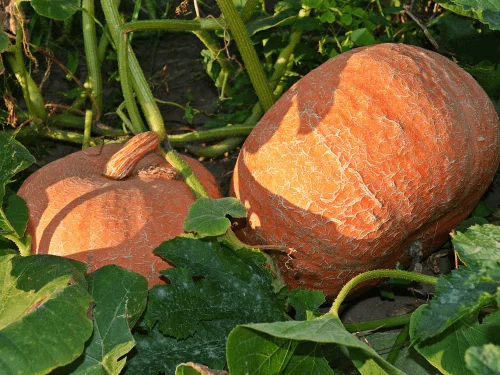
How to Grow Pumpkins Q&A
Can I grow pumpkins in a small home garden?
Yes. Choose bush or miniature varieties, grow vines on a trellis, or use raised beds. Plan on one or two plants per hill and prune vines when space is tight.
When should I plant pumpkins for Halloween?
Plant seeds in late May or early June in most climates. Count back from your first frost date and allow for 90 to 120 days of growth.
Why does my pumpkin plant have flowers but no fruit?
Male flowers appear first, so early flowers will not set fruit. If female flowers open but fail to fruit, you probably have too few bees. Pollinate by hand in the morning.
What causes pumpkin leaves to turn white?
This is usually powdery mildew. Improve airflow, water at the base, remove infected leaves, and apply a fungicide or neem oil.
Can I eat the pumpkin I grew for carving?
Yes, though carving types are stringy and bland. Pie pumpkins are sweeter, but the seeds from any pumpkin can be roasted.
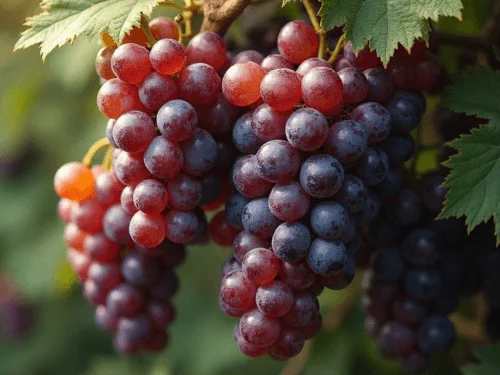
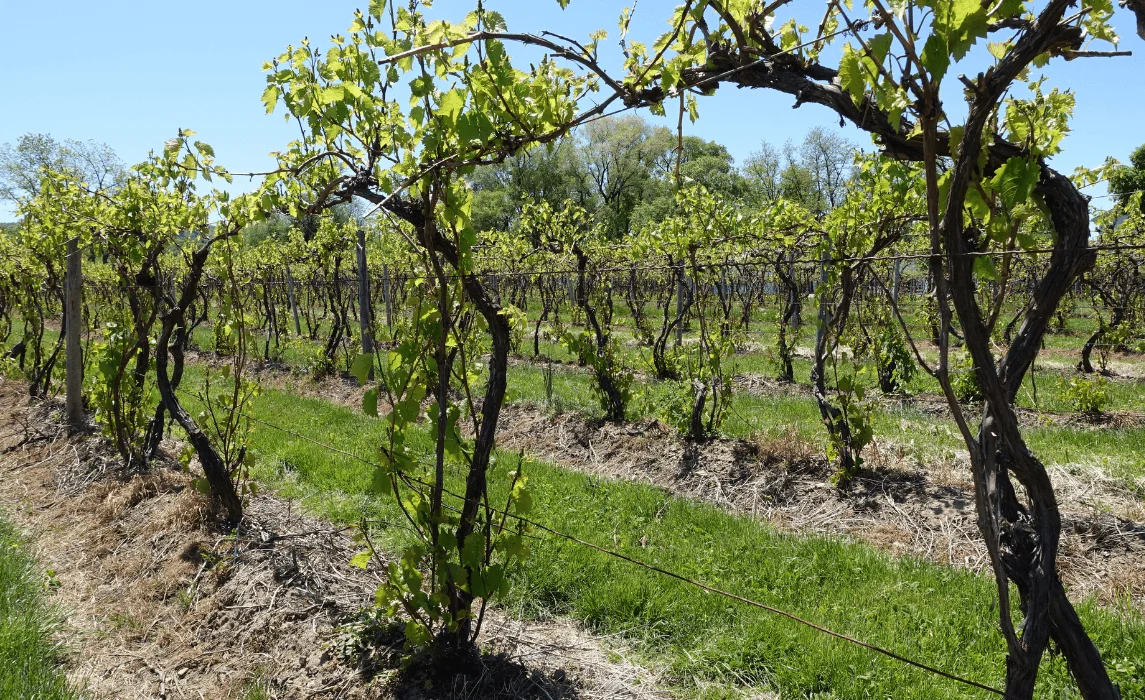
Growing Grapevines Q&A
How long does it take for a grape plant to produce fruit?
Most young vines need two to three years after planting before they set a full crop, though a few clusters may appear in year two. Patience pays off — established vines can keep producing for 40 years or more.
Do I need more than one vine to grow grapes?
No. Since most grape varieties are self-fertile, one plant is enough to produce fruit on its own. Planting a second variety nearby is optional and mainly helps with cross-pollination in a few less common types.
Can grape vines grow in containers?
Yes, though grape vines grow best planted directly in the ground, where the root system has room to spread. A large container works for a year or two, but expect to transplant once the vine outgrows the pot.
Why aren't my grapes ripening?
Grapes ripen slowly compared to many fruits, and cool weather, too much shade, or overcrowded canes can all delay the process. Give the vine full sun, thin the clusters, and be patient through the growing season.
What's the difference between table grapes and wine grapes?
Table grapes are bred for fresh eating, with thinner skins and fewer seeds, while wine grapes tend to have thicker skins, more seeds, and higher sugar content suited to fermentation.
Are grape vines toxic to pets?
Grapes and grape leaves are not toxic to people, but grapes and raisins are toxic to dogs and can cause kidney damage, so keep fallen fruit cleaned up if pets have access to the vineyard.
Bee Garden Q&A
What flowers attract the most bees to a garden?
Bees are generally drawn to flowers that are blue, purple, yellow, or white, and that offer easy access to nectar and pollen. Lavender, bee balm, sunflower, and coneflower are some of the most reliable plants that attract bees to a home garden.
Do I need to avoid pesticides in a bee-friendly garden?
Yes, whenever possible. Insecticide and pesticide products can harm adult bees and their larva, even in small amounts. Choosing natural pest control methods helps keep your garden safe for visiting bees.
Can a small home garden still support pollinators?
Absolutely. Even a few containers of zinnias, salvia, or crocus on a balcony can offer pollen and nectar for local bees. Bees will travel between small garden spaces, so every bit of habitat helps.
Do bees need more than just flowers?
Yes. Bees also need nesting sites and water. Ground-nesting bees need patches of bare soil, while a shallow bee bath gives bees a safe spot to drink, especially in hot weather.
Will planting a pollinator garden really help save the bees?
It genuinely can. As natural habitat shrinks, home gardens have become an important food source and shelter for bees, including many native bee species. A well-planned bee garden supports pollination for your own flowers and vegetables while helping the wider bee population.
What is the best USDA zone for growing a bee garden?
There is no single best zone. Most of the plants above grow well across USDA zones 4 through 9, and gardeners in colder or warmer zones can simply choose varieties suited to their climate, or grow warm-season bees favorites like sunflower and zinnia as annuals.
If you have ever looked at a dim, bare corner of your yard and wished something lush and alive could fill it, you are not alone. Many gardeners assume that shady spots are destined to remain dull and lifeless, but the truth is that there are dozens of stunning vines for shade that can transform even the darkest fence line or arbor into a living tapestry of green, purple, white, and gold. Whether you are working with full shade beneath a canopy of mature trees or dealing with the dappled light of partial shade along the side of your house, the right vine can turn a problem area into the highlight of your entire garden.
Choosing the best vine for a shady location is not just about finding something that survives with less sunlight. It is about selecting a plant that will genuinely thrive, produce flowers or interesting foliage, and grow vigorously enough to cover a trellis, fence, or wall without becoming a maintenance nightmare. In this guide, we walk through twelve of the best perennial and annual vines for shade, including fast-growing options for impatient gardeners. For each variety, you will find a detailed profile covering background, physical description, growing conditions, and practical care requirements—along with gardening tips to help every climber in your collection reach its full potential.
10 Best Vines for Shade
1. Climbing Hydrangea (Hydrangea petiolaris)
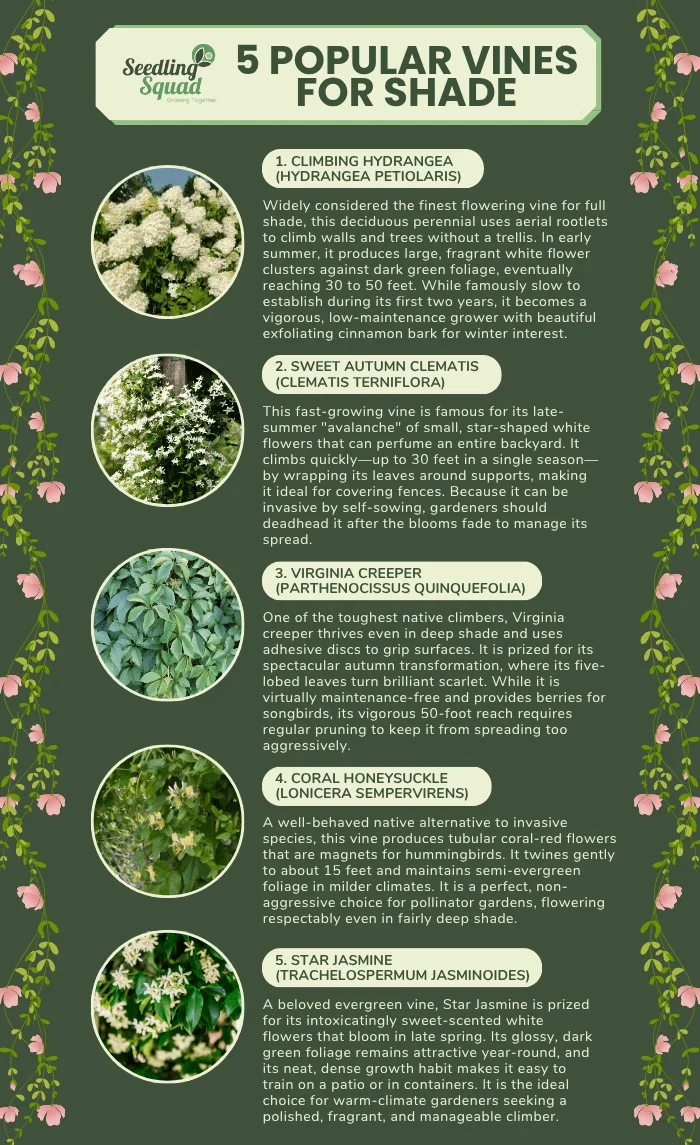
Climbing hydrangea is widely considered the finest flowering vine for full shade. Native to Asian woodlands, this deciduous perennial attaches to walls and trees with aerial rootlets, so it needs no separate trellis. In early summer it produces large, flat clusters of fragrant white flowers against heart-shaped, dark green foliage. Mature vines reach a height of 30 to 50 feet. It is famously slow during its first two years while building a strong root system, but once established it becomes a vigorous grower that rewards patience for decades. The exfoliating cinnamon bark adds winter texture. It thrives in rich, moist soil amended with compost and appreciates a thick layer of mulch to keep roots cool. This plant is ideal for patient gardeners with large, shady walls who want a low-maintenance climber that looks stunning in every season.
Soil: Rich, moist, and mulched.
Water: Regular water (especially when young).
Light: Partial to full shade.
Humidity: Likes moist air.
Fertilizer: Balanced food in early spring.
Temperature: Cold-hardy; needs shade in heat.
USDA Zones: 4–9.
2. Sweet Autumn Clematis (Clematis terniflora)
Sweet autumn clematis is a fast-growing perennial vine that erupts with an avalanche of small, star-shaped white flowers in late summer, releasing a sweet scent strong enough to perfume an entire backyard. It climbs by wrapping leaf stalks around thin supports, reaching 20 to 30 feet in a single growing season—one of the fastest ways to cover a bare fence or trellis. After bloom, silky seed heads provide winter interest. This clematis can become invasive by self-sowing from seed, so deadheading before seeds set is an important gardening tip. The glossy green foliage stays attractive all season. It blooms well in part shade with just a few hours of morning sunlight. It is deal for gardeners who want fast, fragrant coverage with minimal fuss.
Soil: Fertile and well-drained. Mulch to keep roots cool.
Water: Deeply 1–2 times a week. Keep soil moist.
Light: Partial shade; needs some morning sun.
Humidity: Average air is fine.
Fertilizer: Balanced food in spring and after first flowers.
Temperature: Handles heat and cold once settled.
USDA Zones: 5–9.
3. Virginia Creeper (Parthenocissus quinquefolia)
Virginia creeper is one of the toughest vines native to eastern North America, thriving in full sun, partial shade, or deep full shade. This fast-growing climber uses adhesive discs to grip surfaces, covering a large wall or fence in two to three seasons and reaching 30 to 50 feet. The five-lobed leaves turn beautiful red and scarlet in autumn, and clusters of blue-black berries in the fall attract songbirds, though the berries are not edible for humans. It is a vigorous grower that can spread aggressively, so regular pruning during the growing season is essential. Despite its enthusiastic habit, it is resistant to most pests, virtually maintenance-free, and provides outstanding seasonal interest. This plant is recommended for low-maintenance gardeners and wildlife enthusiasts who want fast, reliable coverage.
Soil: Any type; not picky.
Water: Regular when young; drought-tolerant later.
Light: Full sun to full shade.
Humidity: Handles any level.
Fertilizer: Rarely needed; use compost in spring.
Temperature: Very cold and heat-tolerant.
USDA Zones: 3–9.
4. Coral Honeysuckle (Lonicera sempervirens)
Coral honeysuckle is a well-behaved native plant vine that produces clusters of tubular, coral-red flowers from late spring through summer. These blooms attract hummingbirds and butterflies in abundance, and small red berries in the fall feed songbirds—a true pollinator powerhouse. Unlike invasive Japanese honeysuckle, this species stays manageable, twining gently to a height of 10 to 15 feet on an arbor, fence, or trellis. The blue-green foliage is semi-evergreen in milder climates, providing year-round screening. It has a light, pleasant fragrance and blooms best with a few hours of filtered sunlight, though it still flowers respectably even in fairly deep shade. It grows well in moist soil but adapts to clay, sand, or loam. This is perfect for native plant enthusiasts and pollinator gardeners who want a shade-tolerant flowering vine that never becomes a nuisance.
Soil: Moist and well-drained. Adaptable to any type.
Water: Regular when young; drought-tolerant later.
Light: Partial shade; filtered sun helps blooms.
Humidity: Average to high air moisture.
Fertilizer: Balanced food in spring. Don't overfeed.
Temperature: Handles heat and moderate cold.
USDA Zones: 4–9.
5. American Wisteria (Wisteria frutescens)
American wisteria is the well-mannered native alternative to the notoriously invasive Asian wisteria species. In late spring it produces pendulous clusters of purple or lavender flowers, typically 6 to 12 inches long, that drape like chandeliers from a sturdy arbor or pergola. This vigorous grower reaches 25 to 30 feet with thick, woody stems that twine tightly, so a steel arbor or reinforced trellis is essential. Because it evolved in the understory of deciduous forests in eastern North America, it blooms well in partial shade where Asian species often refuse to flower. The compound, lush green foliage provides a beautiful backdrop for the cascading flower clusters. Avoid high-nitrogen fertilizer, which encourages foliage over flowers. This plant is best for experienced gardeners willing to invest in sturdy support and consistent pruning for decades of spectacular, fragrant bloom in a shady backyard.
Soil: Well-drained and average. Avoid too much nitrogen.
Water: Regular when young; handles some drought later.
Light: 4–6 hours of sun. More shade means fewer flowers.
Humidity: Handles any level.
Fertilizer: Low-nitrogen/high-phosphorus in spring.
Temperature: Heat-tolerant and cold-hardy.
USDA Zones: 5–9.
6. Trumpet Vine (Campsis radicans)
Trumpet vine is a fast-growing deciduous climber native to eastern North America that produces large, trumpet-shaped blooms in clusters of orange, beautiful red, and yellow flowers from midsummer through fall. The vivid blooms practically glow against the dark green, pinnate foliage. It is one of the top plants for attracting hummingbirds and butterflies. This vine is a fast grower that can add 6 feet of new growth per season, climbing by aerial rootlets to reach 30 to 40 feet. It tolerates partial shade well, especially in hot climates where afternoon shade prevents leaf scorch. The biggest caveat is its aggressive nature—it spreads by underground runners and self-seeds from bean-like pods, so commit to pulling suckers regularly. It blooms on new wood, so even after winter dieback it regrows and flowers. This plant is best for gardeners with large spaces who want abundant, dramatic color on a sturdy fence or trellis.
Soil: Highly adaptable; any soil type.
Water: Regular when young; very drought-tolerant later.
Light: Full sun to partial shade. Sun helps blooms.
Humidity: Handles dry or humid air.
Fertilizer: Rarely needed. Too much reduces flowers.
Temperature: Very heat and cold-tolerant.
USDA Zones: 4–9.
7. Star Jasmine (Trachelospermum jasminoides)
Star jasmine is a beloved evergreen vine that produces masses of pinwheel-shaped white flowers with an intoxicating sweet scent in late spring. The fragrant flowers can fill an entire patio on a warm evening, making it perfect near seating areas, along a fence, or over an arbor. The glossy, dark green foliage stays attractive year-round. Star jasmine twines around supports and reaches a height of 15 to 20 feet. It grows well in partial shade and prefers protection from intense afternoon sunlight in hot climates. Its neat, dense habit makes it easy to train, and it is one of the best choices for containers on a shady patio or balcony where it provides year-round lush greenery. It is ideal for warm-climate gardeners who want fragrant flowers, polished foliage, and a well-mannered vine that never overwhelms its space.
Soil: Well-drained and compost-rich. Slightly acidic.
Water: Regular when young; fairly drought-resistant later.
Light: Partial shade to full sun. Needs afternoon shade in heat.
Humidity: Likes moderate humidity.
Fertilizer: Balanced food in early spring.
Temperature: Warm climates; protect below 10°F.
USDA Zones: 8–11.
8. Black-Eyed Susan Vine (Thunbergia alata)
Black-eyed Susan vine is one of the most popular annual vines for shade, delivering cheerful yellow flowers with a dark center that bloom continuously from late spring until first frost. This fast grower reaches 6 to 8 feet in a single growing season, growing quickly from seed, and is an excellent choice for containers, small trellises, and hanging baskets. Newer cultivars expand the palette to orange, cream, and deep red varieties. The heart-shaped leaves are a fresh medium green, and the vine twines gracefully to create a full, lush display. As an annual vine, it gives you flexibility to experiment each year or fill gaps while slower perennial vines establish. It blooms well in part shade with as little as four hours of sunlight, and its warm yellow flowers brighten even the dimmest shady corners of any yard. This plant is perfect for beginner gardeners and container gardeners wanting instant color through the growing season.
Soil: Rich, well-drained, and compost-rich.
Water: Keep moist. Water daily in pots during heat.
Light: Partial shade to full sun; needs 4+ hours.
Humidity: Likes moderate humidity; mist if dry.
Fertilizer: Liquid food every two weeks in summer.
Temperature: Warm-season; dies at first frost.
USDA Zones: Annual in all; perennial in 10–11.
9. Variegated Kiwi Vine (Actinidia kolomikta)
Variegated kiwi vine is one of the most striking foliage climbers for a shady garden. Its heart-shaped leaves emerge green and develop bold splashes of pink and white as the growing season progresses, giving the vine a painted, artistic quality. Male plants show the most dramatic variegation, and the effect intensifies with maturity. In a shady garden where foliage matters more than flowers, this vine is an absolute standout that can make even the dimmest corner feel brighter and more alive. It reaches a height of 15 to 20 feet, twining around a trellis or arbor. Female plants may produce small, edible fruits if a male pollinator is nearby. A few hours of morning sunlight keeps the variegation vibrant. It is recommended for collectors of unusual plants and gardeners who want vivid color from foliage rather than bloom alone.
Soil: Fertile, well-drained, and organic.
Water: Regular; keep soil consistently moist.
Light: Partial shade; morning sun helps color.
Humidity: Likes moderate humidity.
Fertilizer: Balanced food in early spring. Don't overfeed.
Temperature: Very cold-hardy; protect new spring growth.
USDA Zones: 3–8.
10. Dutchman’s Pipe (Aristolochia macrophylla)
Dutchman’s pipe is a bold native plant vine from eastern North America that brings an almost tropical lushness to temperate shade gardens. It is named for its curved, pipe-shaped flowers with a purple-brown interior. The real showpiece is the enormous heart-shaped foliage—leaves grow up to 12 inches across, overlapping like shingles to create one of the densest privacy screens of any vine. This vigorous grower twines to a height of 20 to 30 feet, thriving in partial shade to full shade where it produces a canopy so thick it feels like a green room on a porch or pergola. It is also a critical host plant for the pipevine swallowtail butterfly, making it valuable for any pollinator or butterfly garden. It grows well in rich, moist soil and does not tolerate drought, so consistent watering and mulching are essential gardening tips. It is recommended for native plant enthusiasts, butterfly gardeners, and anyone needing a sturdy, lush screen in deep shade.
Soil: Adaptable; any well-drained soil.
Water: Regular when young; moderately drought-tolerant later.
Light: Partial shade to full sun; needs sun for fruit.
Humidity: Handles average to high air moisture.
Fertilizer: Light, balanced food in spring.
Temperature: Handles cold winters and warm summers.
USDA Zones: 4–9.
Frequently Asked Questions:
Q: How do I keep invasive vines under control?
The key to managing vigorous or invasive vines is consistent pruning and monitoring. Remove seed pods before they open to prevent self-sowing, pull up suckers and runners as they appear, and prune the vine hard at least once per year. Choosing non-invasive native plant species like coral honeysuckle or American wisteria instead of their invasive counterparts is the single best step you can take.
Q: Can I grow shade vines in containers?
Absolutely. Star jasmine and black-eyed Susan vine are among the best choices for containers. Use a large pot with drainage holes, fill it with a quality potting mix, and provide a small trellis or obelisk for the vine to climb. Container vines need more frequent watering and fertilizing than those planted in the ground.
Q: Which shade vines attract hummingbirds and butterflies?
Coral honeysuckle and trumpet vine are the top picks for attracting hummingbirds with their tubular flowers. Dutchman’s pipe is a host plant for the pipevine swallowtail butterfly, and sweet autumn clematis attracts a wide variety of pollinators, including butterflies, when it blooms in late summer.
Related posts
Here are some articles you might be interested in.

.webp)
.webp)
.webp)
.webp)
.webp)
.webp)
.webp)
.webp)
.webp)
.webp)