The Best Outdoor Foliage Plants For A Shady Container Garden Design
Published on
May 18, 2026
Author
Sarah Wilson
Sarah Wilson started her gardening journey during the pandemic and had fallen in love with it ever since. Eager to connect with fellow garden enthusiasts, she wants to share the knowledge she's gained over the past three years.
Bee Garden Q&A
What flowers attract the most bees to a garden?
Bees are generally drawn to flowers that are blue, purple, yellow, or white, and that offer easy access to nectar and pollen. Lavender, bee balm, sunflower, and coneflower are some of the most reliable plants that attract bees to a home garden.
Do I need to avoid pesticides in a bee-friendly garden?
Yes, whenever possible. Insecticide and pesticide products can harm adult bees and their larva, even in small amounts. Choosing natural pest control methods helps keep your garden safe for visiting bees.
Can a small home garden still support pollinators?
Absolutely. Even a few containers of zinnias, salvia, or crocus on a balcony can offer pollen and nectar for local bees. Bees will travel between small garden spaces, so every bit of habitat helps.
Do bees need more than just flowers?
Yes. Bees also need nesting sites and water. Ground-nesting bees need patches of bare soil, while a shallow bee bath gives bees a safe spot to drink, especially in hot weather.
Will planting a pollinator garden really help save the bees?
It genuinely can. As natural habitat shrinks, home gardens have become an important food source and shelter for bees, including many native bee species. A well-planned bee garden supports pollination for your own flowers and vegetables while helping the wider bee population.
What is the best USDA zone for growing a bee garden?
There is no single best zone. Most of the plants above grow well across USDA zones 4 through 9, and gardeners in colder or warmer zones can simply choose varieties suited to their climate, or grow warm-season bees favorites like sunflower and zinnia as annuals.
Hypoallergenic Plants Q&A
Do houseplants cause allergies?
Yes, certain indoor plants can trigger a plant allergy through loose pollen, scented flowers, sap, dust, or damp soil. Allergies and houseplants are highly individual: one person may sneeze near peace lilies while another has no response. Overwatering lets mold produce a spore that may become airborne. If symptoms begin after adding plants in your home, isolate each pot, clean the area, and discuss persistent allergy symptoms with a qualified clinician.
Which plants to avoid?
Plants to avoid include strongly fragrant flowers, visibly dusty specimens, and wind-pollinated garden plants brought inside while shedding. Male palms can release pollen if they flower, and wet potting mix can make allergies worse. The best and worst choices depend on the person, so remove any plant that appears to cause pollen allergy symptoms or contact irritation.
Can indoor plants purify air?
Claims about indoor plants that purify come largely from controlled chambers. Although some air-purifying plants can take up chemicals, ordinary air purifying plants are not fast enough to replace ventilation or air cleaners in a real room. Plants can improve air quality mainly by supporting comfort and encouraging care for the space; they should not be presented as houseplants for clean air that reliably remove formaldehyde. To improve indoor air quality, control sources, ventilate safely, and use proven filtration.
How does the ogren scale work?
The Ogren Plant Allergy Scale system, also called OPALS, rates a plant's potential allergenicity from 1 to 10. It considers pollen, fragrance, and contact reactions, but the likelihood a plant will cause a reaction still depends on the individual and exposure. A high score does not prove a particular plant will cause pollen allergy, and a low score is not a medical guarantee.
Can plants help you breathe?
Allergy-friendly plants may make an indoor space calmer, but they do not treat disease or guarantee allergy relief. For people with allergies, clean leaves, dry saucers, fresh potting mix, and steady air circulation matter more than labels such as hypoallergenic plants. These indoor plants that are allergy-safe can help you breathe easier only by limiting likely triggers; they cannot help you breathe during an asthma attack.
Planting Calendar Q&A
Is an almanac planting calendar exact?
No. It is a useful regional estimate built from historical conditions. Confirm its suggested planting date with your local forecast, soil condition, and microclimate.
When is the best time to plant?
The best time to plant is when the crop's temperature needs match your frost window and the soil is workable. Cool crops can begin earlier; tender warm-season crops wait until frost danger has passed.
Can every vegetable be started indoors?
No. Tomatoes and peppers handle indoor seed starting well, while carrots are usually sown directly in the ground. Follow crop-specific seed packets and avoid disturbing sensitive roots.
What if a late frost is forecast?
Delay transplanting tender crops, move containers inside, or cover established plants overnight. Remove covers after temperatures rise so light and airflow return.
How often should I revise my calendar?
Review it at the start of each growing season and add notes after major sowings and harvests. Records reveal which dates, varieties, and methods work best in your garden.
A shaded patio or a dimly lit porch doesn’t have to be a barren, colorless space. While sun-loving flowers might struggle to thrive in the shadows, shade offers a unique opportunity to play with texture, shape, and vibrant leaf colors. In fact, some of the most striking and low-maintenance container gardens rely entirely on the enduring beauty of foliage rather than fleeting blooms.
Container gardening in the shade is all about shifting your focus. From striking silver patterns and deep, moody purples to cascading chartreuse vines, the right combination of leaves can instantly brighten up the darkest corners of your outdoor space. Whether you have a covered balcony, a north-facing patio, or a seating area nestled under the canopy of mature trees, creating a lush, dynamic display is easier than you might think. Let's explore the best outdoor foliage plants to elevate your shady container garden design and transform your shadowed retreat into a leafy, vibrant oasis.
10 Outstanding Outdoor Foliage Plant Varieties
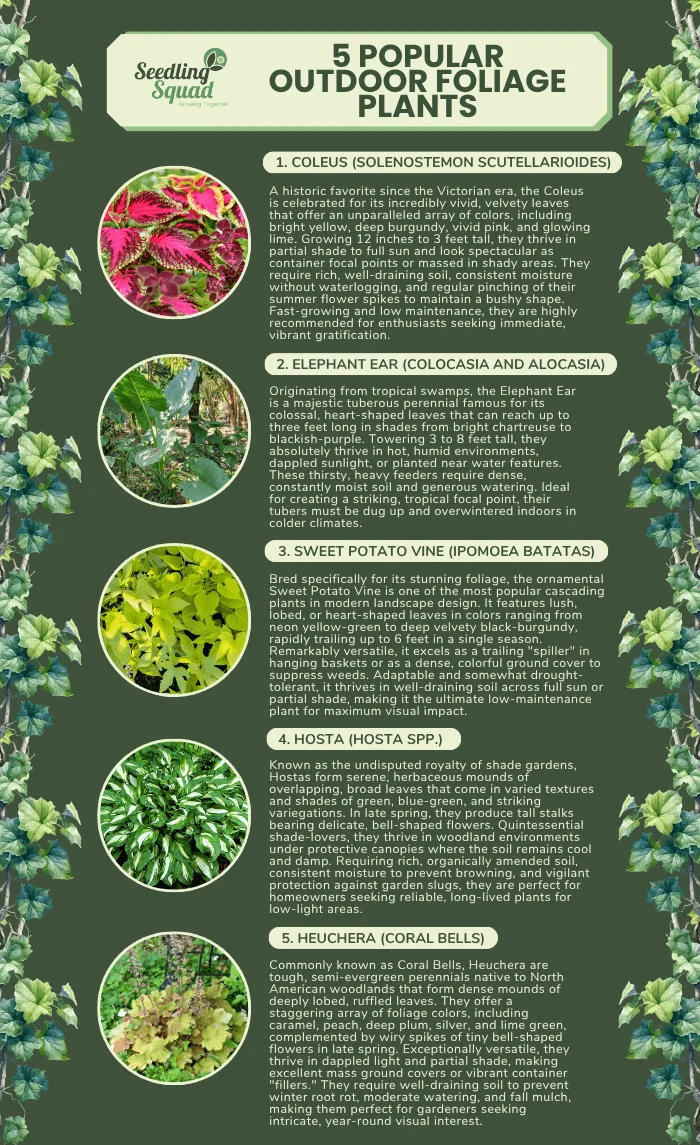
1. Coleus (Solenostemon scutellarioides)
The coleus is a historic favorite, celebrated since the Victorian era for its incredibly vivid leaves, originally hailing from Southeast Asia before being brought to Europe and heavily hybridized into an absolute cornerstone of summer bedding plants and container layouts. Physically, this standout foliage plant boasts velvety, slightly serrated oval foliage that offers an unparalleled array of color, featuring bright yellow, deep velvety burgundy, vivid pinkish hues, and glowing lime, typically growing anywhere from 12 inches to 3 feet tall, and occasionally producing small blue flowers or purple flower spikes in late summer, though it is primarily grown for its leaves. They thrive beautifully in partial shade and many newer cultivars grow best in full sun, looking spectacular as a focal point in a large pot or massed together in shady areas. To care for them, ensure they are planted in rich, well-draining soil, water them regularly to keep the soil consistently moist but not waterlogged, provide moderate to high humidity, and pinch off the delicate flower spikes in late spring to early summer to keep the plant bushy; while tender and often grown as an annual, they can easily be brought indoors for the winter as an indoor plant. We highly recommend the coleus to the container gardening enthusiast and the impatient gardener, as they grow fast and require very low maintenance, offering immediate gratification.
Soil: Rich, well-draining potting mix or amended garden soil
Water: High; keep consistently moist
Light: Partial shade to full sun (depending on variety)
Humidity: Moderate to high
Fertilizer: Balanced liquid fertilizer every two weeks
Temperature: 60°F to 85°F (Frost sensitive)
USDA Zone: 10-11 (Grown as an annual elsewhere)
2. Elephant Ear (Colocasia and Alocasia)
Originating from the tropical swamps and rainforests of Asia and Central America, the elephant ear is a tuberous perennial that has been cultivated for centuries, transitioning from an agricultural food crop into a majestic ornamental specimen celebrated for its architectural presence in the landscape. This plant is famous for its colossal, heart-shaped leaves that can reach up to three feet in length, coming in various shades of green, from a bright chartreuse to deep, almost blackish-purple and dark green leaves that can tower 3 to 8 feet tall over smaller garden plants. Elephant ears absolutely thrive in hot, humid environments and are perfect for a shady garden, areas with dappled sunlight, or planted near water features and in massive, sturdy planters that can accommodate their vigorous growth. These are very thirsty, hungry plants that require dense, moisture-retentive soil that never fully dries out, generous watering (some can even grow in standing water), partial shade to protect their massive leaves from scorching rays, and in colder climates, their tubers must be dug up in the fall and stored in a box indoors for the winter. This plant is highly recommended for the bold, dramatic gardener looking to create a striking focal point or a tropical oasis, especially those who have large outdoor spaces to fill and don't mind heavy watering routines.
Soil: Rich, loamy, moisture-retentive
Water: Very high; keep constantly wet
Light: Partial shade to light shade
Humidity: Very high
Fertilizer: Heavy feeder; apply slow-release fertilizer monthly
Temperature: 65°F to 90°F
USDA Zone: 8-11
3. Persian Shield (Strobilanthes dyerianus)
Native to the warm, humid regions of Myanmar, the persian shield is an exotic, shrub-like plant that was introduced to Western horticulture in the late 19th century and has remained a beloved specimen for its unique foliage that looks almost artificial. The persian shield features striking foliage consisting of lance-shaped leaves that boast an iridescent, silvery-white foliage overlay atop vibrant purple and magenta tones, with deep green veining, growing as a bushy shrub typically reaching 3 to 4 feet in height, and occasionally producing tiny, pale purple flowers in ideal conditions. This plant thrives in environments that mimic its tropical home—hot, humid, and sheltered—excelling in a shady garden, areas receiving dappled morning sunlight, or when utilized in container gardening alongside contrasting silver foliage plants. Persian shield requires consistently moist, rich, well-draining soil, regular watering to prevent wilting as it is not drought tolerant, light shade or partial shade to prevent the harsh direct sun from bleaching the spectacular leaf color, and can easily be overwintered indoors as a houseplant if kept away from cold drafts. We recommend the persian shield to gardeners who want to add a jewel-toned pop of color to shady spots, and it is ideal for the meticulous container gardener who loves crafting highly textured, exotic-looking arrangements.
Soil: Rich, organic, well-draining
Water: Moderate to high; keep evenly moist
Light: Partial shade to light shade
Humidity: High
Fertilizer: Half-strength liquid fertilizer every two weeks
Temperature: 60°F to 80°F
USDA Zone: 9-11
4. Sweet Potato Vine (Ipomoea batatas)
Sharing the exact same botanical lineage as the edible sweet potato, ornamental sweet potato vines have been aggressively bred solely for their stunning foliage rather than their tubers, quickly becoming one of the most popular cascading plants utilized in modern landscape design. This trailing plant features lush, deeply lobed or heart-shaped leaves with an incredibly diverse leaf color ranging from a glowing, neon bright yellow-green to deep, velvety black-burgundy, rarely blooming but occasionally producing small, pale pinkish tubular flowers as it rapidly trails up to 6 feet or more in a single season. The sweet potato vine is remarkably versatile, thriving as a trailing "spiller" in hanging baskets and window boxes where it elegantly cascades over the sides, or acting as a dense, colorful ground cover in open garden beds to suppress weeds. It is highly adaptable to various soil types provided they are well-draining, is somewhat drought tolerant once established but looks best with regular deep watering, performs exceptionally well in full sun or partial shade, and can be aggressively pruned if it begins to overtake your garden design. This is the ultimate plant for the beginner or the "set it and forget it" gardener, highly recommended for anyone looking to quickly fill large containers, hanging baskets, or blank spaces with minimal effort and maximum visual impact.
Soil: Well-draining, moderately fertile
Water: Moderate; allow top inch to dry between waterings
Light: Full sun to partial shade
Humidity: Tolerates a wide range
Fertilizer: Balanced fertilizer monthly
Temperature: 65°F to 90°F
USDA Zone: 9-11
5. Hosta (Hosta spp.)
Hostas are the undisputed royalty of shade gardens, originating from the forest floors of East Asia before being brought to Europe in the 1700s, leading to thousands of registered cultivars that make them one of the most widely planted perennials for shade across the world. They form herbaceous mounds of overlapping, broad leaves that can be corrugated or smooth, coming in nearly every shape from narrow lances to massive round bowls, showcasing varying shades of green, blue-greens, and beautifully variegated leaves, while sending up tall stalks bearing delicate, bell-shaped flowers in shades of white or lavender in late spring to early summer. These are quintessential shade-loving plants that thrive in the sheltered environment of a woodland garden, underneath the protective canopy of trees and shrubs, where the soil remains cool and damp. Hostas require rich, loamy soil heavily amended with organic matter, consistent moisture especially during the hottest parts of the year to prevent their margins from browning, strongly prefer shade to prevent scorching, and require vigilant protection against garden slugs which are their primary pest. We recommend hostas to the perennial collector and the homeowner looking for reliable, long-lived, low maintenance plants to grow in difficult, low light areas of their property to create a serene environment.
Soil: Rich, organic, well-draining but moisture-retentive
Water: Moderate to high; needs consistent moisture
Light: Partial shade to full shade
Humidity: Moderate
Fertilizer: Slow-release granular fertilizer in early spring
Commonly known as Coral Bells, Heuchera are tough, evergreen or semi-evergreen perennials native to North American woodlands that have been transformed by intense breeding programs into some of the most highly sought-after foliage plants in modern horticulture. Heuchera form dense mounds of deeply lobed, often ruffled, heart-shaped leaves that offer a staggering array of color, featuring striking foliage in shades of caramel, peach, deep plum, silver, and lime green, while producing tall, wiry flower spikes adorned with tiny, delicate pinkish or red bell-shaped flowers in late spring. These incredibly versatile plants for shade thrive in dappled light, partial shade, and woodland settings, making them fantastic when planted en masse as a ground cover or utilized as a vibrant "filler" in container gardening. These perennials require well-draining soil to prevent winter root rot, moderate watering that allows the top layer to dry out slightly, light shade to protect their colorful foliage from harsh afternoon sun, and a layer of mulch in late fall to protect their shallow root systems from frost heaving. Heuchera is perfect for the detail-oriented gardener who loves mixing and matching different plants to create intricate color palettes, and is an excellent choice for those seeking year-round visual interest.
Soil: Humus-rich, excellently draining
Water: Moderate; do not overwater
Light: Partial shade to light shade
Humidity: Moderate
Fertilizer: Light application of compost in early spring
Temperature: Hardy, tolerates freezing well
USDA Zone: 4-9
7. Dusty Miller (Jacobaea maritima)
Native to the harsh, rocky, and sun-baked coastal regions of the Mediterranean, Dusty Miller has evolved incredibly specific adaptations to survive in harsh climates, making it a staple in formal garden design due to its ruggedness and stark coloration. This plant is grown entirely for its magnificent silver foliage, featuring leaves that are deeply lobed, fuzzy, and coated in fine, silvery-white hairs that make the plant look almost artificial as it grows in small mounds about 12 to 18 inches tall, occasionally producing small mustard-yellow flowers that most gardeners shear off to maintain the standout foliage. Dusty Miller thrives where many other plants fail, growing best in full sun and thriving in hot, dry, exposed outdoor spaces, making it an exceptional edging plant for bright flower beds and a fantastic contrasting element in mixed containers. This incredibly drought tolerant plant requires very well-draining, sandy or rocky soil, minimal watering to prevent root rot, and absolutely demands full sun to maintain its tight, compact growth habit and bright silver coloration, as it will become leggy in low light. This is highly recommended for the xeriscape gardener, the beginner, or anyone dealing with hot, baked soil where water conservation is a priority and low maintenance is desired.
Soil: Sandy, well-draining, poor to average fertility
Water: Low; highly drought tolerant
Light: Full sun
Humidity: Prefers low humidity
Fertilizer: Rarely needed; very light feeding if at all
Temperature: Tolerates high heat; frost tolerant
USDA Zone: 8-10 (Often grown as an annual)
8. Caladium (Caladium bicolor)
Hailing from the warm, heavily shaded riverbanks of the Amazon basin in South America, Caladiums are tropical perennials grown from tuberous roots that have been cherished since the late 1800s for their ability to inject brilliant, almost neon colors into the darkest parts of the landscape. Caladiums feature large, paper-thin, arrow or heart-shaped leaves that provide unique foliage displaying an intricate mix of white, pinkish, bright red, and green veins and margins, growing 18 to 24 inches tall and rarely blooming outside their native habitat, focusing all their energy on their colorful foliage. These are true shade-loving plants that thrive in warm, humid, shady areas where the ambient light illuminates their translucent leaves, making them perfect for brightening up a dark shady garden, planting beneath dense trees and shrubs, or starring in a shaded patio container. Caladiums require consistently moist, rich, well-draining soil, full shade or highly filtered light to prevent their delicate leaves from burning in direct sun, warm temperatures with high humidity, and in cold climates, the tubers must be dug up before the first frost and stored in a cardboard box indoors for the winter. We recommend Caladiums to the shade gardener looking to break up the monotony of green and add a massive splash of color to shady areas without relying on flowering plants.
Soil: Rich, slightly acidic, well-draining
Water: High; keep evenly moist
Light: Full shade to partial shade
Humidity: High
Fertilizer: Liquid fertilizer every two weeks
Temperature: 70°F to 90°F (Cannot tolerate cold)
USDA Zone: 9-11
9. Japanese Painted Fern (Athyrium niponicum)
Native to the woodland regions of East Asia, the Japanese Painted Fern is one of the most elegant and refined plants for shade available to gardeners, earning the title of Perennial Plant of the Year in 2004 as a testament to its widespread appeal and hardy nature. Unlike traditional green ferns, this variety features incredible, unique foliage with delicate, lacy, triangular fronds that are a striking blend of silvery-white foliage, soft gray-green, and deep burgundy or purplish midribs, growing in a slow, creeping mound that reaches 12 to 18 inches in height. This fern absolutely belongs in a serene woodland garden, thriving in light shade to full shade and loving the cool, damp environment found near streams or tucked into the shaded crevices of a rock wall to add ethereal beauty to any shady garden design. The Japanese Painted Fern requires soil that is rich in organic matter and very well-draining, consistent moisture so the soil never dries out completely, low light conditions to prevent frond crisping, and requires practically zero pruning or low maintenance throughout the year as it quietly dies back in late fall and returns in early spring. This plant is highly recommended for the shade enthusiast and the refinement-focused gardener who appreciates subtle, intricate leaf color over bold, loud blooms.
Fertilizer: Light application of compost in spring
Temperature: Extremely cold hardy
USDA Zone: 3-8
10. Canna Lily (Canna spp.)
Native to the tropical and subtropical regions of the Americas, Canna Lilies are robust, rhizomatous perennials that produce gorgeous flowers, but modern landscape designers frequently utilize specific cultivars solely for their massive, architectural foliage which adds an immediate towering tropical presence. Cannas are towering giants, growing between 4 to 8 feet tall with huge, paddle-shaped, oval foliage that unfurls tightly from thick stems in spectacular leaf colors ranging from solid bright green to deep, metallic burgundy and boldly variegated leaves, while also producing clusters of vibrant flowers in mid-summer. These are aggressive, sun-loving plants that thrive in the heat, growing best in full sun and acting highly effective when used as a living privacy screen, a dramatic back border, or as the towering center "thriller" in massive container gardening setups. Cannas are very heavy feeders and drinkers that require rich, fertile soil heavily amended with compost, abundant frequent watering during the heat of the summer, full sun to produce their best leaf color, and in zones cooler than USDA 8, the rhizomes must be dug up after the first frost and stored indoors for the winter. We recommend Canna Lilies to the gardener who wants to make a massive, structural statement and is ideal for those with large outdoor spaces who want to create a fast-growing, tropical barrier or a high-impact focal point.
Soil: Rich, fertile, moisture-retentive
Water: High; requires frequent, deep watering
Light: Full sun
Humidity: Moderate to high
Fertilizer: Heavy feeder; apply balanced fertilizer regularly
Temperature: 65°F to 90°F
USDA Zone: 8-11
Bee Balm Plant Care: How to Grow and Care for Bee Balm in Your Garden
Q: Why are my shade-loving plants losing their variegated leaves?
A: If a plant with unique foliage or variegated leaves (like a Hosta) is planted in deep, absolute shade, it may revert to producing solid dark green leaves to maximize its chlorophyll production. Moving it to an area with light shade or dappled morning light often restores the vibrant array of color.
Q: What does it mean when a plant is "drought tolerant"?
A: Drought tolerant plants, like Dusty Miller with its thick silver foliage, have adapted to survive long periods with very little water. However, "tolerant" does not mean "immune." They still grow best with occasional deep watering, especially when planted in containers that tend to dry out rapidly.
Q: Can I mix these outdoor foliage plants into my existing herb garden?
A: Absolutely! Many gardeners slip a colorful container of Coleus or Sweet Potato Vine right next to their raised beds or herb garden to add a splash of non-edible color to the functional space. Just ensure the light requirements match the surrounding plants.
Related posts
Here are some articles you might be interested in.


.webp)
.webp)
.webp)
.webp)
.webp)

.webp)
.webp)
.webp)
.webp)
.webp)