Sarah Wilson started her gardening journey during the pandemic and had fallen in love with it ever since. Eager to connect with fellow garden enthusiasts, she wants to share the knowledge she's gained over the past three years.
Growing Grapevines Q&A
How long does it take for a grape plant to produce fruit?
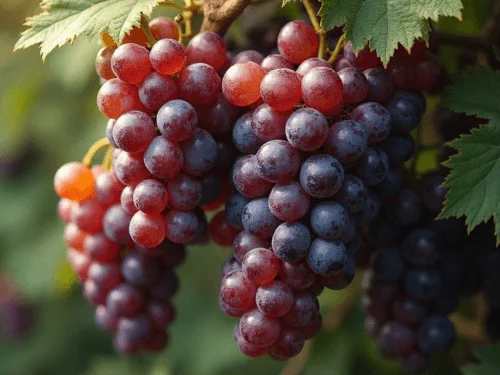
Most young vines need two to three years after planting before they set a full crop, though a few clusters may appear in year two. Patience pays off — established vines can keep producing for 40 years or more.
Do I need more than one vine to grow grapes?
No. Since most grape varieties are self-fertile, one plant is enough to produce fruit on its own. Planting a second variety nearby is optional and mainly helps with cross-pollination in a few less common types.
Can grape vines grow in containers?
Yes, though grape vines grow best planted directly in the ground, where the root system has room to spread. A large container works for a year or two, but expect to transplant once the vine outgrows the pot.
Why aren't my grapes ripening?
Grapes ripen slowly compared to many fruits, and cool weather, too much shade, or overcrowded canes can all delay the process. Give the vine full sun, thin the clusters, and be patient through the growing season.
What's the difference between table grapes and wine grapes?
Table grapes are bred for fresh eating, with thinner skins and fewer seeds, while wine grapes tend to have thicker skins, more seeds, and higher sugar content suited to fermentation.
Are grape vines toxic to pets?
Grapes and grape leaves are not toxic to people, but grapes and raisins are toxic to dogs and can cause kidney damage, so keep fallen fruit cleaned up if pets have access to the vineyard.
Bee Garden Q&A
What flowers attract the most bees to a garden?
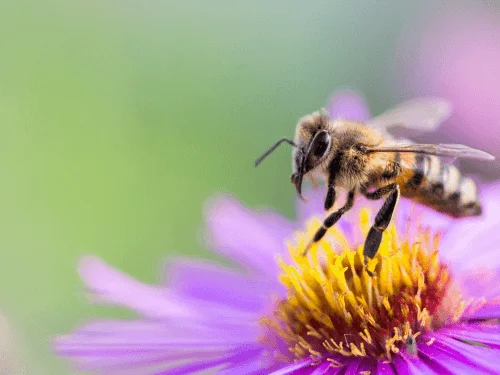
Bees are generally drawn to flowers that are blue, purple, yellow, or white, and that offer easy access to nectar and pollen. Lavender, bee balm, sunflower, and coneflower are some of the most reliable plants that attract bees to a home garden.
Do I need to avoid pesticides in a bee-friendly garden?
Yes, whenever possible. Insecticide and pesticide products can harm adult bees and their larva, even in small amounts. Choosing natural pest control methods helps keep your garden safe for visiting bees.
Can a small home garden still support pollinators?
Absolutely. Even a few containers of zinnias, salvia, or crocus on a balcony can offer pollen and nectar for local bees. Bees will travel between small garden spaces, so every bit of habitat helps.
Do bees need more than just flowers?
Yes. Bees also need nesting sites and water. Ground-nesting bees need patches of bare soil, while a shallow bee bath gives bees a safe spot to drink, especially in hot weather.
Will planting a pollinator garden really help save the bees?
It genuinely can. As natural habitat shrinks, home gardens have become an important food source and shelter for bees, including many native bee species. A well-planned bee garden supports pollination for your own flowers and vegetables while helping the wider bee population.
What is the best USDA zone for growing a bee garden?
There is no single best zone. Most of the plants above grow well across USDA zones 4 through 9, and gardeners in colder or warmer zones can simply choose varieties suited to their climate, or grow warm-season bees favorites like sunflower and zinnia as annuals.
Hypoallergenic Plants Q&A
Do houseplants cause allergies?
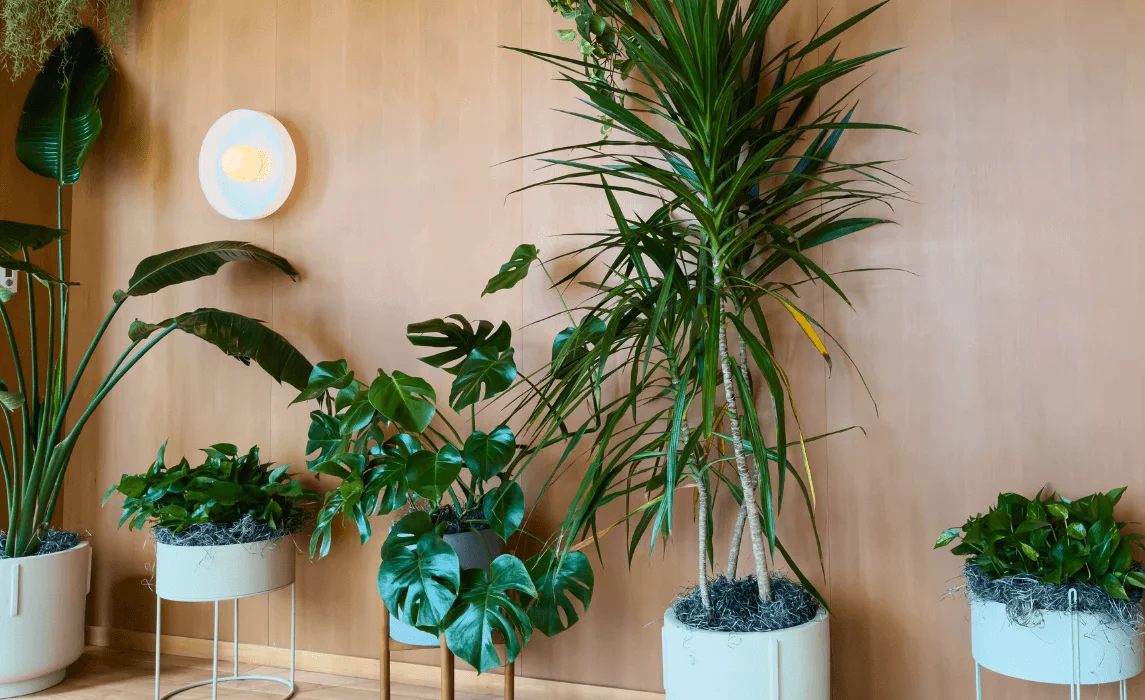
Yes, certain indoor plants can trigger a plant allergy through loose pollen, scented flowers, sap, dust, or damp soil. Allergies and houseplants are highly individual: one person may sneeze near peace lilies while another has no response. Overwatering lets mold produce a spore that may become airborne. If symptoms begin after adding plants in your home, isolate each pot, clean the area, and discuss persistent allergy symptoms with a qualified clinician.
Which plants to avoid?
Plants to avoid include strongly fragrant flowers, visibly dusty specimens, and wind-pollinated garden plants brought inside while shedding. Male palms can release pollen if they flower, and wet potting mix can make allergies worse. The best and worst choices depend on the person, so remove any plant that appears to cause pollen allergy symptoms or contact irritation.
Can indoor plants purify air?
Claims about indoor plants that purify come largely from controlled chambers. Although some air-purifying plants can take up chemicals, ordinary air purifying plants are not fast enough to replace ventilation or air cleaners in a real room. Plants can improve air quality mainly by supporting comfort and encouraging care for the space; they should not be presented as houseplants for clean air that reliably remove formaldehyde. To improve indoor air quality, control sources, ventilate safely, and use proven filtration.
How does the ogren scale work?
The Ogren Plant Allergy Scale system, also called OPALS, rates a plant's potential allergenicity from 1 to 10. It considers pollen, fragrance, and contact reactions, but the likelihood a plant will cause a reaction still depends on the individual and exposure. A high score does not prove a particular plant will cause pollen allergy, and a low score is not a medical guarantee.
Can plants help you breathe?
Allergy-friendly plants may make an indoor space calmer, but they do not treat disease or guarantee allergy relief. For people with allergies, clean leaves, dry saucers, fresh potting mix, and steady air circulation matter more than labels such as hypoallergenic plants. These indoor plants that are allergy-safe can help you breathe easier only by limiting likely triggers; they cannot help you breathe during an asthma attack.
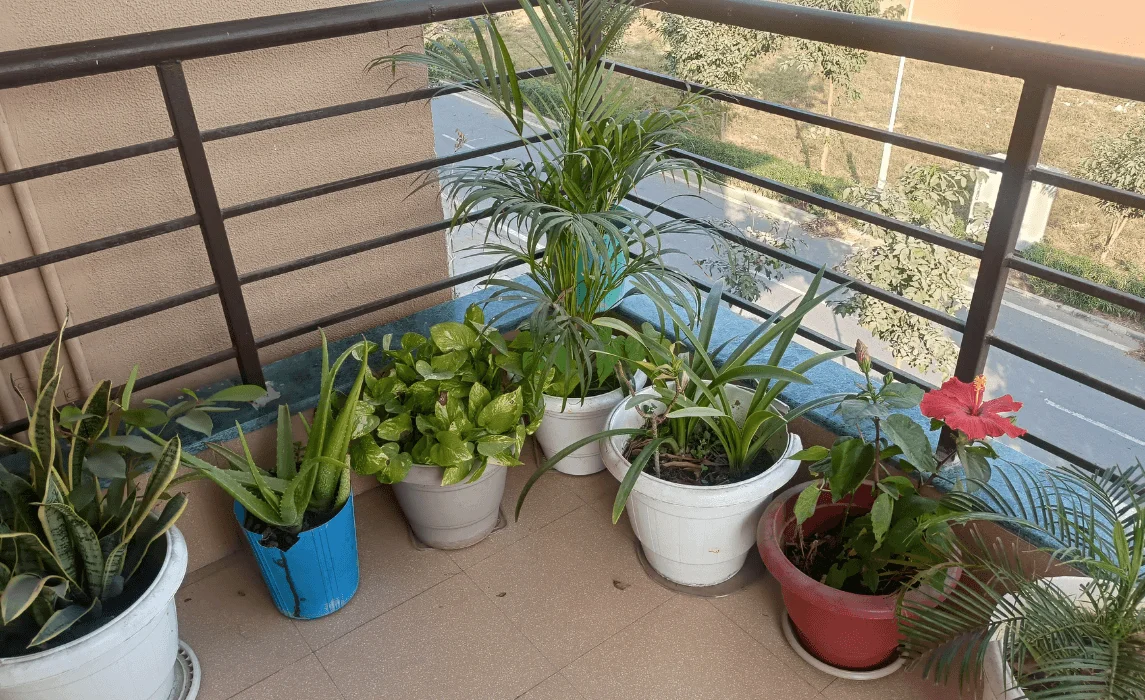
Have you always wanted to cultivate a green sanctuary but felt restricted by the lack of a traditional yard? You are not alone. Turning small spaces into simple, functional, and highly rewarding green areas is a dream shared by many city dwellers. If you are a beginner looking to start a garden, the most important tip is to understand that a balcony garden offers a magnificent opportunity to enjoy growing plants without needing acres of land.
Starting small and keeping things manageable is the golden rule. You do not need to fill your entire outdoor area with complex arrangements on day one. A successful balcony garden begins with simple, intentional choices that build your confidence. With the right guide to starting, you can start a balcony garden that provides peace, beauty, and even fresh food right outside your door. You will learn everything from understanding your specific environment to choosing the ideal containers, selecting the perfect foliage, and mastering daily watering habits. Let us embark on this exciting journey to transform your outdoor space into an oasis.
Assessing Your Balcony or Rooftop: A Foundational Tip
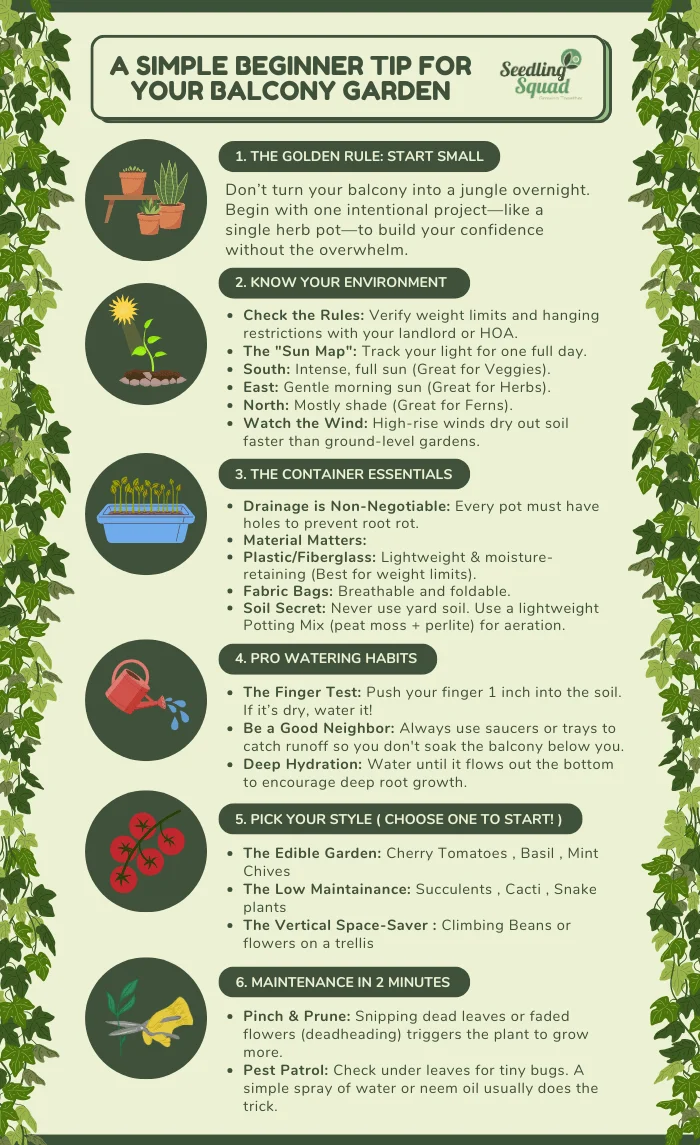
Before you purchase a single seed or pot, the very first step in planning your balcony garden is to intimately understand the physical space you have available. The conditions on your balcony will dictate every subsequent decision you make. If you live in an apartment building, you must first check with your landlord or homeowners association regarding any rules or restrictions. Some buildings have strict weight limits for a balcony or rooftop, while others may prohibit items hanging over the outer edge.
Once you know your restrictions, assess the physical layout. Whether you have an expansive terrace or a tiny Juliet balcony, mapping out the space on your balcony is essential. You need to ensure you leave enough room to comfortably move around, sit, and enjoy your new sanctuary. Because you are working with limited space, thinking vertically is critical. Utilizing walls, corners, and the balcony railing will help you maximize your growing area without creating clutter.
Another crucial factor is the microclimate of your specific area. High above the ground, wind can be a significant challenge, drying out the air and damaging fragile stems. Furthermore, sun reflecting from windows—either your own or those from neighboring buildings—can intensify the heat and light, creating a surprisingly hot environment. Understanding these unique factors will help you make informed decisions as you build your thriving balcony garden.
Sun Exposure: How Much Light Do Plants on Your Balcony Need?
The lifeblood of any plant growth is light. You must monitor the amount of sunlight your outdoor area receives to ensure your garden plants survive and thrive. The amount of sun varies dramatically depending on which direction your balcony faces and the surrounding architecture.
Spend a day tracking the sun exposure on your balcony. How much direct sunlight per day does the space receive? South-facing balconies typically get the most intense, full sun, which is ideal for a vegetable garden filled with fruiting crops. East-facing balconies get gentle morning sun and afternoon shade, while west-facing areas get hotter, late afternoon sun. North-facing balconies usually remain in partial shade for most of the day.
Knowing your light levels allows you to choose the right plants. Plants that require full sun need at least six to eight hours of direct sunlight. If your space is heavily shaded by trees or other buildings, do not despair. There are plenty of shade-tolerant options, including delicate ferns, certain herbs, and leafy greens, that will flourish in those conditions.
How to Water and Hydrate Your Garden Plants
One of the most common stumbling blocks for a beginner is watering. The rules for watering your plants in a container garden are very different from watering an in-ground bed. Because pots are exposed to the air on all sides, and because urban environments often experience higher winds, the potting soil in a balcony container will dry out much faster than natural earth.
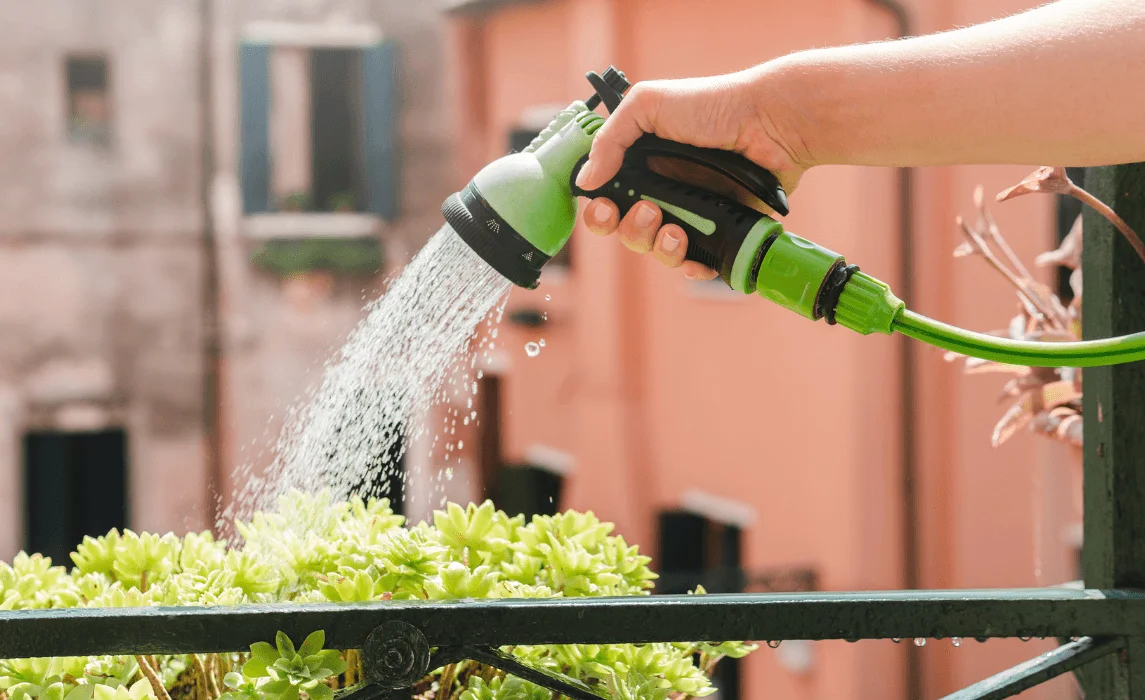
Developing proper watering habits is a vital tip. During the peak of the growing season, especially in the heat of summer, you may need to water your plants daily, or even twice a day. The best method is to use the "finger test." Push your finger an inch into the soil; if it feels dry, it is time to add water.
When you do water, water deeply and thoroughly at the base of the plant. You want to see excess water draining out from the holes in the bottom of your pot. This encourages the roots to grow deep down, creating a stronger, more resilient plant. However, you must be considerate of your neighbors below. Always place a saucer or use trays under your plants to catch the runoff, but be sure to empty them after a heavy soaking so your plants do not sit in standing water and develop root rot. For those with busy schedules, self-watering pots are an excellent investment, providing a consistent moisture level that is ideal for balcony conditions.
The Right Container and Planter for Every Balcony Garden
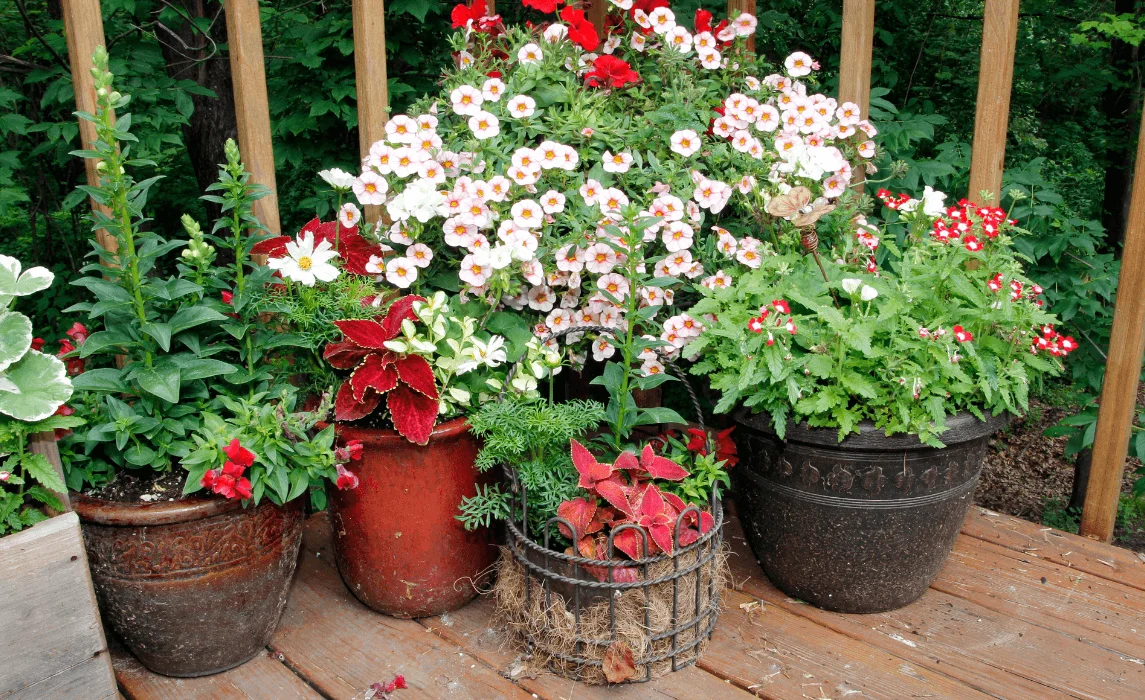
When you are gardening without access to the ground, the container becomes the entire world for your plants. Choosing the perfect planter is a balance of aesthetics, weight, and functionality. Whatever material you choose, the absolute, non-negotiable rule is that every single garden pots or planters must have adequate drainage holes.
Plastic and fiberglass pots are lightweight and excellent at retaining moisture, making them ideal for balcony environments with strict weight limits. Terracotta pots offer a classic look and are breathable, though they can be heavy and dry out quickly in the sun. Fabric grow bags have become incredibly popular because they are lightweight, breathable, and easily foldable when not in use. They also prevent roots from circling the pot, promoting healthier root development.
Ensure your pots offer enough space to grow. Cramming a large plant into a tiny pot will restrict its roots to grow, stunting its development. Match the size of the container to the mature size of the plant.
Soil Basics: Skip the Garden Soil for Your Container
A thriving garden on a balcony relies heavily on the quality of the growing medium. One critical tip: never use standard garden soil dug from the ground or cheap topsoil for your pots. Natural soil is far too dense and heavy for containers; it will quickly compact, suffocating the roots and preventing proper drainage.
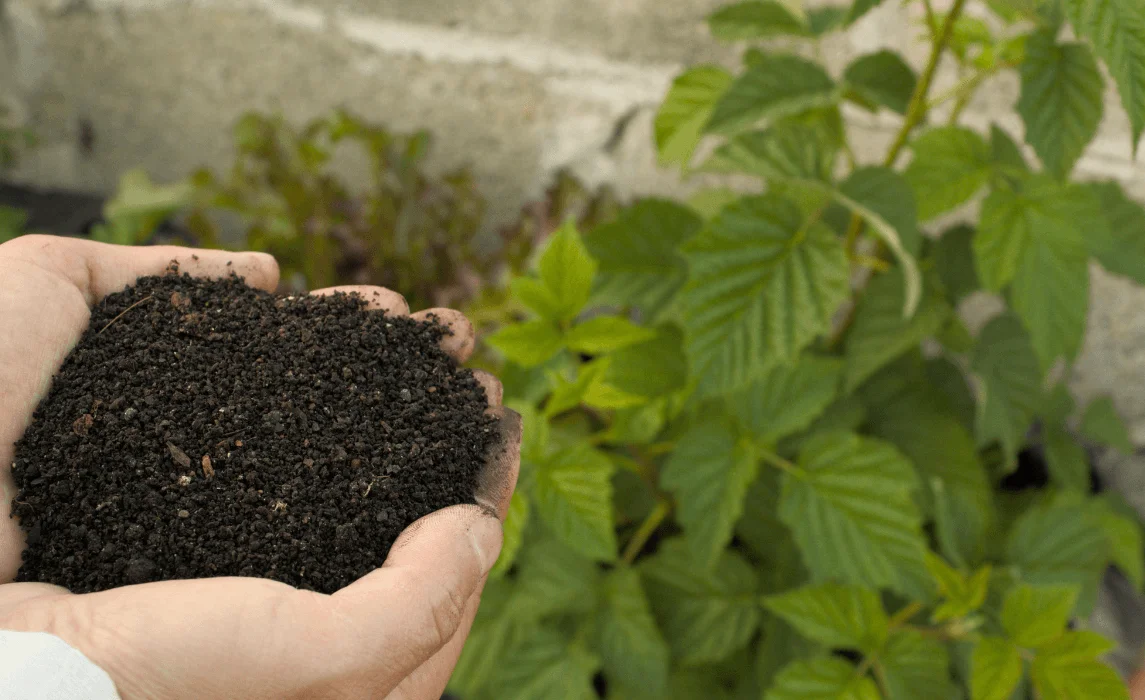
Instead, invest in a high-quality, lightweight potting soil designed specifically for container use. These commercial mixes are usually soil-less blends containing peat moss or coco coir to retain moisture, and perlite or vermiculite to provide essential aeration. To give your plants the nutrients they need, blend your potting mix with high-quality compost. This rich organic matter feeds your plants naturally and improves the overall structure of the soil, giving you the best chance at a successful balcony garden.
Choose the Right Plants: Garden Ideas for a Beautiful Balcony Garden
With the basics of light, water, containers, and soil covered, it is time for the fun part: selecting what to grow! To help you design your space, here are several balcony garden ideas, each paired with beginner-friendly plants. By choosing a specific theme, you can focus your efforts and create a cohesive, beautiful balcony garden.
1. Edible Gardens: The Balcony Vegetable Garden and Herb Sanctuary
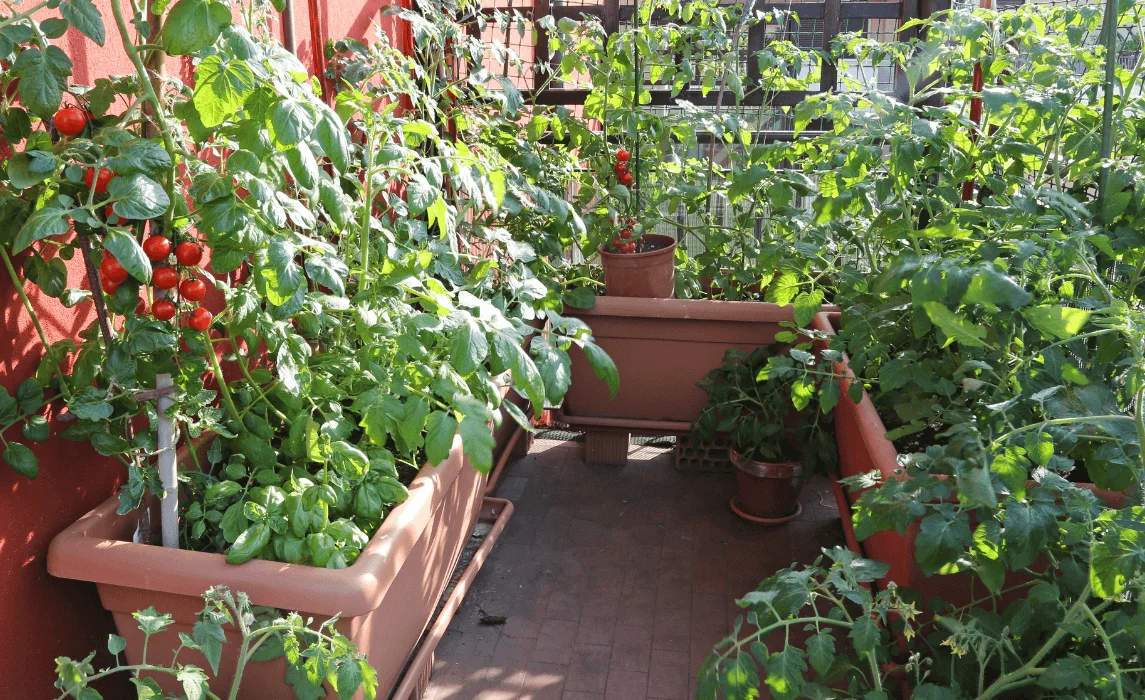
Growing your own food is incredibly rewarding, and a balcony vegetable garden is highly achievable even in a limited space. Start with crops that offer a high yield for their footprint.
Vegetables: Cherry tomatoes are the superstars of small spaces. They are prolific, easy to grow, and do well in moderately sized pots. Leafy greens like lettuce, spinach, and arugula are perfect because they have shallow roots and can tolerate partial shade.
Herbs: An herb garden is arguably the best starting point for a beginner. Herbs are hardy, require very little room, and offer incredible fresh flavor for your cooking. Try a pot of basil, mint, chive, and parsley. Chives are particularly resilient, and parsley grows beautifully even with less intense light.
2. Flower Spaces: Adding Color with Plants and Flowers
If your primary goal is visual beauty, dedicating your balcony to plants and flowers will transform it into a vibrant retreat.
Beginner-Friendly Flowers: Marigolds are robust, cheerful, and incredibly easy to grow. They thrive in sunny spots and even help deter certain insect pests. Petunias and pansies are also excellent choices for adding a splash of color to your balcony railing.
3. Low-Maintenance Setups: The Easy to Grow Garden
For the busy professional or the gardener who travels frequently, a low-maintenance setup is ideal for balcony conditions.
The Best Plants: Succulents and cacti are the ultimate low-maintenance plants. They store water in their thick leaves and require very infrequent watering. Snake plants and ZZ plants can even be transitioned indoors during harsh winters, making them highly versatile.
4. Vertical Gardening: Maximizing Space
When floor space is scarce, you must look upwards. Vertical gardening is the secret weapon for an apartment balcony.
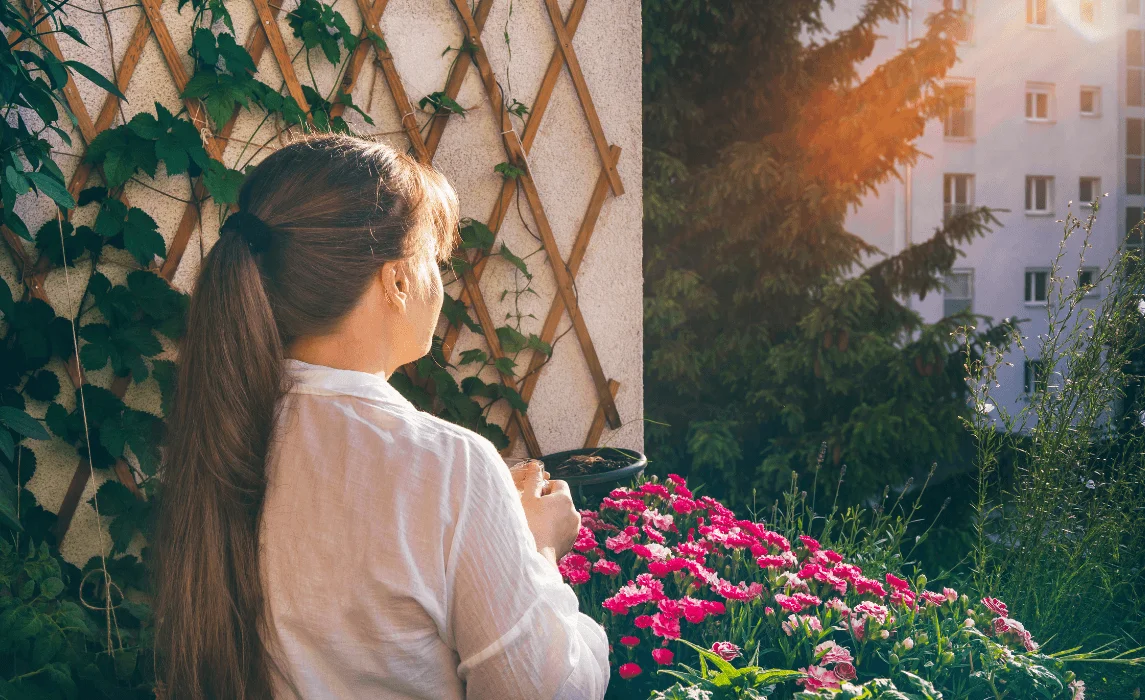
Techniques and Plants: Install a trellis against a bare wall to support climbing plants like pole beans, sweet peas, or morning glories. Utilize balcony railing planters (saddle planters) that securely straddle the railing, providing excellent sun exposure for trailing vines or herbs without consuming any of your seating area.
5. Tropical Themes: A Lush Escape
Create the feeling of a resort vacation right outside your door with large-leaved, dramatic foliage.
Tropical Choices: Plants like the Bird of Paradise, Elephant Ears, or large ferns can create a lush, jungle-like atmosphere. Many of these tropicals enjoy high humidity and can easily be brought indoors as stunning houseplants when the growing season ends.
6. Minimalist Layouts: Clean and Contemporary
If you prefer a sleek, modern aesthetic, a minimalist layout focuses on a few structural, high-impact plants rather than a chaotic jungle.
The Approach: Choose two or three large, matching containers and plant architectural specimens like ornamental grasses, a sleek Japanese Maple, or a sculpted dwarf citrus tree. Keep the color palette restrained for a calming, sophisticated environment.
How to Prune and Maintain Your Garden
A garden is a living ecosystem that requires ongoing attention. Regular maintenance is how you interact with your plants and ensure they remain healthy. Armed with a few simple gardening tips, maintaining your balcony plants becomes a joyful routine rather than a chore.
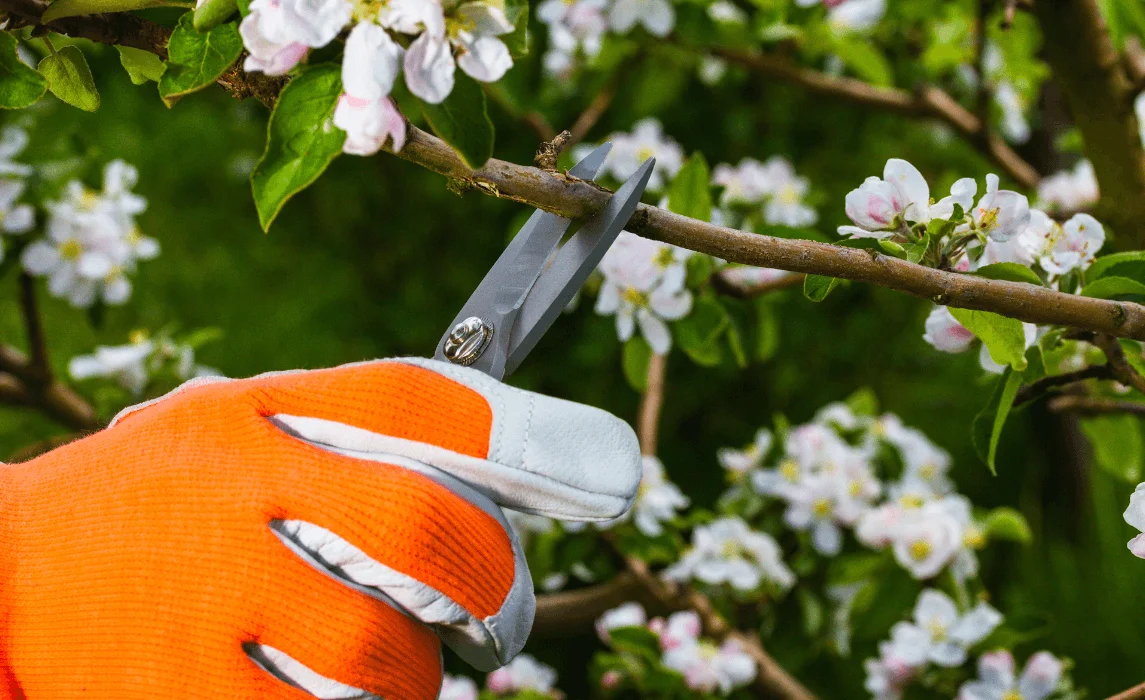
One vital skill is learning how to prune your plants. Many beginners are terrified of cutting their plants, but pruning actually stimulates new, healthy plant growth. Using a sharp, clean tool like bypass pruners, regularly snip away any dead, yellowing, or diseased leaves. For herbs like basil, pinching off the top growth encourages the plant to branch out and become bushier. For flowering plants, "deadheading" (removing faded blooms) tricks the plant into producing even more flowers.
Vigilance is also key to pest management. A pest problem can spread quickly in a confined balcony setting. Check the undersides of your leaves regularly for aphids or spider mites. A simple spray of water or a mild neem oil solution is usually enough to keep these invaders at bay, protecting your garden on the balcony.
Conclusion: Take the First Step to a Successful Balcony Garden
Creating a thriving, beautiful garden on the balcony does not require a degree in horticulture or a massive budget. By understanding your space, monitoring your light, mastering watering, and selecting the right pots and soil, you lay the groundwork for incredible success.
The most important tip of all is simply to begin. Do not feel pressured to implement every single idea at once. Look at the garden ideas listed above—whether it is a small pot of cherry tomatoes, a fragrant container of chive and parsley, or a vibrant box of marigolds on your railing—and choose just one. Start a garden with a single, manageable project. As you watch those first few seeds sprout or that first flower bloom, your confidence will grow alongside your plants. Grab your potting soil, head to your local garden center, and take that exciting first step toward creating your very own green oasis in the sky. Happy gardening!
Frequently Asked Questions:
Q: Do I need a lot of direct sunlight per day to start a balcony garden?
A: No. While cherry tomatoes need 6-8 hours of direct sunlight per day, leafy greens and herbs like parsley or chive thrive in partial shade. Simply choose the right plants for your specific amount of sun.
Q: Can I use standard garden soil in my balcony pots?
A: No. Standard garden soil is too heavy and compacts easily. Always use a high-quality, well-draining potting soil mixed with peat moss and compost for your container garden.
Q: How often should I be watering my plants on a balcony or rooftop?
A: Check daily. Stick your finger an inch into the soil; if it is dry, it is time to water. Container plants dry out quickly, so ensure pots have holes in the bottom and consider self-watering pots for convenience.
Related posts
Here are some articles you might be interested in.