Ryan Johnson relocated to his grandfather's old farm when he was 22 years old where he discovered the joys of farming and gardening. With his cool demeanor and strong-willed passion for the agrarian lifestyle, he now shares his know-how to aspiring gardeners.
How to Grow Pumpkins Q&A
Can I grow pumpkins in a small home garden?
Yes. Choose bush or miniature varieties, grow vines on a trellis, or use raised beds. Plan on one or two plants per hill and prune vines when space is tight.
When should I plant pumpkins for Halloween?
Plant seeds in late May or early June in most climates. Count back from your first frost date and allow for 90 to 120 days of growth.
Why does my pumpkin plant have flowers but no fruit?
Male flowers appear first, so early flowers will not set fruit. If female flowers open but fail to fruit, you probably have too few bees. Pollinate by hand in the morning.
What causes pumpkin leaves to turn white?
This is usually powdery mildew. Improve airflow, water at the base, remove infected leaves, and apply a fungicide or neem oil.
Can I eat the pumpkin I grew for carving?
Yes, though carving types are stringy and bland. Pie pumpkins are sweeter, but the seeds from any pumpkin can be roasted.
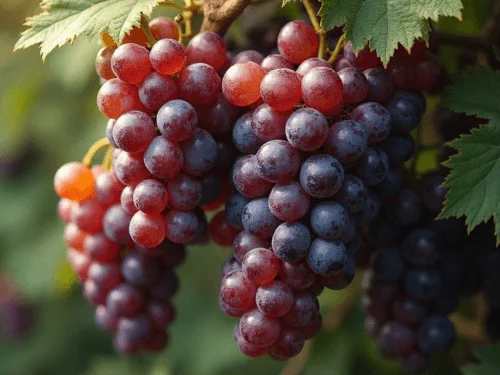
Growing Grapevines Q&A
How long does it take for a grape plant to produce fruit?
Most young vines need two to three years after planting before they set a full crop, though a few clusters may appear in year two. Patience pays off — established vines can keep producing for 40 years or more.
Do I need more than one vine to grow grapes?
No. Since most grape varieties are self-fertile, one plant is enough to produce fruit on its own. Planting a second variety nearby is optional and mainly helps with cross-pollination in a few less common types.
Can grape vines grow in containers?
Yes, though grape vines grow best planted directly in the ground, where the root system has room to spread. A large container works for a year or two, but expect to transplant once the vine outgrows the pot.
Why aren't my grapes ripening?
Grapes ripen slowly compared to many fruits, and cool weather, too much shade, or overcrowded canes can all delay the process. Give the vine full sun, thin the clusters, and be patient through the growing season.
What's the difference between table grapes and wine grapes?
Table grapes are bred for fresh eating, with thinner skins and fewer seeds, while wine grapes tend to have thicker skins, more seeds, and higher sugar content suited to fermentation.
Are grape vines toxic to pets?
Grapes and grape leaves are not toxic to people, but grapes and raisins are toxic to dogs and can cause kidney damage, so keep fallen fruit cleaned up if pets have access to the vineyard.
Bee Garden Q&A
What flowers attract the most bees to a garden?
Bees are generally drawn to flowers that are blue, purple, yellow, or white, and that offer easy access to nectar and pollen. Lavender, bee balm, sunflower, and coneflower are some of the most reliable plants that attract bees to a home garden.
Do I need to avoid pesticides in a bee-friendly garden?
Yes, whenever possible. Insecticide and pesticide products can harm adult bees and their larva, even in small amounts. Choosing natural pest control methods helps keep your garden safe for visiting bees.
Can a small home garden still support pollinators?
Absolutely. Even a few containers of zinnias, salvia, or crocus on a balcony can offer pollen and nectar for local bees. Bees will travel between small garden spaces, so every bit of habitat helps.
Do bees need more than just flowers?
Yes. Bees also need nesting sites and water. Ground-nesting bees need patches of bare soil, while a shallow bee bath gives bees a safe spot to drink, especially in hot weather.
Will planting a pollinator garden really help save the bees?
It genuinely can. As natural habitat shrinks, home gardens have become an important food source and shelter for bees, including many native bee species. A well-planned bee garden supports pollination for your own flowers and vegetables while helping the wider bee population.
What is the best USDA zone for growing a bee garden?
There is no single best zone. Most of the plants above grow well across USDA zones 4 through 9, and gardeners in colder or warmer zones can simply choose varieties suited to their climate, or grow warm-season bees favorites like sunflower and zinnia as annuals.
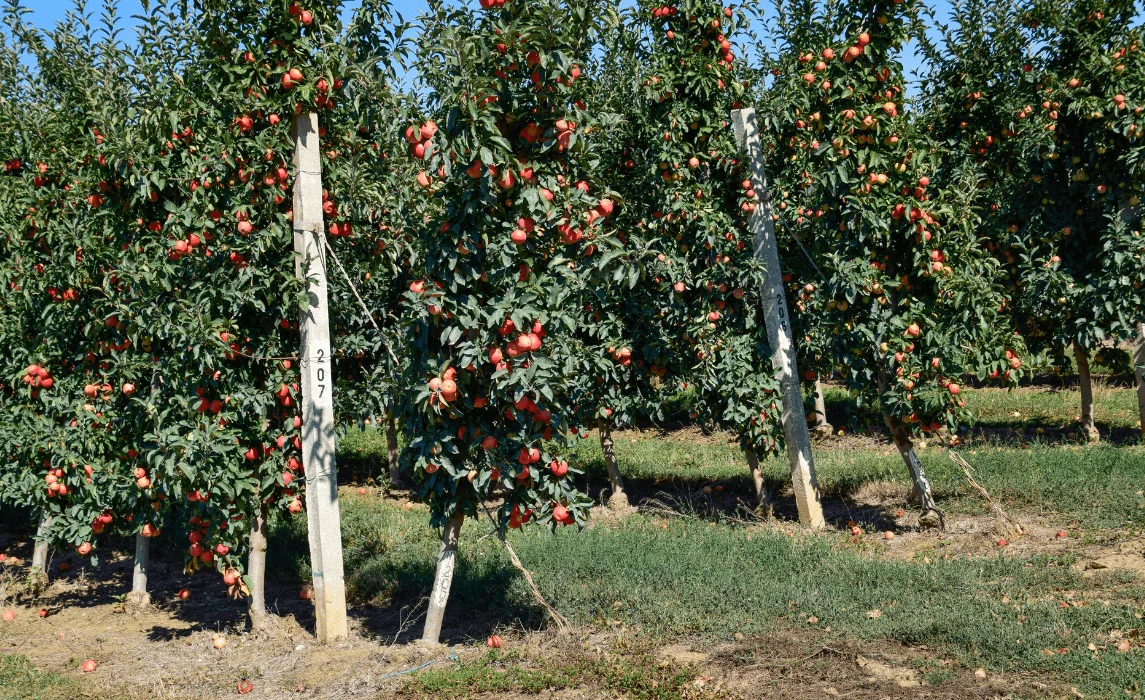
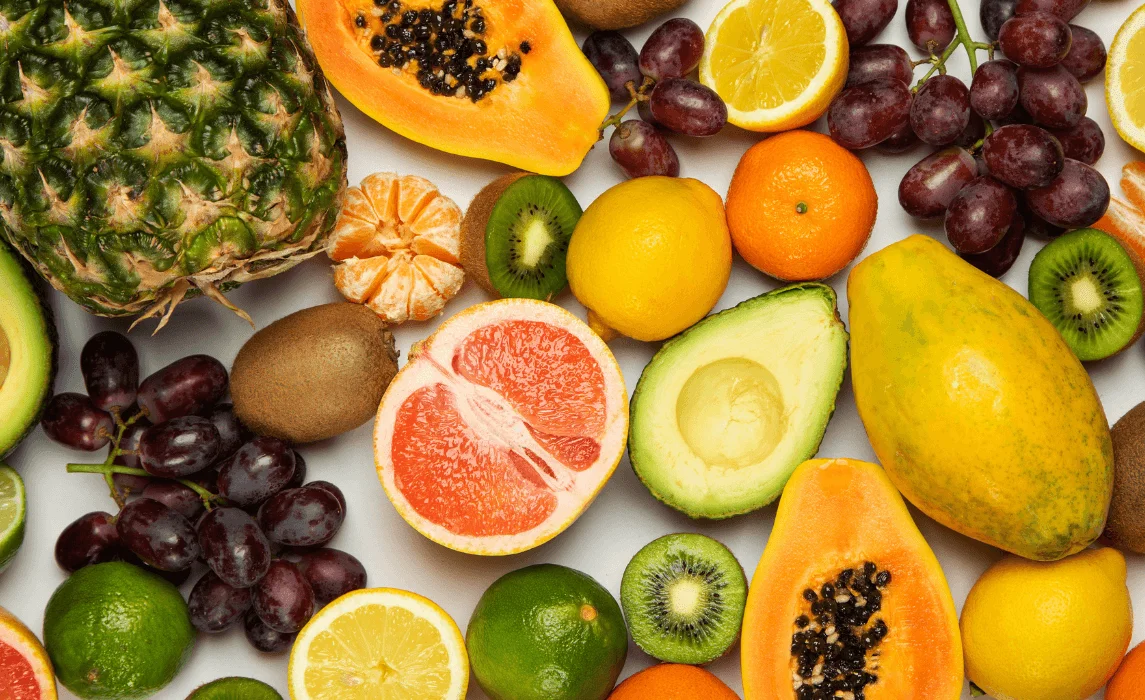
A fruit garden turns ordinary outdoor space into a source of flavor, savings, exercise, and seasonal pleasure. Picking fresh fruit at home also gives you control over ripeness and growing methods, while blossoms and shelter can support wildlife. Fruit gardening is beginner-friendly because a perennial plant can return for years, and you can begin with one strawberry pot or blueberry shrub instead of a full orchard. This guide explains how to start a fruit garden from scratch: choosing suitable fruit, preparing the site, planting, watering, pollinating, protecting, pruning, and harvesting. Whether your home fruit garden will share a vegetable garden, occupy a patio, or fill a sunny border, the goal is a manageable system that produces healthy fruit without making your first season feel overwhelming.
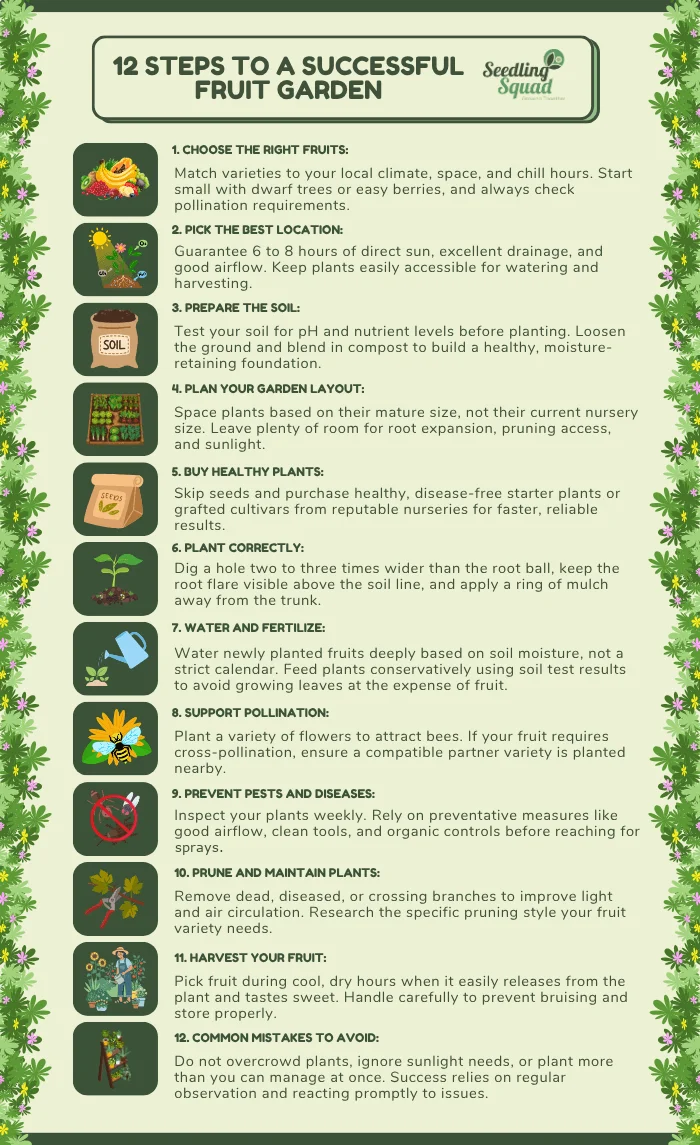
12 Steps to a Successful Fruit Garden
1. Choose the Right Fruits
Match every type of fruit to your winter cold, summer heat, rainfall, and length of growing season before you buy. Local extension advice and a local garden center can identify fruit varieties that grow best in your area and explain which fruit species need winter chill. Next, measure the garden space. In a large yard, an apple tree, pear, or compact stone fruit may fit; in a small space, choose dwarf fruit trees, espalier fruit trees, fruit trees in containers, or small fruit crops. Strawberry, raspberry, blackberry, blueberry, and currant are among the easiest fruit to grow, although a blueberry needs acidic soil and a raspberry or blackberry needs firm boundaries. If you want to grow cherry trees, ask whether the variety is self-fertile. Beginners rarely need many fruit trees: 2-4 fruit trees can already create a generous fruit patch when their mature size and pollination partners are planned.
2. Pick the Best Location
Most fruit plants need at least six hours of direct sun, and the majority of fruit plants crop more heavily with eight, so track shade before deciding where fruits in your garden will live. Avoid frost pockets and ground that stays soggy after rain; good drainage protects roots, while proper airflow helps leaves dry and slows fungal disease. Trees need enough clearance from walls, wires, and paths, yet easy access matters too. Place the fruit garden near a hose or water source and where you can inspect it often. A sunny route through the home garden makes it simpler to water your garden, notice a pest early, weed, and gather ripe fruit before birds or weather do.
3. Prepare the Soil
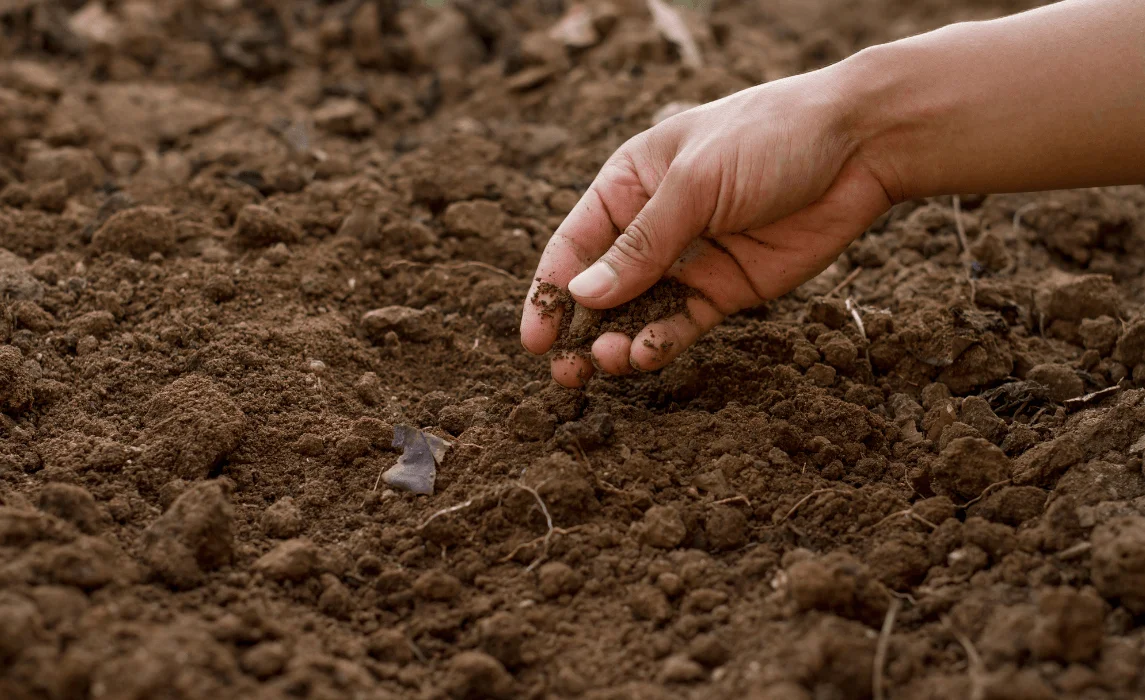
Test the garden soil rather than guessing. A basic laboratory or home test can reveal pH, drainage limits, and nutrient shortages; most fruit plants like slightly acidic to neutral soil, while blueberry prefers a lower pH. Loosen compacted ground and blend compost with the upper soil to increase organic matter, but do not fill only the planting hole with rich amendments because roots may circle inside it. If drainage is poor, roots face prolonged wetness, or bending is difficult, a raised bed can create a deeper, workable root zone. Build and improve the bed before planting, then let the soil settle. Healthy soil is the foundation of fruit growing: it holds enough moisture for growth, releases nutrients gradually, and supports the organisms that help fruit plants and trees resist stress.
4. Plan Your Garden Layout
Draw the layout at mature size, not at the size shown on a nursery bench. Many fruit trees spread wider than beginners expect, and even dwarf forms require room for roots, air, pruning, and harvest. Follow the label's spacing, keep vigorous canes away from narrow paths, and leave access around fruit trees for a ladder or wheelbarrow. Companion planting can place low herbs or flowers near trees and bushes to attract beneficial insects, but avoid dense competitors at the trunk. Keep a separate open circle of mulch and protect young bark from tools. If the fruit patch borders a veggie garden, arrange taller plants on the side that will not shade vegetables. A thoughtful small fruit garden lets plants in your garden expand without becoming crowded and makes every later task easier.
5. Buy Healthy Plants
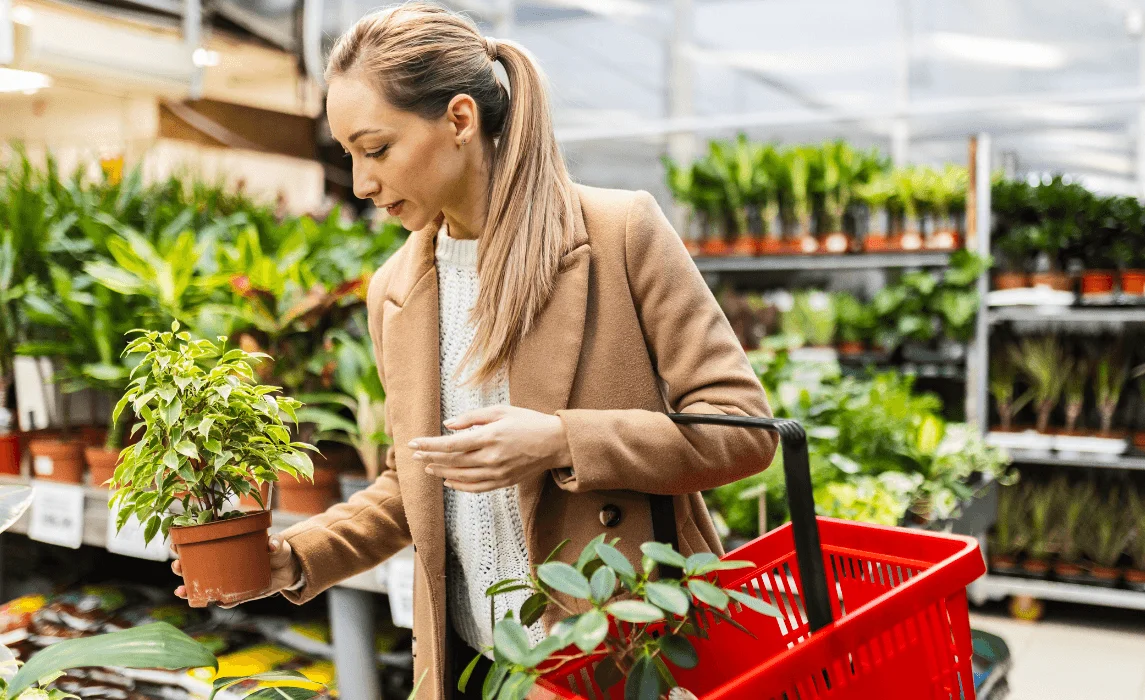
Seeds are inexpensive for strawberry and a few specialty crops, but they are slow and may not match the parent; starter plants give beginners faster, more predictable results. For an apple tree, pear, blueberry, currant, cane fruit, or other shrub, choose a named cultivar suited to your climate and space. Healthy fruit-bearing plants and trees should have moist roots, firm stems, evenly colored leaves, and no cankers, webbing, scale, rot, or circling roots. Check the graft union on a fruit tree and confirm the rootstock's mature size. A reputable nursery or garden center should label pollination needs and provide a guarantee. When comparing fruit trees for sale, ask how the plants and trees were grown and transported. Inspect every tree or bush before purchase; strong fruit plants and trees establish faster than discounted specimens already under stress.
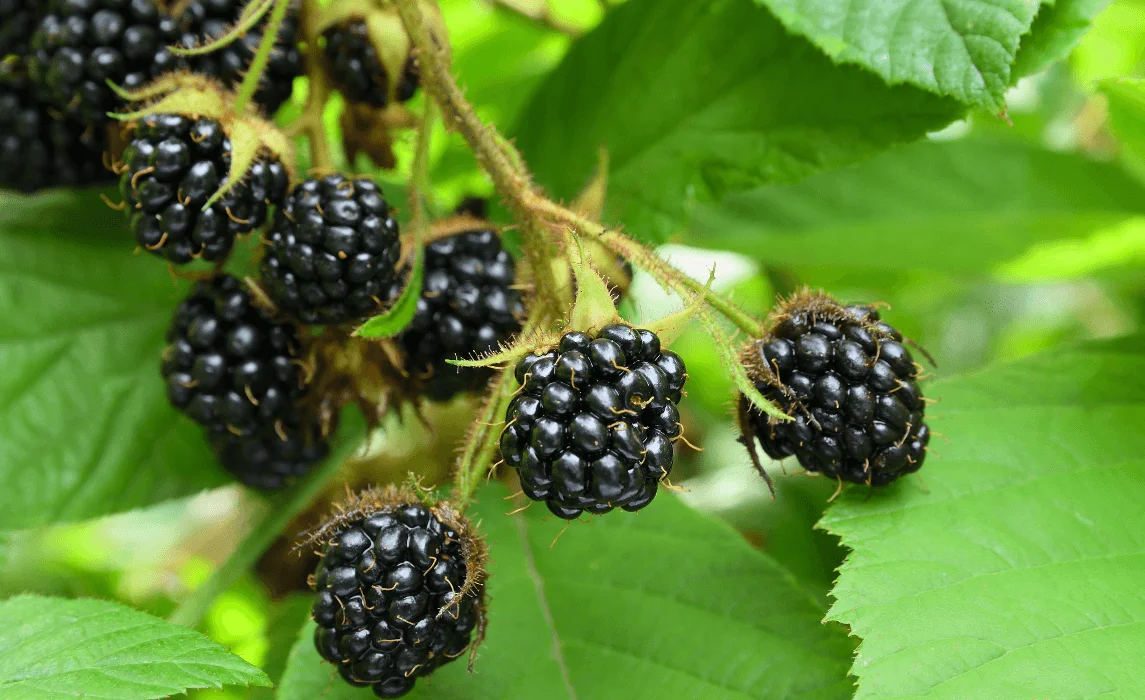
How to Grow Blackberry Fruit from Store-Bought Fruit in Your Home Garden
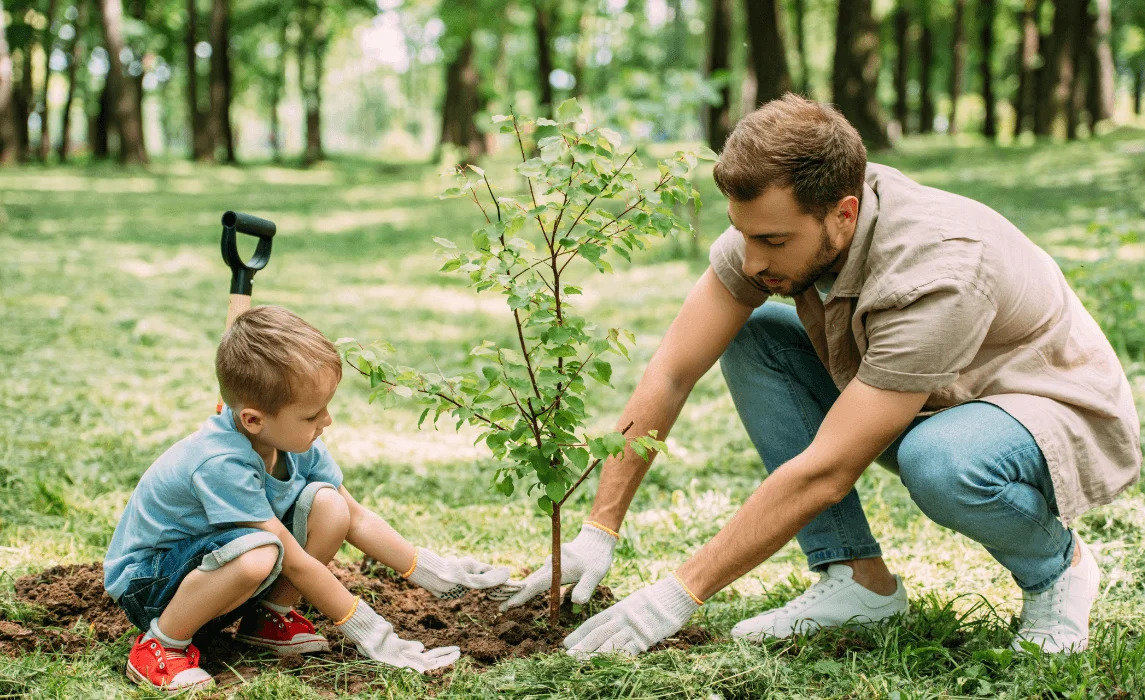
The safest planting time is usually early spring after severe freezes or autumn after leaf fall where winters are moderate; container-grown stock can be planted during the growing season if heat and drought are avoided. To plant fruit trees, dig a hole two to three times wider than the root ball but no deeper, loosen or spread roots, keep the root flare visible, and position the graft union above soil. Use the same depth when you plant fruit canes or shrubs, unless the label says otherwise. Backfill with native soil, firm gently, and water thoroughly. Then spread 2 to 3 inches of mulch over the root zone to conserve moisture, suppress weed growth, and moderate temperature. Keep mulch several inches from stems and trunks so bark stays dry and rodents have less cover.
7. Water and Fertilize
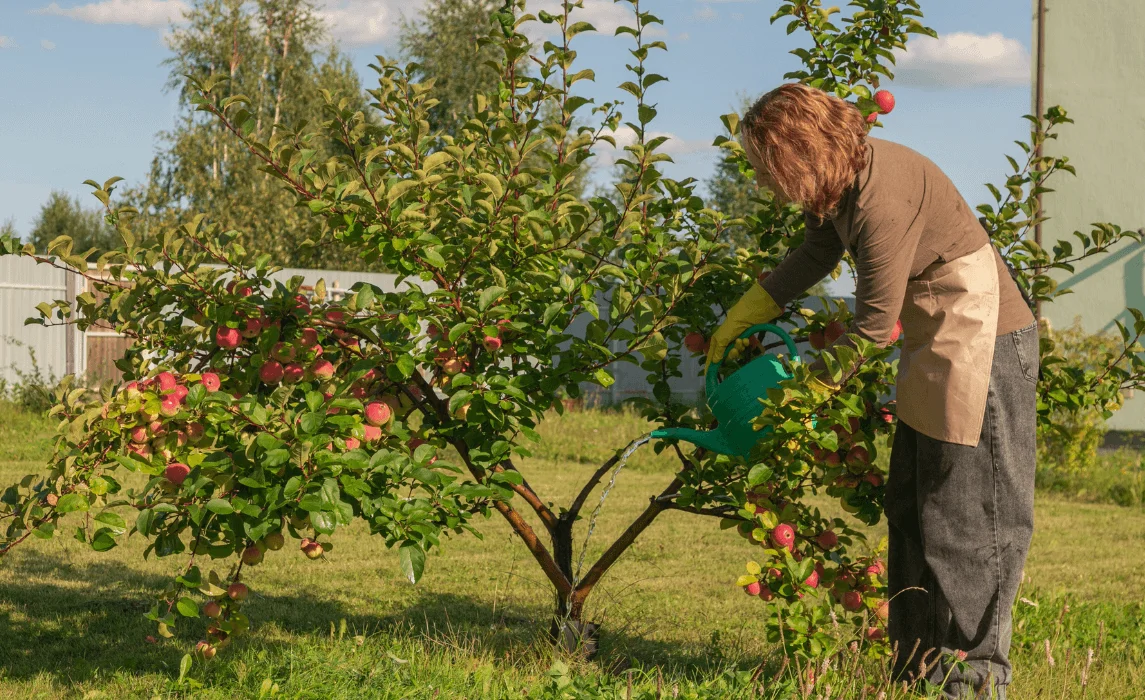
Water new plants deeply and regularly during their first season, checking the soil instead of following a rigid calendar. Established plants need less frequent irrigation, but fruit trees need steady moisture during bloom, fruit set, and dry spells; fruit plants like strawberry may need closer attention because their roots are shallow. Water your fruit at soil level in the morning, soaking the root zone rather than wetting foliage. Frequent light sprinkles encourage shallow roots, while waterlogged soil excludes air, so adjust for rain and drainage. Before fertilizing, use the soil test and watch growth. Compost may be enough in fertile ground; otherwise apply a balanced or fruit-specific feed at the label rate in early growth. Too much nitrogen produces leaves at the expense of fruit production, so never assume many fruit plants need heavy feeding.
8. Support Pollination
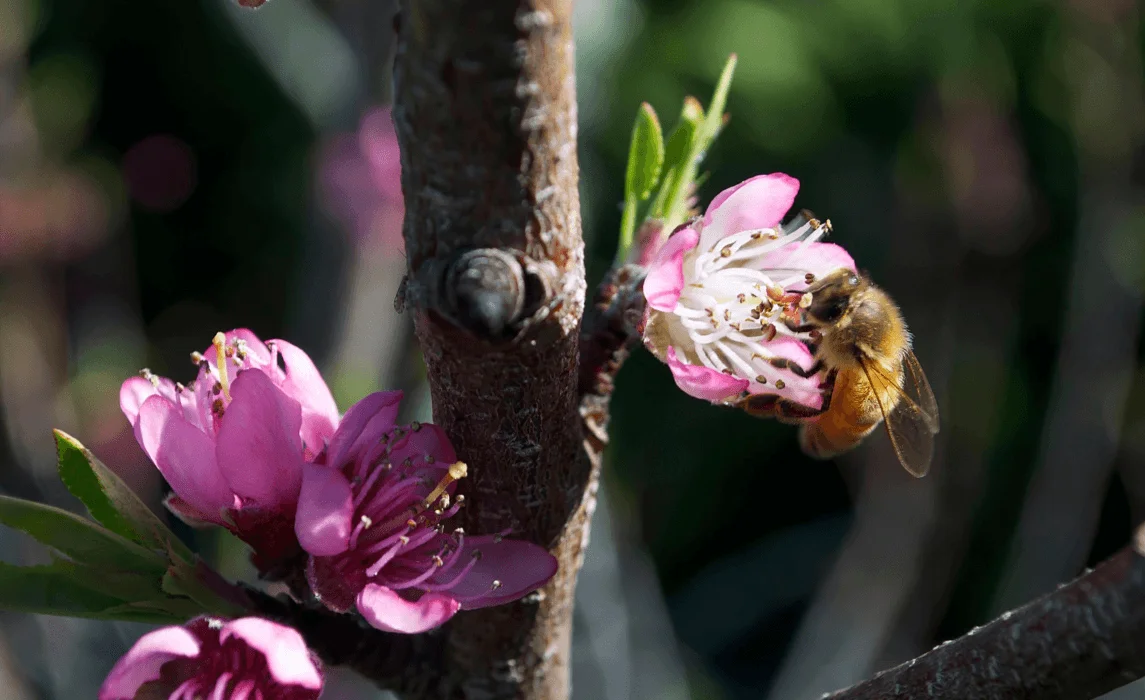
Pollination moves pollen to receptive flowers and allows fruit set; without it, a healthy plant may bloom yet fail to produce fruit. Attract bees and other pollinators by growing pesticide-free flowers with overlapping bloom times, providing shallow water, and leaving some safe nesting habitat. Many strawberry, raspberry, blackberry, currant, and peach cultivars are self-pollinating, meaning one plant can bear fruit, though visitors often improve yield. Other crops, including many apple, pear, blueberry, and cherry varieties, cross-pollinate and need a compatible cultivar flowering at the same time. Check the label rather than assuming two plants of the same name will work. When selecting perennial fruit, treat pollination as part of the purchase plan; a perennial plant has little value if its required partner is missing.
9. Prevent Pests and Diseases
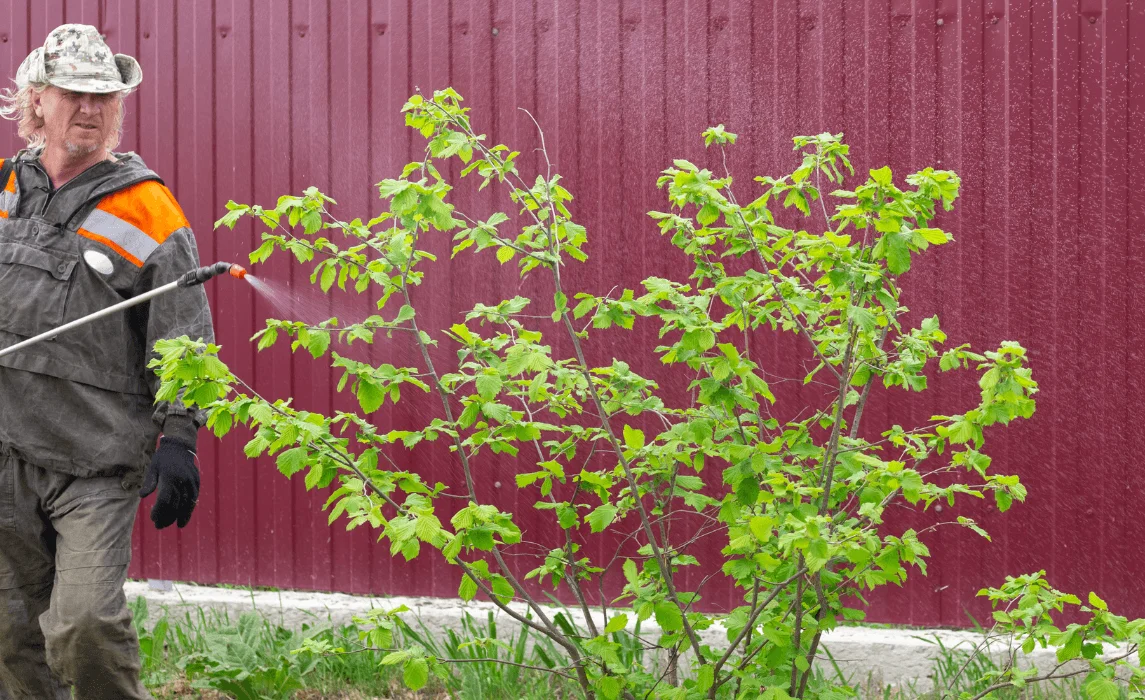
Common troublemakers include aphids, mites, scale, caterpillars, beetles, slugs, birds, rodents, and fruit flies, but the right response begins with identification. Inspect leaf undersides, shoots, fallen fruit, and bark each week. Prevent disease by spacing fruit trees and bushes for air, watering the soil instead of leaves, cleaning tools, removing mummified fruit, and choosing resistant cultivars. Clear a weed before it shelters pests or competes for water. Organic control methods include hand-picking, barriers, netting that is secured safely, insecticidal soap for appropriate soft-bodied insects, horticultural oil during the correct season, and beneficial insect habitat. Do not copy a commercial fruit spray schedule without diagnosis. Use the least disruptive treatment, follow its label exactly, protect bloom-time pollinators, and remove badly infected material so the rest of the fruit garden remains healthy.
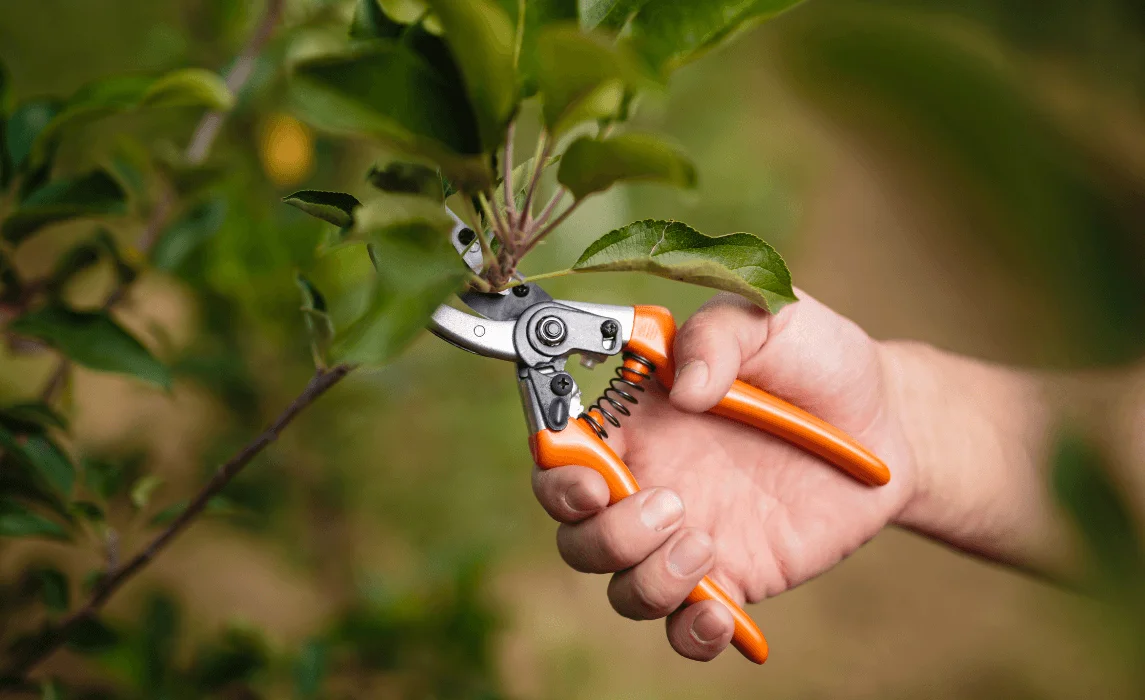
10. Prune and Maintain Plants
Pruning improves light, airflow, branch strength, picking access, and the balance between new growth and fruit harvest. Begin by removing dead, damaged, diseased, crossing, or inward-growing wood with clean, sharp tools. Make cuts just outside the branch collar and never leave long stubs. Different fruit growers use different systems because trees like apple and peach fruit on different wood, while raspberry canes may be summer-bearing or fall-bearing; identify the cultivar before cutting. Young plants need formative pruning, but excessive pruning can delay bearing or trigger weak shoots. Routine care also includes renewing mulch, tying canes, checking stakes and guards, thinning overloaded fruit, collecting drops, and recording bloom and harvest dates. These small habits keep perennial fruit plants productive and make annual maintenance of trees and bushes predictable.
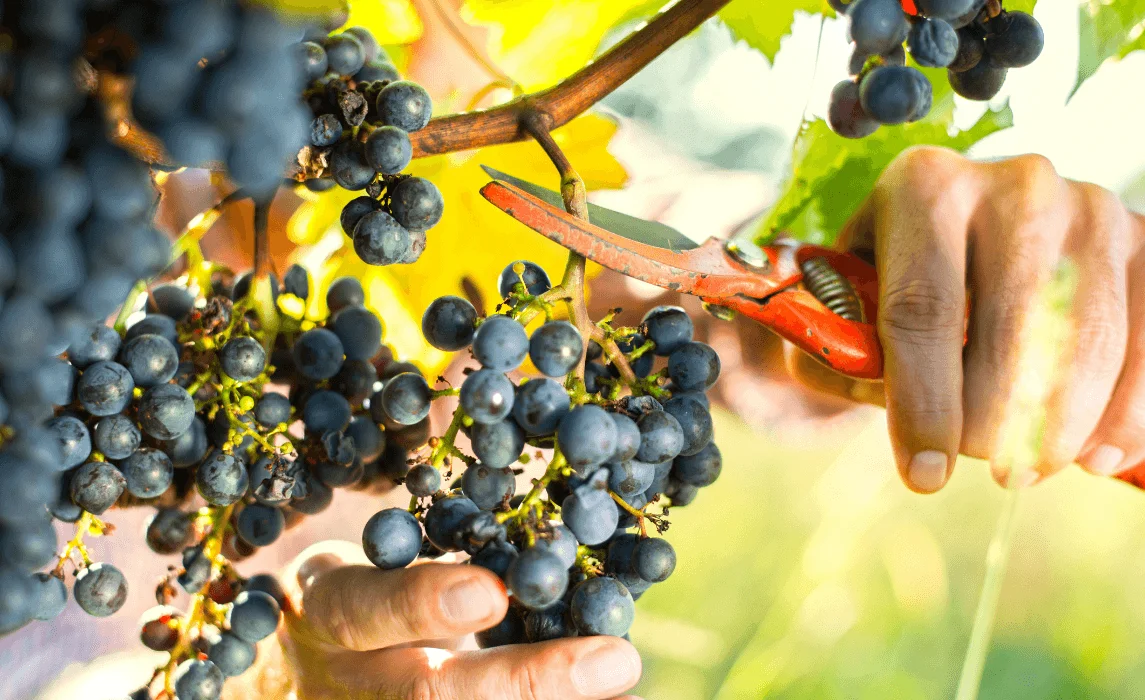
11. Harvest Your Fruit
Color is only one sign of readiness. Ripe strawberry, raspberry, blackberry, blueberry, and other small fruit should taste sweet for the variety and release with a gentle pull; apple and pear maturity may be judged by seed color, background color, flavor, and how easily the fruit lifts and twists from the spur. Pick in cool, dry conditions, support the branch, and use clean snips for fruit that should not be pulled. Handle every fruit harvest gently because bruises shorten storage. Refrigerate berries promptly without washing until use, keep sound apples or pears cool and separate from damaged pieces, and process overripe fruit quickly. Check storage guidance for each variety of fruit: some are best eaten immediately, while others improve briefly or keep for weeks.
Easy-to-Grow Vegetables: A Beginner's Guide to Simple and Productive Gardening
The most expensive mistake is poor fruit selection: a tempting variety may need more winter chill, heat, room, or pollination support than your site can provide. Inadequate sunlight causes weak growth and poor flavor, while improper watering alternates root stress with rot. Overcrowding plants reduces airflow and makes pruning and picking difficult; this is especially costly when growing a fruit tree whose final canopy was ignored. Neglecting soil health leads to repeated fertilizer guesses instead of correcting pH, drainage, compost, or organic matter. Do not plant many fruit plants at once simply because they are available. Learn what each type of fruit needs, make space for mature fruit trees in your yard, and expand only after the first group settles in. A successful fruit garden depends more on consistent observation than on perfection: check moisture, growth, pests, supports, and fruit set, then respond early and calmly.
Frequently Asked Questions:
What is the easiest fruit to grow for a first garden?
Strawberry is often the simplest starting point because it fits containers, fruits quickly, and is easy to replace. Raspberry, blackberry, and currant can also be forgiving when their spread is controlled. The best fruit is the one matched to your climate, sunlight, soil, and available care.
Can I grow fruit trees in a small space?
Yes. Choose a dwarf tree on a clearly labeled rootstock, train an espalier against wires, or use fruit trees in containers with sufficient soil volume and winter protection. Confirm mature dimensions, pollination needs, and whether the container can be watered consistently before you grow fruit trees.
Do I need more than one fruit tree?
It depends on the cultivar. Some trees are self-fertile, while others need compatible partners that bloom together. A nursery may recommend 2-4 fruit trees for varied harvests, but one self-pollinating dwarf tree can be enough when garden space is limited.
How soon will fruit plants produce fruit?
Strawberries and some cane fruits may crop in the first or second season, while a grafted fruit tree often takes several years. Rootstock, plant age, climate, pruning, and stress all affect timing. Remove an excessive early crop if the young plant needs energy for roots and structure.
Can a fruit garden share space with vegetables?
Yes. A combined vegetable and fruit area works when permanent crops do not shade or crowd annual beds. Put long-lived fruit plants where future digging will not disturb their roots, maintain clear paths, and choose fruits to grow at home that fit the same sunlight and watering pattern as the wider garden.
Related posts
Here are some articles you might be interested in.