Ryan Johnson relocated to his grandfather's old farm when he was 22 years old where he discovered the joys of farming and gardening. With his cool demeanor and strong-willed passion for the agrarian lifestyle, he now shares his know-how to aspiring gardeners.
Hypoallergenic Plants Q&A
Do houseplants cause allergies?
Yes, certain indoor plants can trigger a plant allergy through loose pollen, scented flowers, sap, dust, or damp soil. Allergies and houseplants are highly individual: one person may sneeze near peace lilies while another has no response. Overwatering lets mold produce a spore that may become airborne. If symptoms begin after adding plants in your home, isolate each pot, clean the area, and discuss persistent allergy symptoms with a qualified clinician.
Which plants to avoid?
Plants to avoid include strongly fragrant flowers, visibly dusty specimens, and wind-pollinated garden plants brought inside while shedding. Male palms can release pollen if they flower, and wet potting mix can make allergies worse. The best and worst choices depend on the person, so remove any plant that appears to cause pollen allergy symptoms or contact irritation.
Can indoor plants purify air?
Claims about indoor plants that purify come largely from controlled chambers. Although some air-purifying plants can take up chemicals, ordinary air purifying plants are not fast enough to replace ventilation or air cleaners in a real room. Plants can improve air quality mainly by supporting comfort and encouraging care for the space; they should not be presented as houseplants for clean air that reliably remove formaldehyde. To improve indoor air quality, control sources, ventilate safely, and use proven filtration.
How does the ogren scale work?
The Ogren Plant Allergy Scale system, also called OPALS, rates a plant's potential allergenicity from 1 to 10. It considers pollen, fragrance, and contact reactions, but the likelihood a plant will cause a reaction still depends on the individual and exposure. A high score does not prove a particular plant will cause pollen allergy, and a low score is not a medical guarantee.
Can plants help you breathe?
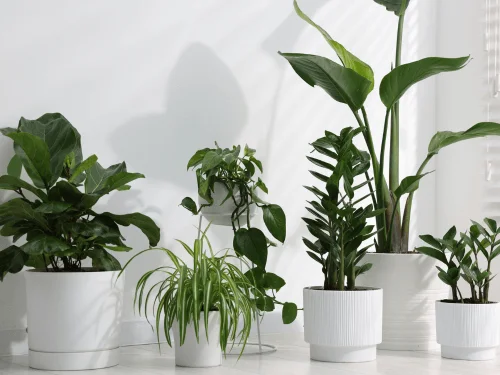
Allergy-friendly plants may make an indoor space calmer, but they do not treat disease or guarantee allergy relief. For people with allergies, clean leaves, dry saucers, fresh potting mix, and steady air circulation matter more than labels such as hypoallergenic plants. These indoor plants that are allergy-safe can help you breathe easier only by limiting likely triggers; they cannot help you breathe during an asthma attack.
Planting Calendar Q&A
Is an almanac planting calendar exact?
No. It is a useful regional estimate built from historical conditions. Confirm its suggested planting date with your local forecast, soil condition, and microclimate.
When is the best time to plant?
The best time to plant is when the crop's temperature needs match your frost window and the soil is workable. Cool crops can begin earlier; tender warm-season crops wait until frost danger has passed.
Can every vegetable be started indoors?
No. Tomatoes and peppers handle indoor seed starting well, while carrots are usually sown directly in the ground. Follow crop-specific seed packets and avoid disturbing sensitive roots.
What if a late frost is forecast?
Delay transplanting tender crops, move containers inside, or cover established plants overnight. Remove covers after temperatures rise so light and airflow return.
How often should I revise my calendar?
Review it at the start of each growing season and add notes after major sowings and harvests. Records reveal which dates, varieties, and methods work best in your garden.
Evergreen Shrubs Q&A
How do I choose evergreen shrubs for my outdoor space?
Match mature size to USDA hardiness, light, drainage, and wind. Use a tall evergreen for screening, a mounded shrub for foundation planting, or ground cover on slopes. Repetition unifies home landscapes, while contrast creates a focal point in the landscape.
What are the best small evergreen shrubs?
Blue Star juniper, dwarf Chamaecyparis, azalea, and Daphne are strong small-space choices. The best evergreen shrubs fit without constant shear work; check mature spread and leave airflow around glossy foliage.
Do evergreen shrubs flower as long as hydrangea?
Not usually. A hydrangea may have a long bloom time from mid-summer onward, while evergreen shrubs often bloom briefly. Combine azalea for spring, Viburnum or Mahonia for winter, and summer perennials.
When should I prune an evergreen hedge?
Prune flowering shrubs after bloom, and shape boxwood, yew, or Thuja lightly during growth. Avoid leafless old conifer wood; natural forms need less pruning and preserve year-round interest.
Why can an evergreen turn brown in winter?
Frozen soil, wind, salt, or poor drainage can brown green foliage. Water before freezing, mulch roots, and choose a protected area so evergreen shrubs retain year-round beauty and lasting structure.
A pollinator garden is a garden designed to provide food, water, shelter, and breeding places for animals that carry pollen from one flower to another. Those visitors may include a bee, butterfly, moth, hummingbird, beetle, fly, or wasp. As they move from plant to plant in search of nectar and pollen, they help flowering plants produce seeds and fruit. A useful pollinator habitat therefore supports wildlife while making the landscape more colorful, productive, and interesting throughout the growing season.
Creating a pollinator garden is a good idea because pollinator populations are declining as habitat disappears and exposure to pesticides, disease, and climate pressures increases. A home pollinator patch can replace some of the missing food and shelter, even when the available garden space is a balcony or a few raised beds. It can also improve harvests in a vegetable garden, introduce a beginner gardener to local wildlife, and transform your garden into a lively place without demanding perfection. The following easy steps explain how to create a pollinator haven that is practical, attractive, and suited to your conditions.
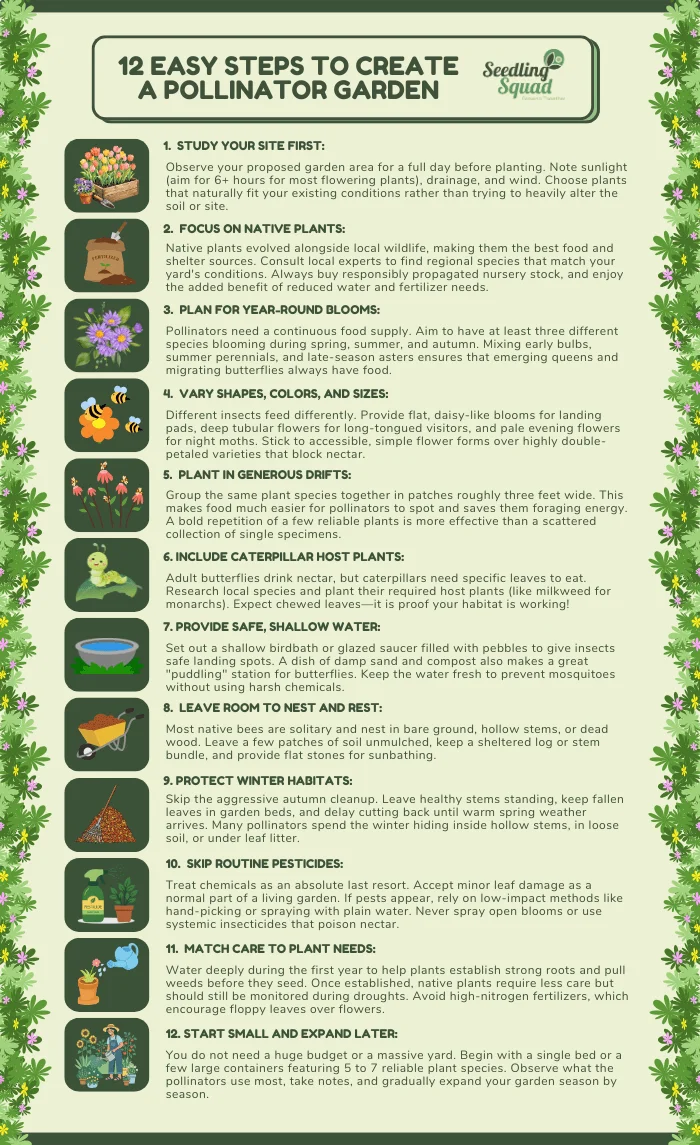
12 Easy Steps to Create a Pollinator Garden
1. Start Planning Your Garden by Studying the Site
Before you start planting, watch the proposed site for a full day. Note how many hours of direct sun it receives, where rain collects, how exposed it is to wind, and whether the soil drains quickly or stays damp. Most nectar-rich flowering plants perform best with six or more hours of sun, and sunny warmth helps many insects become active. However, a shade garden can still serve pollinators when it contains woodland flowers and shrubs adapted to lower light. Measure the area, sketch permanent features, and mark access for watering and maintenance. Planning a pollinator garden around real conditions is more reliable than buying appealing flowers first and trying to make them fit later. If you are starting a new garden, test the soil and improve only obvious problems, such as severe compaction or poor drainage. Your goal is to choose the right plants for the site rather than radically remake the site for specific plants.
2. Add Native Plants as the Foundation of a Native Pollinator Garden
Planting native species is one of the most effective ways to create pollinator habitat because a native plant has developed alongside regional insects and other wildlife. Contact a local native-plant nursery, botanic garden, university extension service, or conservation group for a list of plants native to your area. Then compare each native plant species with your light, soil, moisture, and winter conditions. Aim for native species to form the backbone of the planting, but do not assume that wild-collected plants are acceptable; buy nursery-propagated stock or seed from responsible suppliers. Native plants also often require less supplemental water and fertilizer once established. Non-native plants need not be removed automatically if they are non-invasive and provide useful flowers, but planting native plants fills relationships that ornamental imports may not. Well-planned native plant pollinator gardens connect fragmented habitats and give a native pollinator familiar food, shelter, and nesting material.
3. Choose Plants for Your Pollinator Garden That Bloom in Every Season
Pollinators need a continuous food supply, not one spectacular week followed by months without flowers. Make a simple spring, summer, and autumn bloom chart before shopping, and choose plants so that at least three plant species flower in each period. Early bulbs, woodland ephemerals, flowering shrubs, summer perennial plants, late asters, and goldenrods can create a dependable sequence. Annual wildflowers can temporarily close gaps while slower perennial plants establish. Check local guidance because not all wildflowers are native to every region, despite the wording on generic seed packets. When comparing plants you’ll want to note both the expected flowering window and local hardiness. Include species that bloom early and plants that bloom late, then repeat strong performers. This season-long approach supplies pollen and nectar when emerging queens, summer colonies, migrating butterflies, and late-season insects need it most. It also ensures the garden maintains color throughout the growing season.
4. Use a Wide Variety of Plants, Flower Shapes, and Colors
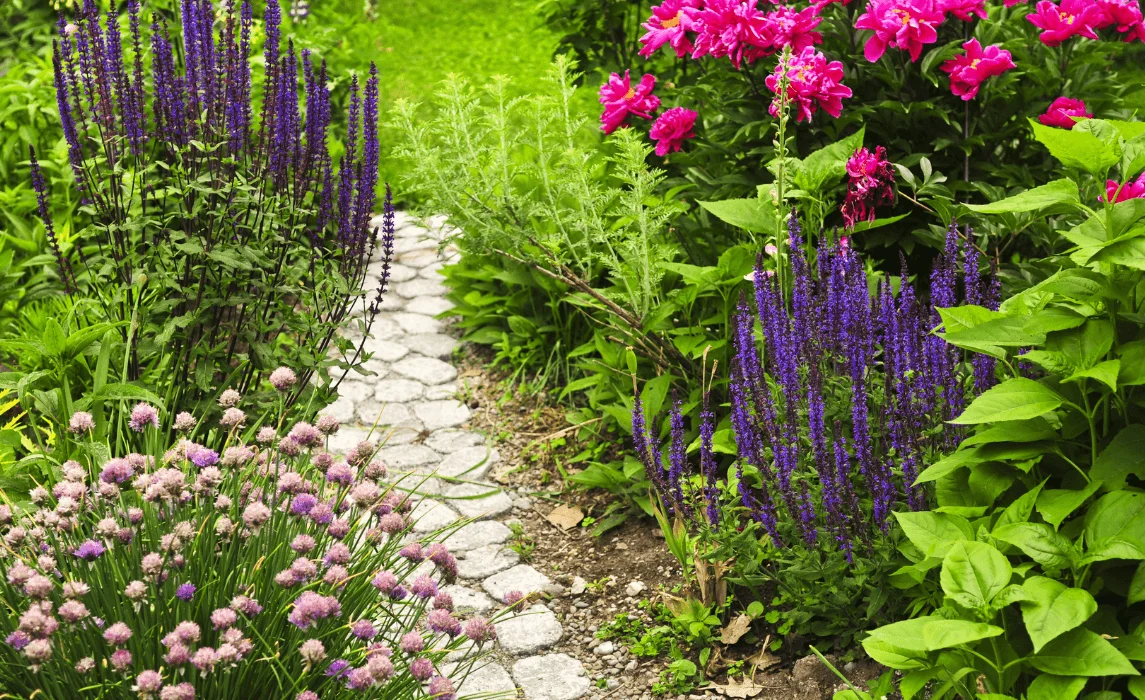
Different pollinators feed in different ways. Open, daisy-like blooms provide landing platforms for many bees and butterflies, small clustered flowers suit short-tongued insects, and deep tubular blooms are accessible to a long-tongued butterfly or hummingbird. Pale, scented evening flowers can help a night-flying moth. When looking for plants, favor simple, accessible flower forms over highly doubled cultivars whose extra petals may obstruct nectar and pollen. Build a wide variety of plants with several heights, colors, scents, and shapes, but check that each choice suits the site. Good pollinator-friendly plants do more than look attractive: the plants provide reachable food in meaningful quantities. A mix of the best plants for local conditions will attract different pollinators and create a garden that will attract wildlife even if weather causes one species to finish early or perform poorly.
5. Refine Your Pollinator Garden Design with Generous Drifts
An effective pollinator garden design makes food easy to find. Instead of placing one specimen of every variety across the yard, group the same species in patches roughly three feet across where space allows. These visible drifts reduce the energy a pollinator spends searching and create a calmer planting design than a collection of isolated dots. In garden beds, position taller plants toward the rear or center, depending on where the bed is viewed, and use shorter plants along paths. Repeat a few colors or species to unify larger gardens. In a small in-ground pollinator garden, three or five plants of each selection can still make a useful target. Leave narrow access points so you can weed and water without trampling stems. Whether your pollinator planting is formal or naturalistic, a limited palette repeated boldly is often more functional and attractive than maximum variety squeezed into minimum space.
6. Include Host Plants for Butterflies and Moths
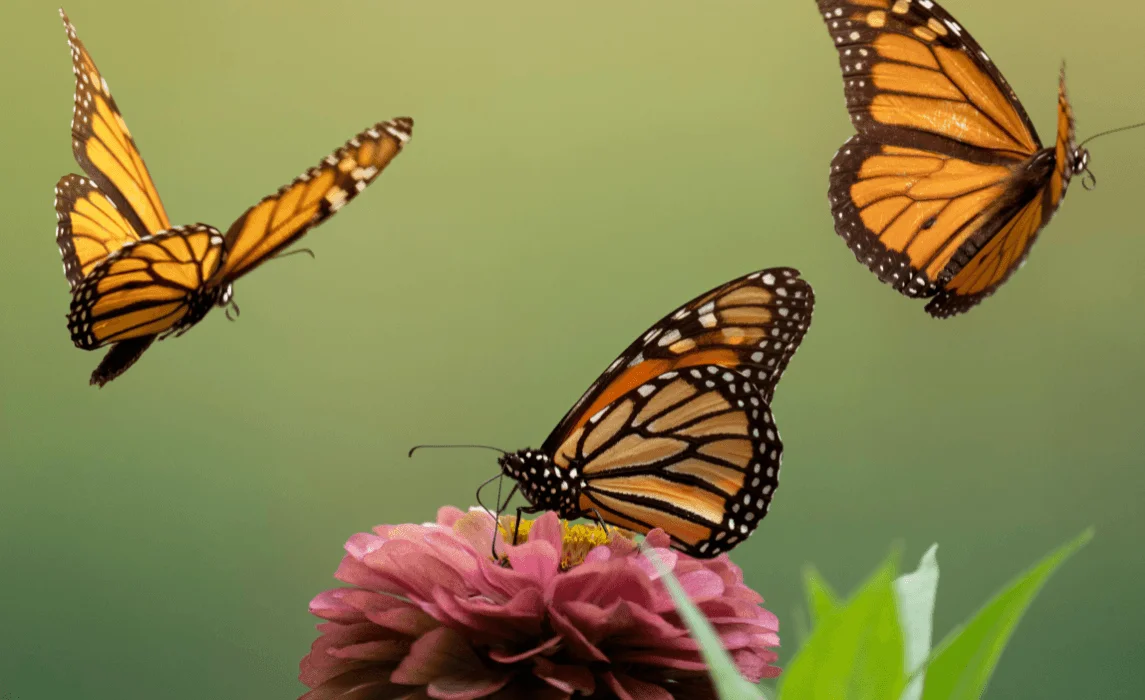
Adult butterflies and moths drink nectar, but every caterpillar needs suitable leaves to eat. That makes a host plant as important as any nectar source. Learn which butterflies and moths live locally, then include host plants they use for egg-laying and larval growth. Milkweed is the essential caterpillar food for monarch butterflies, while other species may depend on native grasses, trees, violets, or herbs. Expect chewed leaves and resist treating them as a failure; the damage shows that the habitat is working. Place less ornamental host foliage behind tidy edging plants if appearance matters. Avoid assuming one famous plant will support every butterfly, because many larvae accept only one genus or a small group of related plants. A successful pollinator garden offers both adult nectar plants and nursery space for the next generation.
Best Plants to Attract Butterflies to Your Garden: Gardening for Pollinators
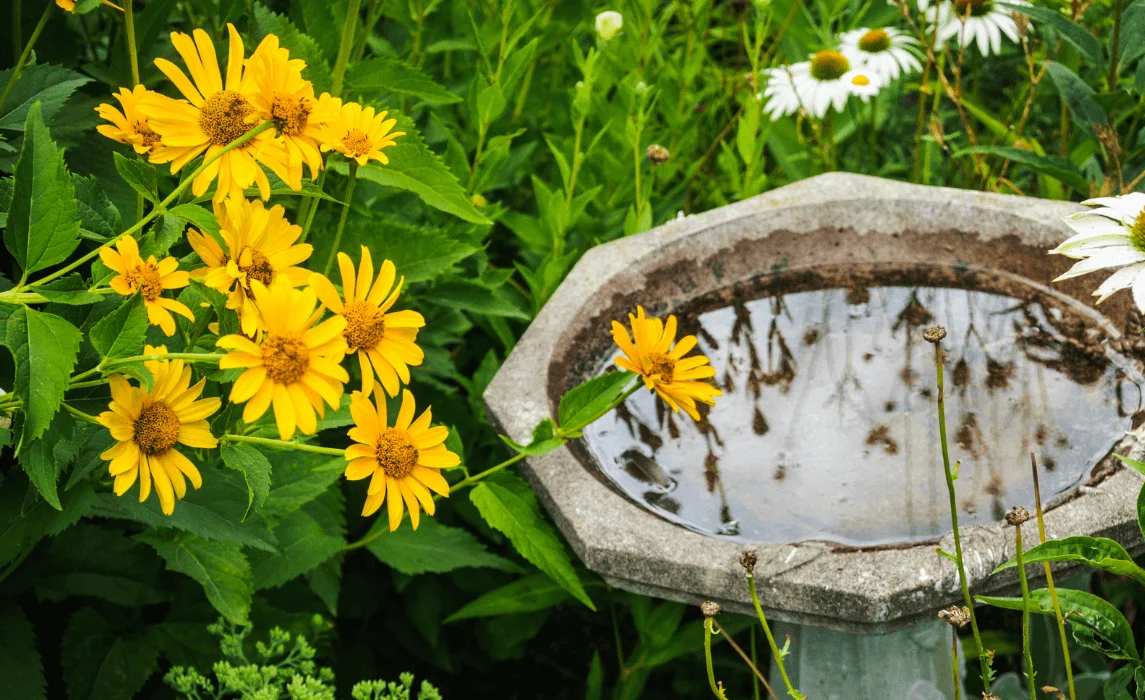
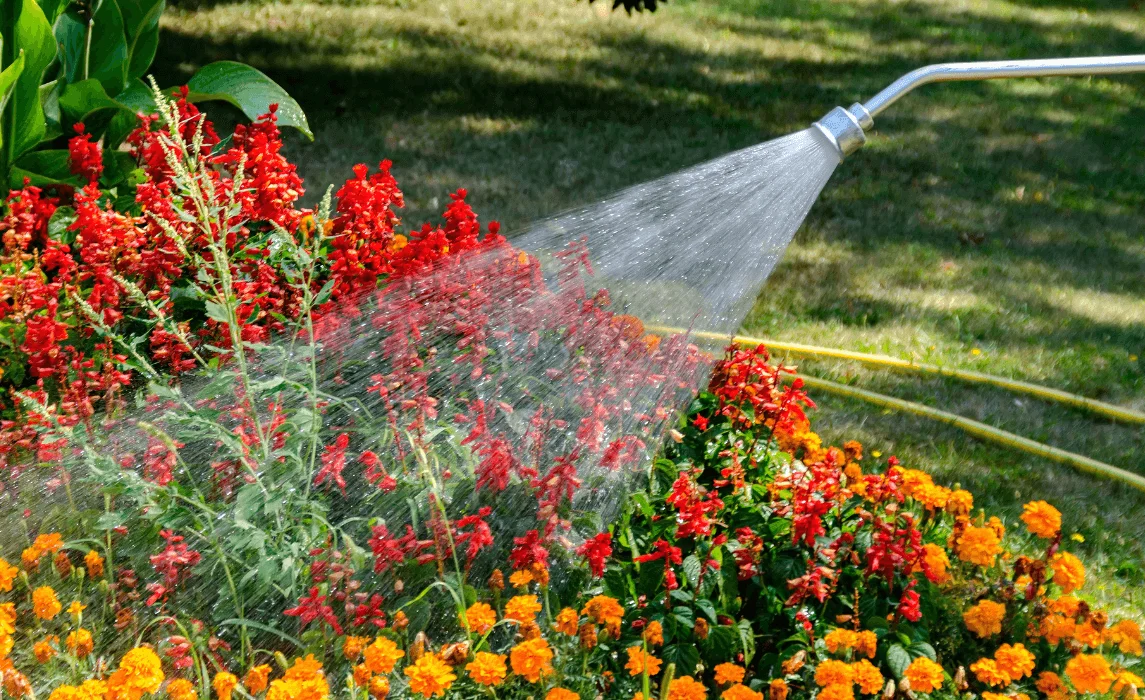
A shallow water source is safer than a deep, steep-sided container. Set out a glazed saucer or shallow birdbath, add pebbles that rise above the water as landing places, and keep the level low. Butterflies may also gather minerals from damp soil, so a dish containing moist sand and a little compost can become a simple puddling station. Put water near the planting but where you can clean and refill it easily. Refresh it frequently to prevent mosquito breeding and scrub the vessel rather than adding chemicals. Drip irrigation or a hose directed at soil level can water plants without soaking visiting insects or knocking them from flowers. During dry weather, steady moisture helps nectar plants keep blooming, although established native plants generally need less intervention than thirsty ornamentals.
8. Leave Places for a Bee to Nest and Rest
Most native bees do not live in managed hives. Many are solitary, and numerous species nest in small tunnels in bare, well-drained ground; others use hollow stems or cavities in dead wood. Preserve a few undisturbed soil patches and avoid covering every inch with landscape fabric or thick mulch. Keep a log, snag, or bundle of correctly sized natural stems in a dry, sheltered location, and maintain any artificial bee house carefully so it does not accumulate mold, parasites, or disease. Flat stones in sunny places provide warm resting surfaces, while shrubs offer protection from wind. Do not disturb an active nest. These modest features convert a flower bed into a complete native pollinator habitat instead of a seasonal feeding station.
9. Protect Overwintering Habitat for Pollinators
Autumn tidiness can remove the very places wildlife needs to survive. Many insects spend winter as an egg, larva, pupa, or adult inside stems, beneath leaf litter, in loose soil, or under bark. To preserve overwintering habitat, leave healthy stems standing through winter, retain some fallen leaves in garden beds, and postpone most cutting until a stretch of warm spring weather. When you do cut hollow stems, leave part of each stem upright so cavities remain available, and place dry cuttings loosely in a quiet corner for a while rather than immediately shredding them. Use mulch selectively and thinly because deep mulch can block ground-nesting insects. A slightly relaxed edge or hidden habitat pile provides valuable overwintering habitat for pollinators while the visible front of the garden can remain intentional and neat.
10. Keep the Pollinator Garden Free from Routine Pesticides
Avoid routine insecticide use, including systemic products that can move through plant tissues and reach nectar and pollen. When a problem appears, identify it before acting; many insects on a plant are harmless or beneficial, and a small amount of leaf damage is normal. Begin with low-impact measures such as hand-picking, pruning an affected stem, spraying pests with plain water, supporting predators, or accepting temporary cosmetic damage. Buy plants from suppliers who can explain how they were grown, and ask whether systemic insecticides were applied. Herbicides can also eliminate useful wildflowers and host foliage, while broad fungicide use may disrupt more life than intended. If intervention is truly necessary, follow local expert guidance and the label exactly, choose the narrowest solution, and never spray open blooms or when pollinators are active. Pollinator friendly gardening treats chemicals as a last resort, not routine maintenance.
11. Match Maintenance to the Plants’ Needs
The right plants should fit the amount of time, water, and care you can provide. During the first growing season, water deeply enough to encourage roots, remove aggressive weeds before they seed, and replace failed plants after diagnosing why they struggled. Once established, many plants require less watering, but they still need observation during prolonged heat or drought. Avoid high-nitrogen fertilizer unless a soil test identifies a need; lush leafy growth can flop and produce fewer flowers. Deadhead some flowers to prolong bloom, but leave plenty of seed heads for birds and winter structure. Divide overcrowded perennial clumps when necessary, and keep invasive plants out of the garden. Record what blooms, which visitors arrive, and where gaps occur. Those notes will guide smarter choices when you add native plants or introduce other plants to your garden next season.
12. Start Small, Observe, and Expand Your Pollinator Paradise
You do not need a large budget or perfect plan to create a pollinator garden. Begin with one prepared bed, a sunny border beside the vegetable garden, several large containers, or compact raised beds. Select five to seven reliable plant species, buy enough to create visible groups, provide water and shelter, and start planting at the appropriate local season. Watch which plants that pollinators use most and which bloom periods remain empty. Take monthly photos and update your plan before expanding. You can create pollinator value on a balcony, in a front-yard strip, or beside an existing shade garden; even small patches become more useful when neighbors add habitat nearby. Over time, include plants with complementary roles, replace weak performers, and allow successful species to spread. That measured approach helps make your garden an affordable pollinator paradise and gives it room to become richer each year.
How to Attract Ladybugs to Your Garden with the Best Plants for Natural Pest Control
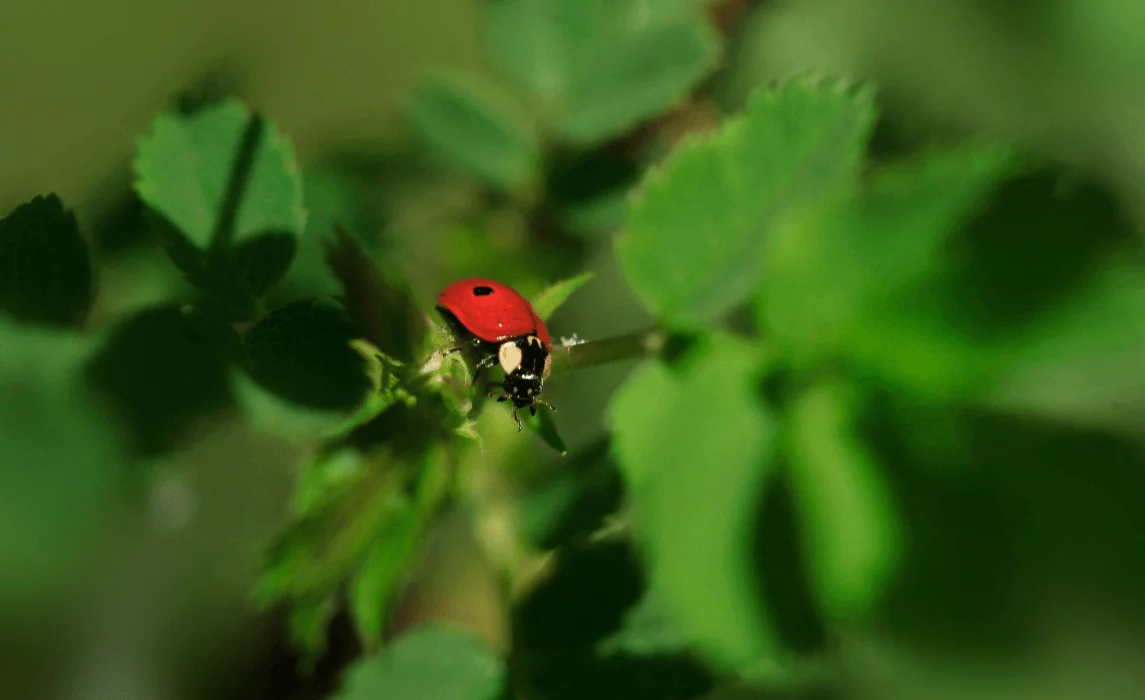
The best plants are healthy, pesticide-free species matched to your region and site that offer accessible nectar and pollen. Start with locally native flowering plants and include spring, summer, and fall bloomers, varied flower shapes, larval host species, grasses, shrubs, and possibly trees. Local extension offices and native-plant organizations can recommend exact plants to grow. The ideal list changes by location, so regional suitability matters more than a universal top-ten list.
Can I make a pollinator garden in a small space?
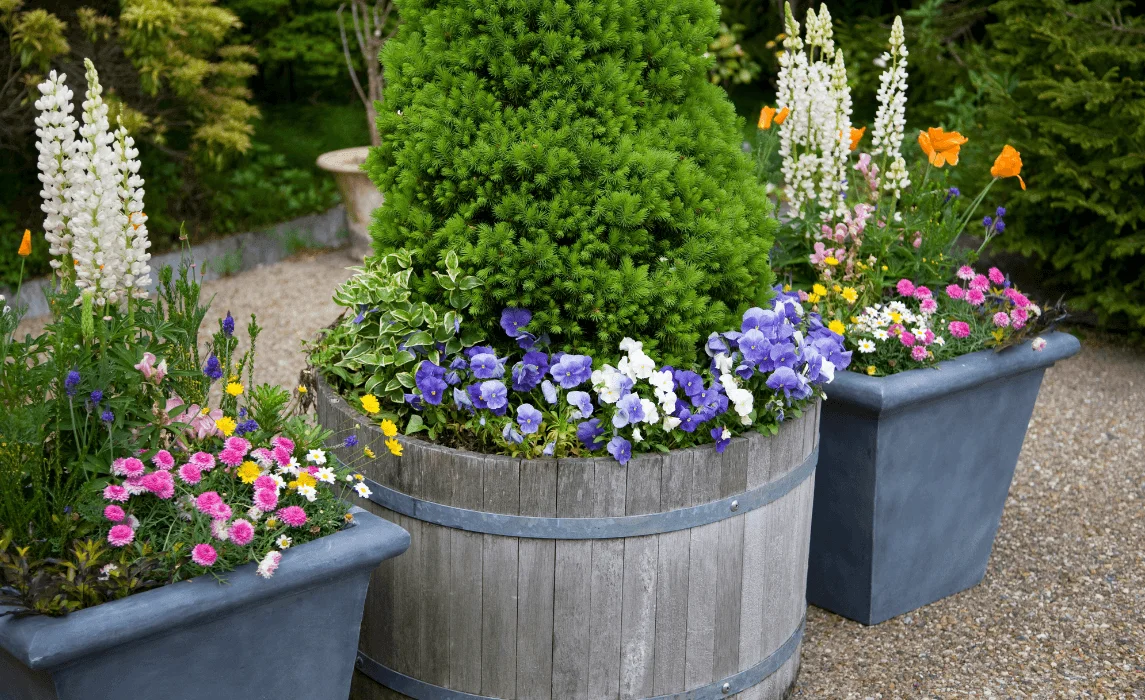
Yes. Containers, a curbside strip, a corner of a patio, or one of your existing garden beds can become a garden for pollinators. Use the largest containers practical, group several pots together, and prioritize long-blooming plants. A small patch with continuous flowers, clean water, and no pesticide exposure can be more valuable than a larger area that blooms briefly.
Can a pollinator garden work in shade?
Yes, although the range of options may be narrower. Study whether the space has bright shade, dappled light, or deep shade, then choose woodland native species suited to that exposure. Spring ephemerals, flowering groundcovers, understory shrubs, and shade-tolerant perennials can support early insects. If possible, place a few flat stones or nearby pots where morning sun provides warmth.
Related posts
Here are some articles you might be interested in.