Ryan Johnson relocated to his grandfather's old farm when he was 22 years old where he discovered the joys of farming and gardening. With his cool demeanor and strong-willed passion for the agrarian lifestyle, he now shares his know-how to aspiring gardeners.
Planting Calendar Q&A
Is an almanac planting calendar exact?
No. It is a useful regional estimate built from historical conditions. Confirm its suggested planting date with your local forecast, soil condition, and microclimate.
When is the best time to plant?
The best time to plant is when the crop's temperature needs match your frost window and the soil is workable. Cool crops can begin earlier; tender warm-season crops wait until frost danger has passed.
Can every vegetable be started indoors?
No. Tomatoes and peppers handle indoor seed starting well, while carrots are usually sown directly in the ground. Follow crop-specific seed packets and avoid disturbing sensitive roots.
What if a late frost is forecast?
Delay transplanting tender crops, move containers inside, or cover established plants overnight. Remove covers after temperatures rise so light and airflow return.
How often should I revise my calendar?
Review it at the start of each growing season and add notes after major sowings and harvests. Records reveal which dates, varieties, and methods work best in your garden.
Evergreen Shrubs Q&A
How do I choose evergreen shrubs for my outdoor space?
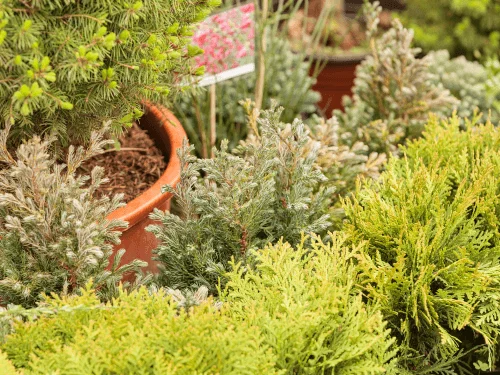
Match mature size to USDA hardiness, light, drainage, and wind. Use a tall evergreen for screening, a mounded shrub for foundation planting, or ground cover on slopes. Repetition unifies home landscapes, while contrast creates a focal point in the landscape.
What are the best small evergreen shrubs?
Blue Star juniper, dwarf Chamaecyparis, azalea, and Daphne are strong small-space choices. The best evergreen shrubs fit without constant shear work; check mature spread and leave airflow around glossy foliage.
Do evergreen shrubs flower as long as hydrangea?
Not usually. A hydrangea may have a long bloom time from mid-summer onward, while evergreen shrubs often bloom briefly. Combine azalea for spring, Viburnum or Mahonia for winter, and summer perennials.
When should I prune an evergreen hedge?
Prune flowering shrubs after bloom, and shape boxwood, yew, or Thuja lightly during growth. Avoid leafless old conifer wood; natural forms need less pruning and preserve year-round interest.
Why can an evergreen turn brown in winter?
Frozen soil, wind, salt, or poor drainage can brown green foliage. Water before freezing, mulch roots, and choose a protected area so evergreen shrubs retain year-round beauty and lasting structure.
Starting a Fruit Garden Q&A
What is the easiest fruit to grow for a first garden?
Strawberry is often the simplest starting point because it fits containers, fruits quickly, and is easy to replace. Raspberry, blackberry, and currant can also be forgiving when their spread is controlled. The best fruit is the one matched to your climate, sunlight, soil, and available care.
Can I grow fruit trees in a small space?
Yes. Choose a dwarf tree on a clearly labeled rootstock, train an espalier against wires, or use fruit trees in containers with sufficient soil volume and winter protection. Confirm mature dimensions, pollination needs, and whether the container can be watered consistently before you grow fruit trees.
Do I need more than one fruit tree?
It depends on the cultivar. Some trees are self-fertile, while others need compatible partners that bloom together. A nursery may recommend 2-4 fruit trees for varied harvests, but one self-pollinating dwarf tree can be enough when garden space is limited.
How soon will fruit plants produce fruit?
Strawberries and some cane fruits may crop in the first or second season, while a grafted fruit tree often takes several years. Rootstock, plant age, climate, pruning, and stress all affect timing. Remove an excessive early crop if the young plant needs energy for roots and structure.
Can a fruit garden share space with vegetables?
Yes. A combined vegetable and fruit area works when permanent crops do not shade or crowd annual beds. Put long-lived fruit plants where future digging will not disturb their roots, maintain clear paths, and choose fruits to grow at home that fit the same sunlight and watering pattern as the wider garden.
Whether you are opening your first seed packet or refining an established vegetable garden, successful planting begins with timing. A planting calendar helps turn changing seasons, frost risk, and local climate into practical decisions about what to sow, what to start indoors, and when to move seedlings outside. This guide explains those choices in plain language so you can plan confidently without treating dates as rigid rules. Use it as a voiceover-ready script or a practical reference, following the numbered sections in order or jumping directly to the season you are planning. Always adjust the advice for your zip code, current weather, soil conditions, and the microclimate around your beds.
1. Calendar Basics
A planting calendar is a guide that tells you when to plant vegetables, herbs, and fruits. It translates climate, temperature, and seasons into a usable planting schedule, so you are less likely to sow too early into cold soil or too late for a crop to mature. A good calendar may show a range rather than one rigid planting date because seeds respond to real growing conditions, not a number printed on a page.
Think of the vegetable planting calendar as a planning tool, not a guarantee. It combines the average frost date, expected soil temperatures, and each crop's days to maturity. Some versions are called a planting chart, gardening calendar, seed planting calendar, or almanac planting calendar. Whatever the label, the best version helps a gardener decide when to plant seeds, when to transplant, and when the likely harvest will arrive.
A regional guide becomes more useful when you search by zip code and confirm the result against nearby weather forecasts. Your yard may be warmer, colder, wetter, or windier than the broader region. That local difference is your microclimate. A sunny brick wall, low frost pocket, raised bed, greenhouse, or coastal breeze can shift the best time to plant by days or even weeks.
2. Two Growing Seasons
Cool-season crops prefer mild weather and often tolerate light frost. They are usually planted in fall, winter, or early spring, depending on climate. Lettuce, spinach, carrots, pea vines, broccoli, kale, radish, beet, collards, and swiss chard are familiar examples. Their seeds may germinate in cooler soil, and leafy growth often stays tender when days are bright but not hot. In many areas, these crops provide both a spring crop and a second fall crop.
Warm-season crops need warm soil, frost-free nights, and stronger summer heat. Tomatoes, peppers, cucumber, squash, beans, and corn fit this group. They are planted in spring and summer after danger of frost has passed, and they slow or stop in cold weather. Freezing temperatures can kill tender foliage, so never let a warm afternoon tempt you to ignore the last frost date.
The simple rule is memorable: cold weather favors leafy greens and roots, while hot weather favors fruiting vegetables. Frost signals the end of most warm-season plants. There are exceptions among the many varieties of vegetables, but this division gives a new gardener a reliable starting point. It also explains why one bed can move from peas in spring to cucumbers in summer and back to spinach in fall.
3. Local Frost Timing
Your last frost date marks the approximate start of safe outdoor planting for tender crops, while your first frost date marks the likely end of their season. Together, the first and last frost dates define the frost-free growing window. They are averages, not appointments. The last average frost can arrive early or late in any particular year, so pair the historical date with current forecasts before you plant vegetables outside.
Next, identify your USDA plant hardiness zone. The USDA map describes average annual minimum winter temperatures and is especially helpful when choosing a perennial, but hardiness alone does not schedule annual vegetables. For example, hardiness zone 5 says something important about winter cold; it does not tell you whether this spring is wet, whether your soil drains slowly, or whether your garden sits in a sheltered microclimate.
Use these layers in order: find the regional frost date by zip code, note your hardiness zone, observe your site, then inspect the short-range weather. If several cold nights are predicted, delay a tender transplant or protect seedlings with cloches or row cover. In mild regions, your calendar may include winter seeding. In cold regions, winter is mainly a time for planning and starting seeds indoors.
4. Seasonal Planting Guide
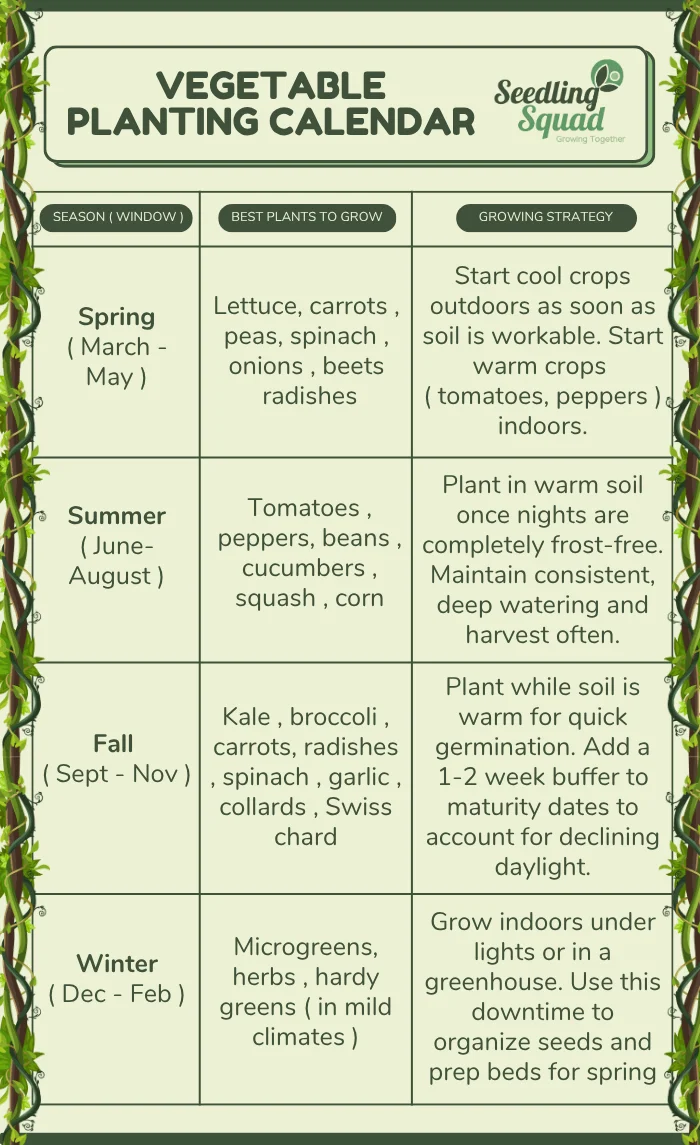
Spring from March through May is the transition into active growth. Start cool crops outdoors as soon as the soil can be worked, start warm crops indoors, and prepare beds with compost. Early choices include lettuce, carrots, peas, spinach, onions, beet, and radish. A spring planting guide should distinguish direct seeding from seed starting because not every vegetable likes the same treatment.
Carrots, peas, and many root crops are normally direct-sown directly in the ground. Tomatoes and peppers are commonly started indoors six to eight weeks before transplanting, although the exact planting time depends on the crop and region. Seeds indoors need bright light, airflow, even moisture, and enough warmth to germinate. If germination is slow, check the seed's age and temperature before adding more water.
Summer from June through August belongs to warm-season crops and steady maintenance. Plant tomatoes, peppers, beans, cucumber, squash, and corn when soil temperatures are suitable and nights remain frost-free. Water deeply and consistently, manage weeds and pests, fertilize only as needed, and pick produce often. Regular harvesting keeps beans and cucumber productive and turns careful spring timing into a generous summer harvest.
Do not assume summer means the calendar is finished. In short-season climates, compare days to maturity with the first frost date before planting another round. In warm climates, intense heat may interrupt fruit set, making shade, mulch, and careful irrigation important. The optimal time for a second sowing may be late summer, when plants can mature as the air begins to cool.
Fall from September through November is another excellent vegetable planting season. Soil is still warm enough for many seeds to germinate quickly, while cooler air suits kale, broccoli, carrots, radish, spinach, garlic, collards, and swiss chard. Count backward from the first frost date, then add a week or two because autumn daylight declines. This cushion improves the chance of a bountiful harvest.
Winter from December through February is mostly a rest season in cold climates, but it is still useful. Grow microgreens and herbs indoors, review seed packets, clean and maintain tools, add protected compost, and plan next season. A greenhouse or mild regional climate may support hardy greens. You can also start plants slowly under lights, organize heirloom seed, and update your planting calendar with notes from the year.
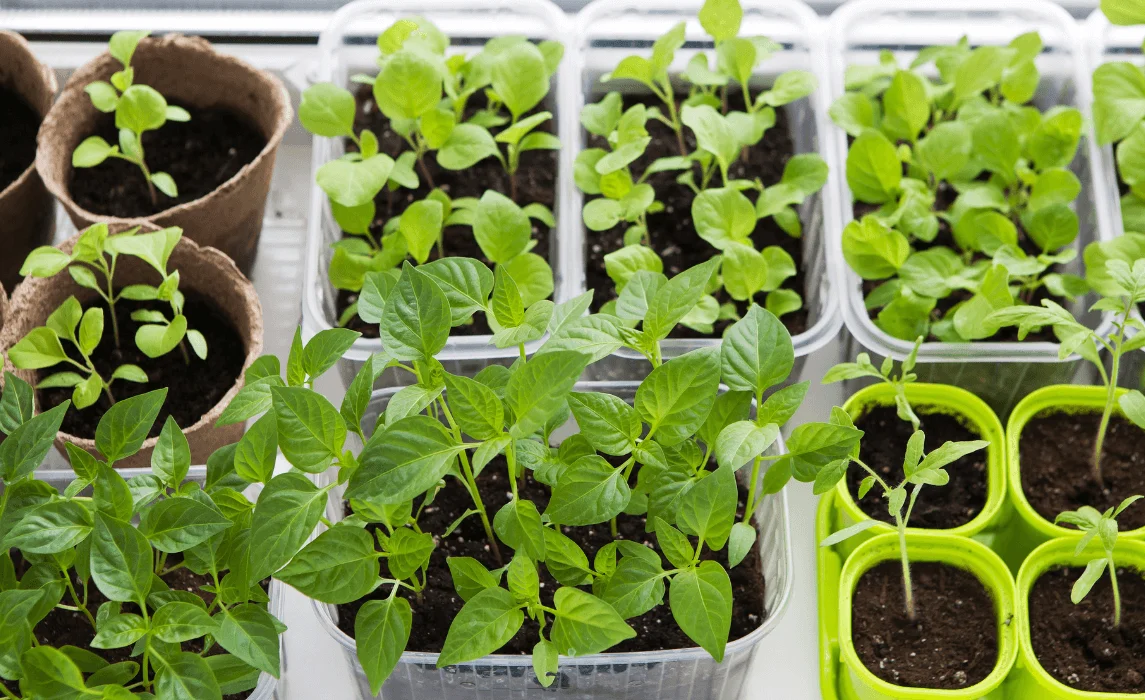
Some crops benefit from a head start indoors. Tomatoes, peppers, eggplant, and certain brassicas can be started from seed before outdoor soil is ready. Beginning with vegetables from seed gives you access to more varieties than buying a starter plant, and it can reduce cost. To grow your own seedlings well, provide strong light just above the leaves, clean containers, seed-starting mix, gentle airflow, and bottom watering when practical.
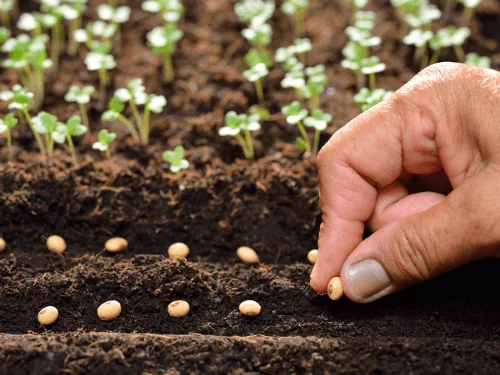
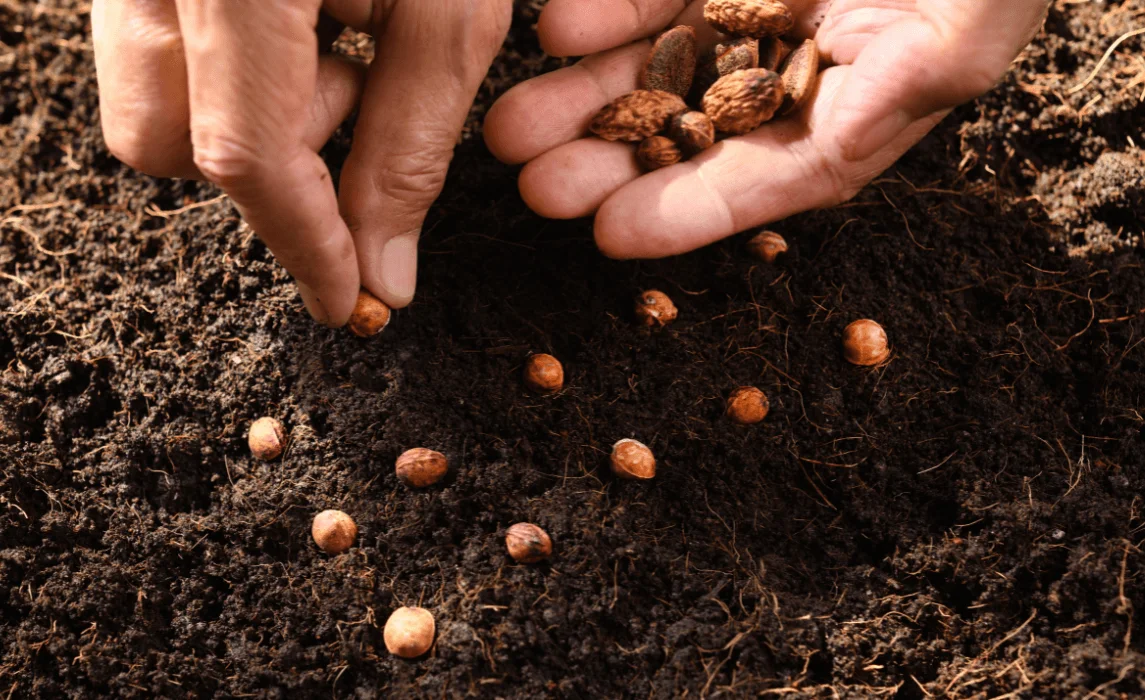
Other crops perform best through direct seeding. Carrots dislike root disturbance, peas establish easily in cool beds, and beans usually grow fast once soil is warm. Read the seed packets to learn depth, spacing, planting date, and expected germination. When you plant seeds too deeply, keep them waterlogged, or allow the surface to crust, young shoots may fail before they emerge.
Indoor seedlings must be hardened off before they move outside. Over seven to ten days, expose them gradually to brighter light, wind, and cooler temperatures. Bring them in when conditions are harsh. Then transplant seedlings on a calm, cloudy day or near evening, water them in, and monitor them closely. This transition helps protect seedlings from sunscald, wind stress, and sudden temperature swings.
6. Simple Planting Rules
Use three rules when a detailed vegetable planting chart feels overwhelming. First, cool weather usually means leafy greens and roots. Second, hot weather usually means fruiting vegetables. Third, frost means stop or shelter tender warm-season crops. These rules do not replace a vegetable planting calendar, but they make every recommendation easier to interpret.
For the best time to plant vegetables, work backward from the crop's needs. Ask whether it likes cool or warm conditions, whether it should be direct-sown or started indoors, and whether enough frost-free growing days remain. Then compare the answer with your local seeding calendar. If the date and the weather disagree, protect the crop or wait. A week of patience is often better than replacing damaged plants from seeds.
Remember that planting time also affects flavor and yield. Lettuce sown too late may bolt in heat, while a tomato transplanted into chilly soil may stall. Garlic needs a long cool period in many regions, and a late pea crop may meet summer heat before flowering. Matching the crop to the season is the shortest path from seedling to harvest.
7. Garden Habits
Build soil with finished compost for better structure, drainage, and nutrient availability. Water consistently rather than excessively; most vegetables prefer a thorough soak followed by time for the upper soil to breathe. Check moisture below the surface instead of watering automatically. Mulch after the soil warms to reduce evaporation and splashing, but keep it away from tender stems.
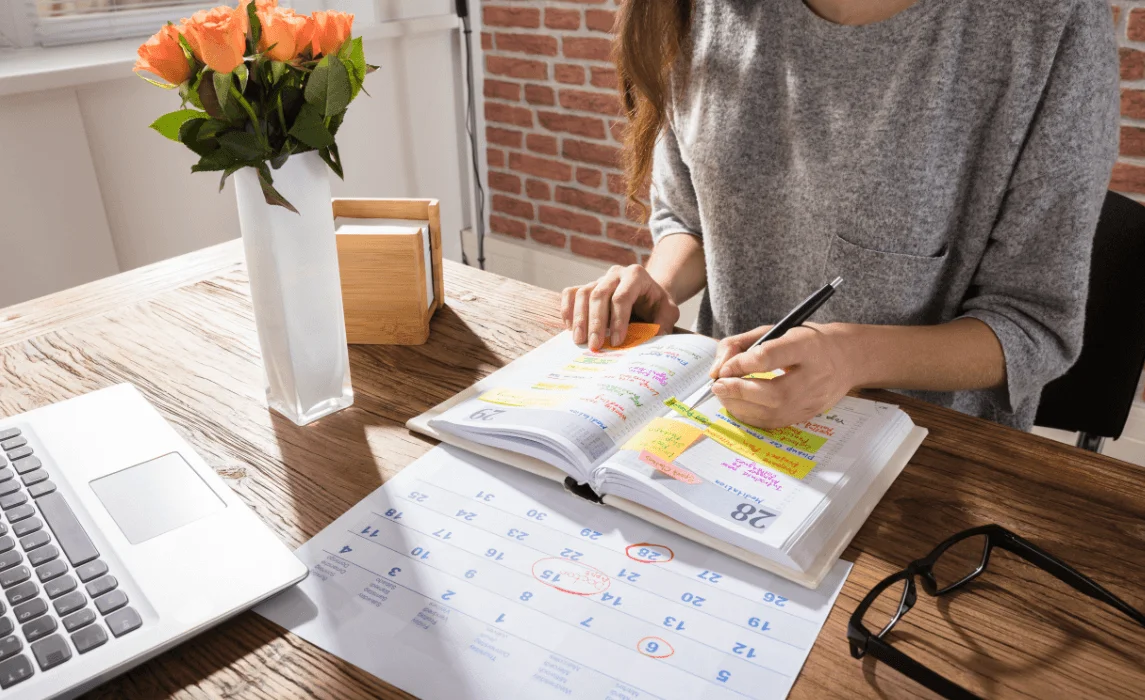
Do not plant everything at once. Succession planting means sowing smaller batches at intervals, which spreads out the harvest. Try radish every one or two weeks, beans in several rounds, or leafy greens before and after peak heat. Keep simple records of the variety, seeding date, transplant date, weather, pest pressure, and yield. Your own notes gradually become the most accurate gardening calendar for your site.
Use companion planting with realistic expectations. Nearby plant combinations can improve use of space, provide shade, attract pollinators, or simplify rotation, but they cannot rescue poor light, bad soil, or incorrect timing. You may plant flowers near vegetables to support beneficial insects, yet each crop still needs appropriate spacing. Avoid claims that one companion automatically prevents every pest.
Always read seed packets. They explain sowing depth, spacing, days to maturity, whether to start plants indoors, and how long seeds may take to germinate. Compare those instructions with the almanac planting calendar and your local observations. The packet describes the plant; the calendar describes the season; your garden reveals what is happening now.
8. Quick Calendar Summary
Plant cool crops in cool seasons and warm crops in warm seasons. Use the last frost to begin tender spring planting and the first frost to judge the end of summer crops. Match each crop to your climate, not merely to a month name. Then refine the planting schedule with soil warmth, current forecasts, your USDA zone, and the special conditions around your beds.
In practice, the process is simple: choose a crop, decide whether to sow outdoors or start it indoors, check the frost window, read the packet, and set a realistic date. Prepare the soil, water evenly, harden off any seedling, and keep notes. With that routine, a seed planting calendar becomes a flexible decision tool rather than a rigid list, and each season teaches you how to plan the next one.
A: No. It is a useful regional estimate built from historical conditions. Confirm its suggested planting date with your local forecast, soil condition, and microclimate.
Q: When is the best time to plant?
A: The best time to plant is when the crop's temperature needs match your frost window and the soil is workable. Cool crops can begin earlier; tender warm-season crops wait until frost danger has passed.
Q: Can every vegetable be started indoors?
A: No. Tomatoes and peppers handle indoor seed starting well, while carrots are usually sown directly in the ground. Follow crop-specific seed packets and avoid disturbing sensitive roots.
Q: What if a late frost is forecast?
A: Delay transplanting tender crops, move containers inside, or cover established plants overnight. Remove covers after temperatures rise so light and airflow return.
Q: How often should I revise my calendar?
A: Review it at the start of each growing season and add notes after major sowings and harvests. Records reveal which dates, varieties, and methods work best in your garden.
Related posts
Here are some articles you might be interested in.


.webp)