Ryan Johnson relocated to his grandfather's old farm when he was 22 years old where he discovered the joys of farming and gardening. With his cool demeanor and strong-willed passion for the agrarian lifestyle, he now shares his know-how to aspiring gardeners.
Bee Garden Q&A
What flowers attract the most bees to a garden?
Bees are generally drawn to flowers that are blue, purple, yellow, or white, and that offer easy access to nectar and pollen. Lavender, bee balm, sunflower, and coneflower are some of the most reliable plants that attract bees to a home garden.
Do I need to avoid pesticides in a bee-friendly garden?
Yes, whenever possible. Insecticide and pesticide products can harm adult bees and their larva, even in small amounts. Choosing natural pest control methods helps keep your garden safe for visiting bees.
Can a small home garden still support pollinators?
Absolutely. Even a few containers of zinnias, salvia, or crocus on a balcony can offer pollen and nectar for local bees. Bees will travel between small garden spaces, so every bit of habitat helps.
Do bees need more than just flowers?
Yes. Bees also need nesting sites and water. Ground-nesting bees need patches of bare soil, while a shallow bee bath gives bees a safe spot to drink, especially in hot weather.
Will planting a pollinator garden really help save the bees?
It genuinely can. As natural habitat shrinks, home gardens have become an important food source and shelter for bees, including many native bee species. A well-planned bee garden supports pollination for your own flowers and vegetables while helping the wider bee population.
What is the best USDA zone for growing a bee garden?
There is no single best zone. Most of the plants above grow well across USDA zones 4 through 9, and gardeners in colder or warmer zones can simply choose varieties suited to their climate, or grow warm-season bees favorites like sunflower and zinnia as annuals.
Hypoallergenic Plants Q&A
Do houseplants cause allergies?
Yes, certain indoor plants can trigger a plant allergy through loose pollen, scented flowers, sap, dust, or damp soil. Allergies and houseplants are highly individual: one person may sneeze near peace lilies while another has no response. Overwatering lets mold produce a spore that may become airborne. If symptoms begin after adding plants in your home, isolate each pot, clean the area, and discuss persistent allergy symptoms with a qualified clinician.
Which plants to avoid?
Plants to avoid include strongly fragrant flowers, visibly dusty specimens, and wind-pollinated garden plants brought inside while shedding. Male palms can release pollen if they flower, and wet potting mix can make allergies worse. The best and worst choices depend on the person, so remove any plant that appears to cause pollen allergy symptoms or contact irritation.
Can indoor plants purify air?
Claims about indoor plants that purify come largely from controlled chambers. Although some air-purifying plants can take up chemicals, ordinary air purifying plants are not fast enough to replace ventilation or air cleaners in a real room. Plants can improve air quality mainly by supporting comfort and encouraging care for the space; they should not be presented as houseplants for clean air that reliably remove formaldehyde. To improve indoor air quality, control sources, ventilate safely, and use proven filtration.
How does the ogren scale work?
The Ogren Plant Allergy Scale system, also called OPALS, rates a plant's potential allergenicity from 1 to 10. It considers pollen, fragrance, and contact reactions, but the likelihood a plant will cause a reaction still depends on the individual and exposure. A high score does not prove a particular plant will cause pollen allergy, and a low score is not a medical guarantee.
Can plants help you breathe?
Allergy-friendly plants may make an indoor space calmer, but they do not treat disease or guarantee allergy relief. For people with allergies, clean leaves, dry saucers, fresh potting mix, and steady air circulation matter more than labels such as hypoallergenic plants. These indoor plants that are allergy-safe can help you breathe easier only by limiting likely triggers; they cannot help you breathe during an asthma attack.
Planting Calendar Q&A
Is an almanac planting calendar exact?
No. It is a useful regional estimate built from historical conditions. Confirm its suggested planting date with your local forecast, soil condition, and microclimate.
When is the best time to plant?
The best time to plant is when the crop's temperature needs match your frost window and the soil is workable. Cool crops can begin earlier; tender warm-season crops wait until frost danger has passed.
Can every vegetable be started indoors?
No. Tomatoes and peppers handle indoor seed starting well, while carrots are usually sown directly in the ground. Follow crop-specific seed packets and avoid disturbing sensitive roots.
What if a late frost is forecast?
Delay transplanting tender crops, move containers inside, or cover established plants overnight. Remove covers after temperatures rise so light and airflow return.
How often should I revise my calendar?
Review it at the start of each growing season and add notes after major sowings and harvests. Records reveal which dates, varieties, and methods work best in your garden.
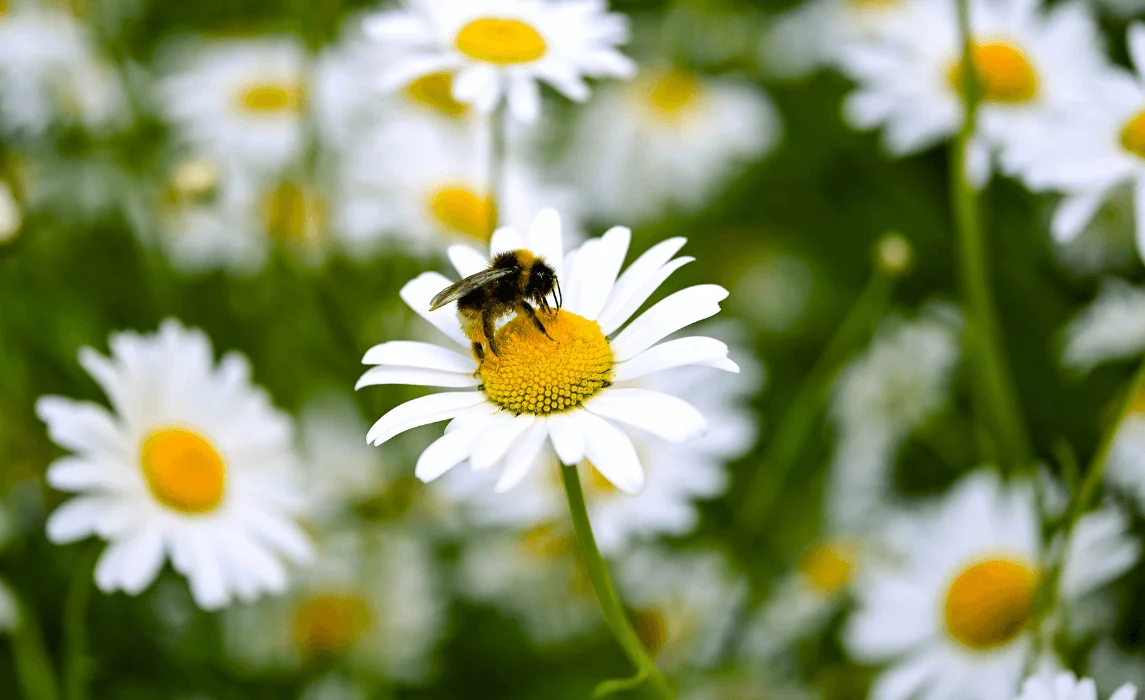
If you want a garden that hums with life, plant a bee garden. A bee-friendly garden gives honey bees, bumble bees, and native bees a steady supply of nectar and pollen, a safe place to nest, and a break from insecticide-heavy landscapes. Bees are important pollinators, helping pollinate much of the food we eat, which is why groups like the National Wildlife Federation encourage home gardeners to help save the bees, one garden space at a time. Not every bee lives in a hive, either: many wild bees are solitary bees or ground-nesting bees that just need bare soil and a good bee habitat, not only a few showy flowers.
Creating a bee garden is simple. Choose flowering plants native to your area, pick varieties that bloom at different times throughout the summer, and skip the pesticide and insecticide sprays whenever you can, since these can harm adult bees and their larva. Add a bee bath along with a few trees and shrubs for shelter, and your local garden can quickly turn into a real habitat for bees. Below are ten of the best plants that attract bees to help you start your own pollinator garden.
10 Best Bee Garden Plant Varieties to Attract Bees
1. Lavender
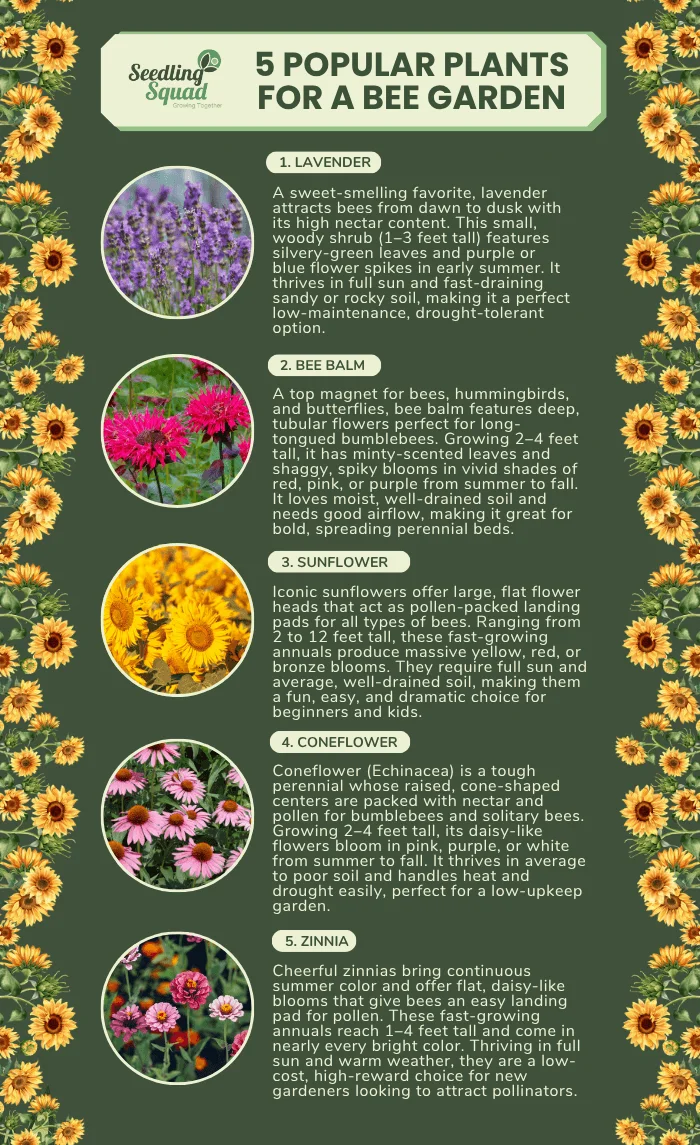
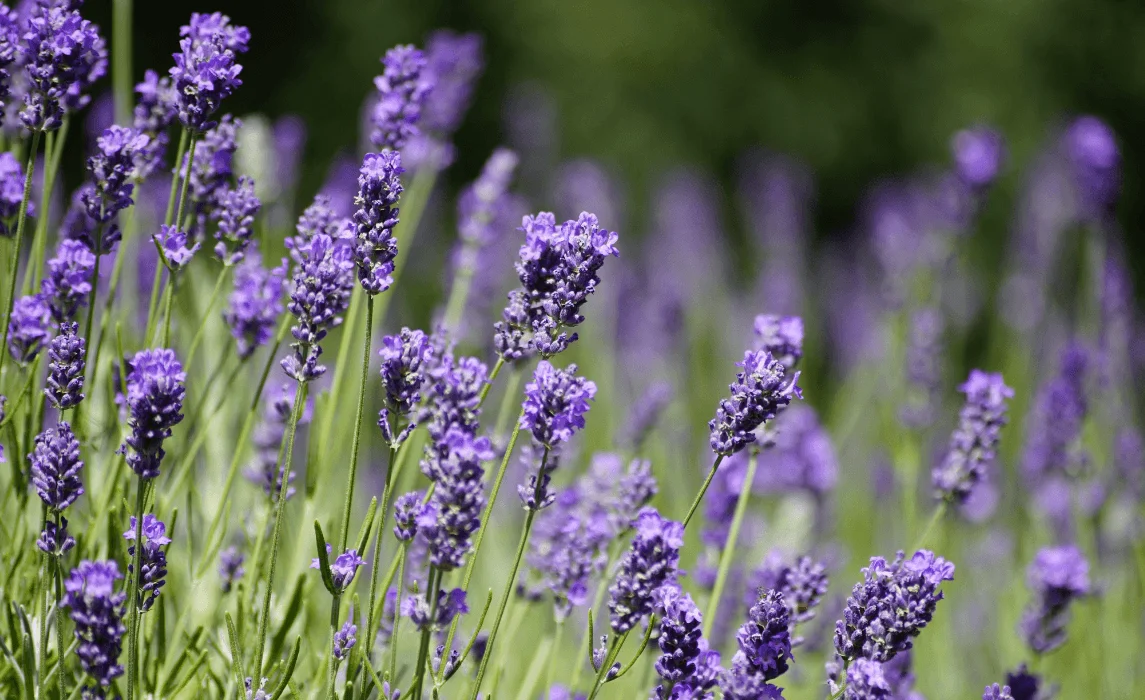
Lavender is a favorite among gardeners who want a bee-friendly garden that also smells wonderful. Bees are drawn to its high nectar content and strong scent, and honeybees in particular will visit lavender flowers from morning until dusk. The plant grows as a small, woody shrub reaching one to three feet tall, with narrow silvery-green leaves and tall spikes of purple, violet, or blue blooms that appear in early to mid-summer. Lavender thrives in sunny, dry spots with sandy or rocky soil, and it does not like wet feet, so good drainage matters more than rich soil. This plant is ideal for gardeners who want a low-maintenance, drought-tolerant option that rewards a little neglect.
Soil: Sandy or rocky soil that drains fast
Water: Light watering, let soil dry out between waterings
Light: Full sun, at least 6 hours a day
Humidity: Low humidity is best
Fertilizer: Little to none needed
Temperature: Warm, 60 to 80°F
USDA Zone: 5 to 9
2. Bee Balm
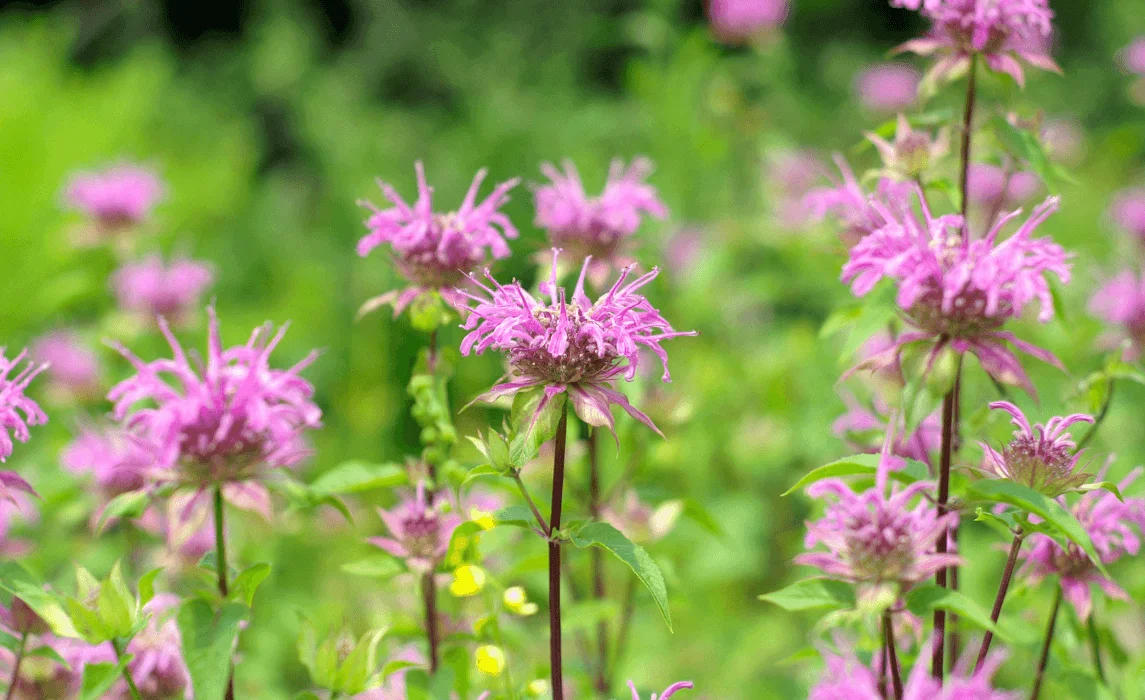
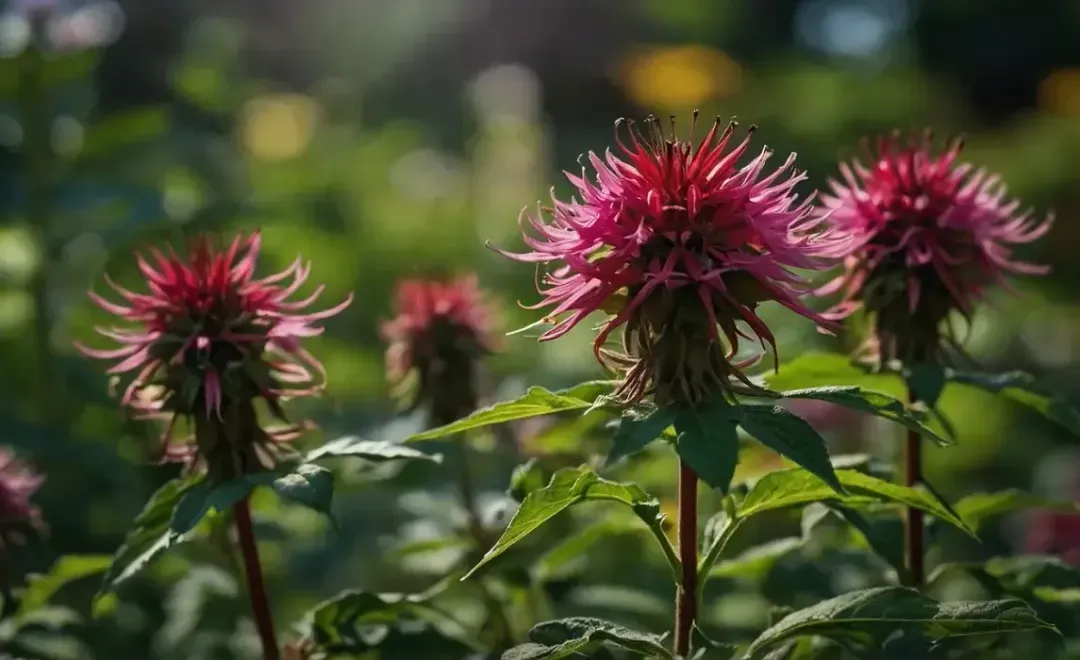
Bee balm gets its name honestly, since it is one of the top plants that attract bees, along with hummingbirds and butterflies. Its tubular flowers are shaped perfectly for long-tongued bumble bees to reach deep pools of nectar. Bee balm grows two to four feet tall with square stems and pointed, slightly fuzzy green leaves that release a minty scent when brushed. Its shaggy, spiky blooms come in shades of red, pink, purple, and white, blooming from summer into early fall. It thrives in moist, well-drained soil and appreciates good air circulation to avoid powdery mildew. This plant suits gardeners who want a bold, colorful garden and don't mind giving a perennial bed a little extra room to spread.
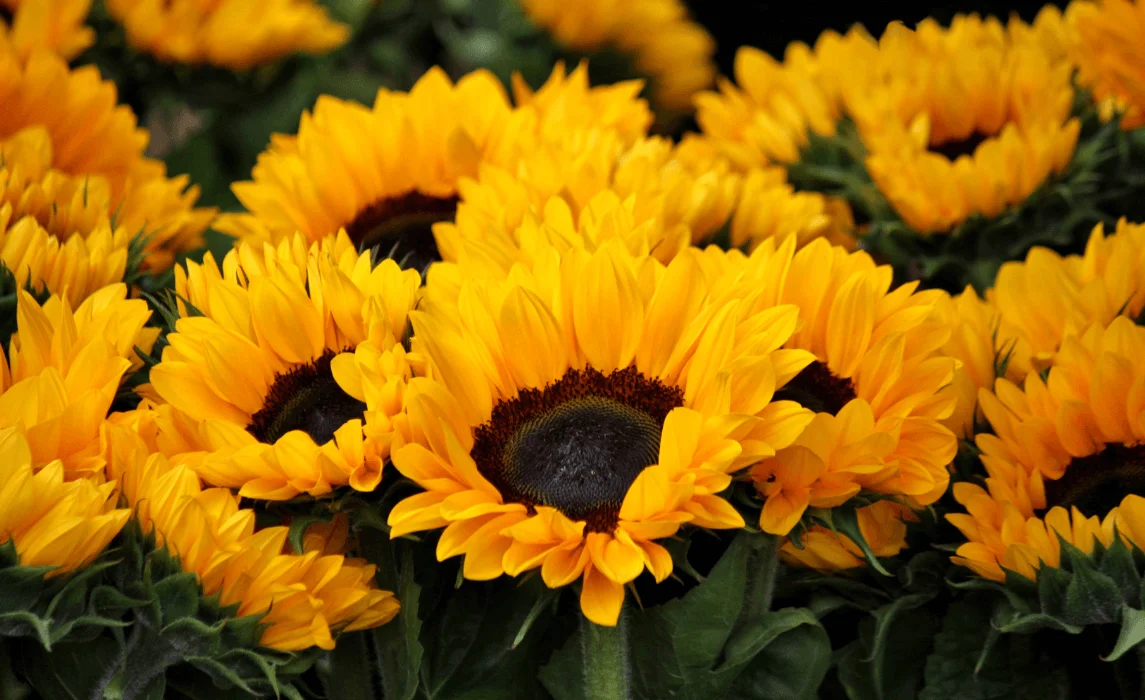
Few plants say "bee garden" like the sunflower. Their large, flat flower heads act like landing pads packed with pollen, making them a favorite stop for honey bees, bumble bees, and many native bees. Sunflowers can grow anywhere from two to twelve feet tall depending on the variety, with broad, rough-textured green leaves and big golden-yellow blooms, though some varieties come in red, orange, or bronze tones. They thrive in full sun with average, well-drained soil and grow quickly from seed. Sunflowers are a great choice for beginner gardeners, families with kids, or anyone who wants fast, dramatic results in a home garden or even a vegetable garden border.
Soil: Average, well-drained soil
Water: Deep watering once a week
Light: Full sun, 6 to 8 hours daily
Humidity: Tolerates normal humidity
Fertilizer: Balanced fertilizer at planting
Temperature: Warm, 70 to 78°F
USDA Zone: 2 to 11 (grown as annual)
4. Coneflower
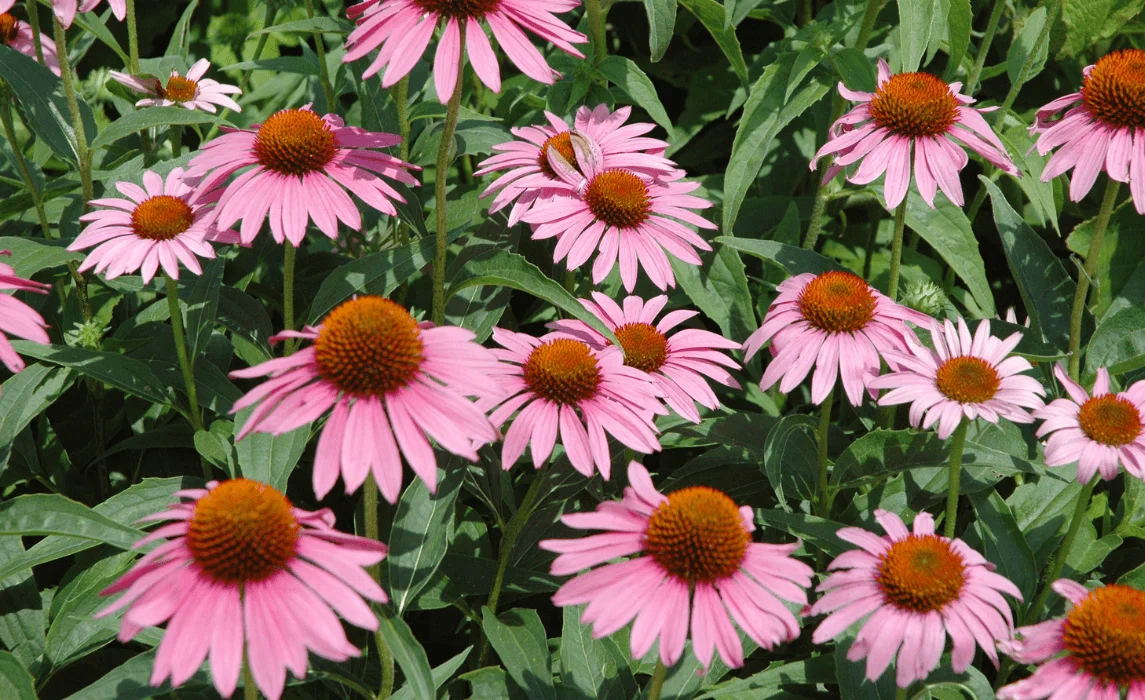
Coneflower, also called echinacea, is a tough, reliable perennial that supports bees and other pollinators for weeks at a time. Its raised, cone-shaped center is packed with tiny florets full of nectar and pollen, drawing in bumble bees and many solitary bees. The plant grows two to four feet tall, with stiff stems, lance-shaped green leaves, and daisy-like petals in shades of pink, purple, white, or orange that bloom from summer through early fall. Coneflower thrives in average to poor soil, needs little watering once established, and handles heat and drought with ease. This makes it a great pick for gardeners who want a beautiful garden without constant upkeep.
Soil: Average, well-drained, tolerates poor soil
Water: Low, drought-tolerant once established
Light: Full sun to light shade
Humidity: Handles both dry and humid air
Fertilizer: Rarely needed
Temperature: Warm, 65 to 80°F
USDA Zone: 3 to 9
5. Salvia
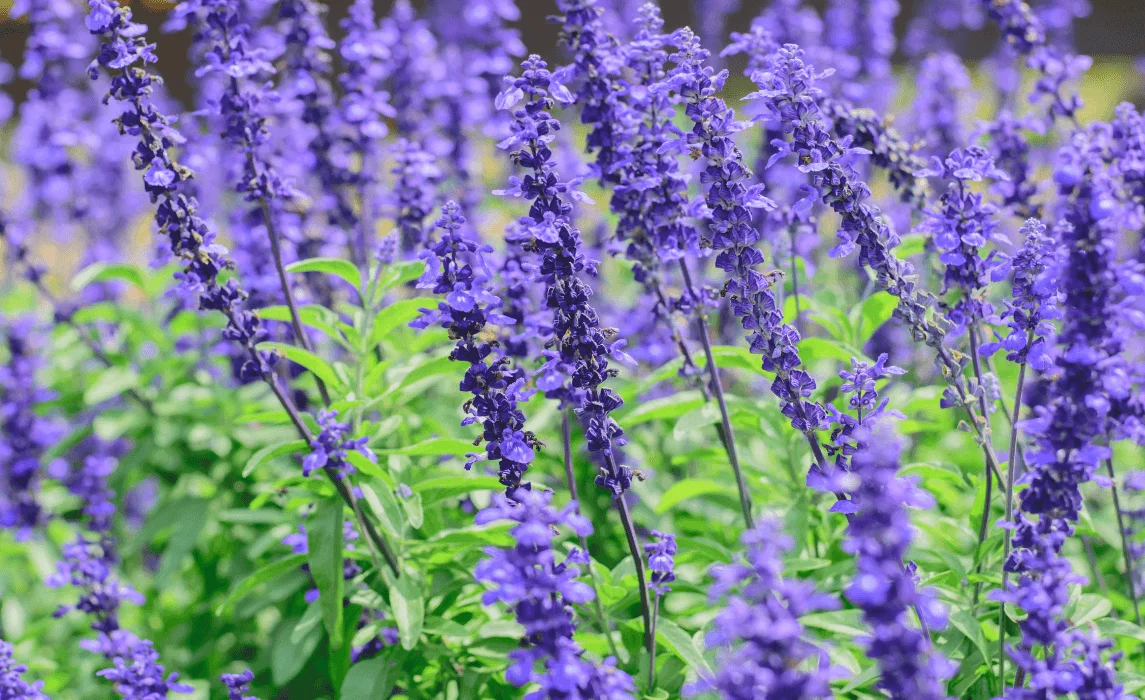
Salvia, or ornamental sage, is a long-blooming plant that keeps a bee garden active from late spring until frost. Its narrow flower spikes hold many small tubular blooms, giving bees a chance to move from bloom to bloom quickly and efficiently. Salvia typically grows one to three feet tall, with grayish-green, slightly textured leaves and flower spikes in deep purple, blue, red, or white. It thrives in full sun and well-drained soil, and many varieties tolerate heat and short dry spells once established. Salvia is a smart choice for gardeners who want continuous color and a plant that keeps attracting bees well after spring flowers fade.
Soil: Well-drained, average fertility soil
Water: Moderate, water when top soil is dry
Light: Full sun
Humidity: Average humidity, avoid soggy conditions
Fertilizer: Light feeding once in spring
Temperature: Warm, 65 to 85°F
USDA Zone: 5 to 10
6. Borage
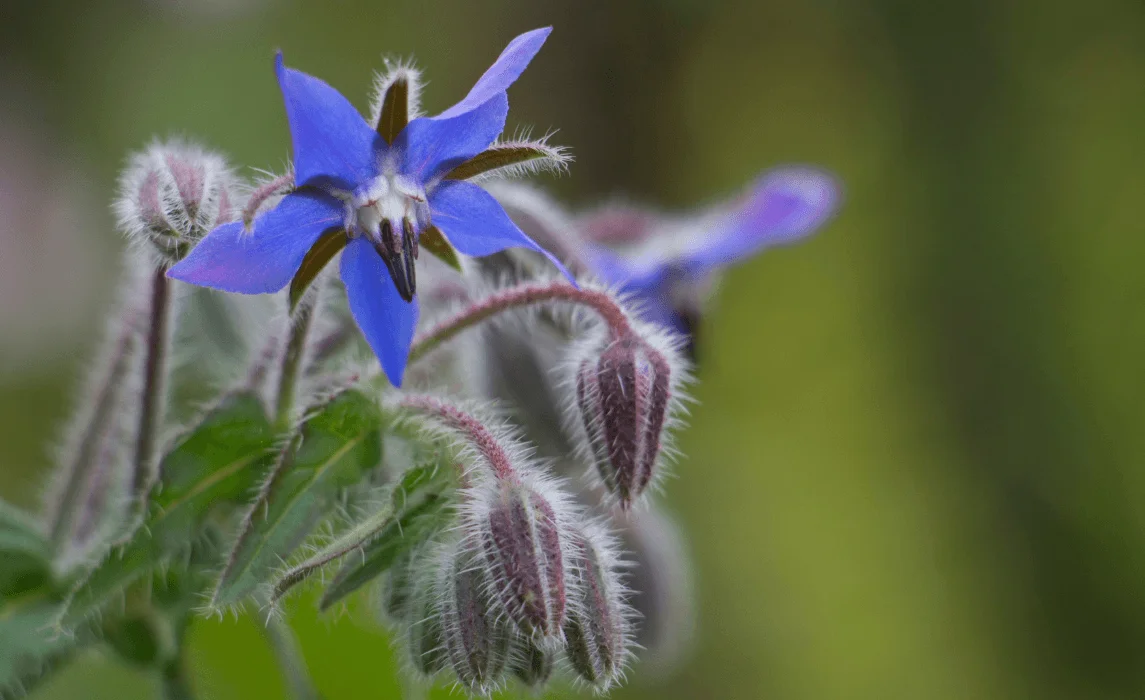
Borage is an old cottage-garden favorite that bees seem unable to resist. Its star-shaped, nodding blue flowers refill with nectar throughout the day, so honeybees and bumble bees often return to the same plant again and again. Borage grows one to three feet tall with hairy, gray-green leaves and clusters of bright blue, sometimes pink, star-shaped blooms. It grows easily from seed, thrives in average soil, and self-seeds readily, often popping up again the next year without any replanting. This plant is a good match for casual gardeners, herb growers, or anyone adding pollinator-friendly plants near a vegetable garden, since borage is also edible.
Soil: Average, well-drained soil
Water: Regular watering, do not let it dry out completely
Light: Full sun to partial shade
Humidity: Tolerates normal humidity
Fertilizer: Little needed
Temperature: Cool to warm, 60 to 75°F
USDA Zone: 2 to 11 (grown as annual)
7. Zinnia
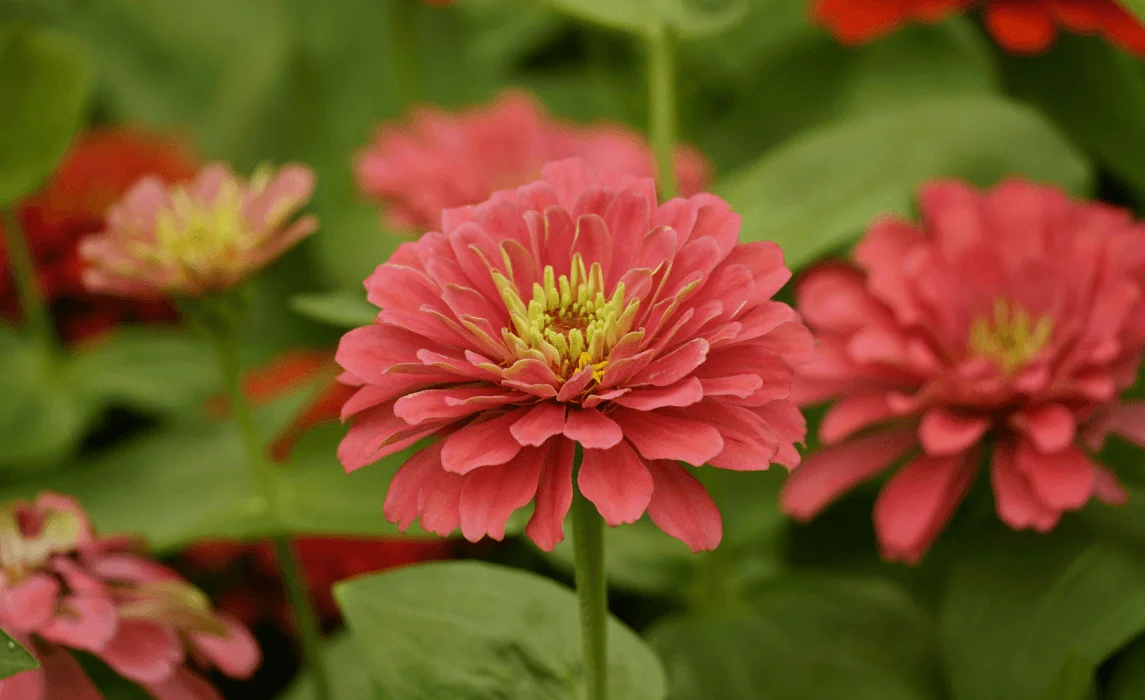
Zinnias are easy, cheerful annuals that bring bees, butterflies, and color to a home garden all summer long. Their flat, daisy-like blooms give bees an easy landing spot and plenty of exposed pollen. Zinnias range from one to four feet tall, with rough oval leaves and single or double blooms in almost every color except true blue, including hot pink, orange, yellow, and red. They thrive in full sun and warm weather, growing quickly from seed and blooming continuously if spent flowers are removed. Zinnias are an excellent pick for new gardeners or anyone who wants a low-cost, high-reward way to attract more bees to a small garden space.
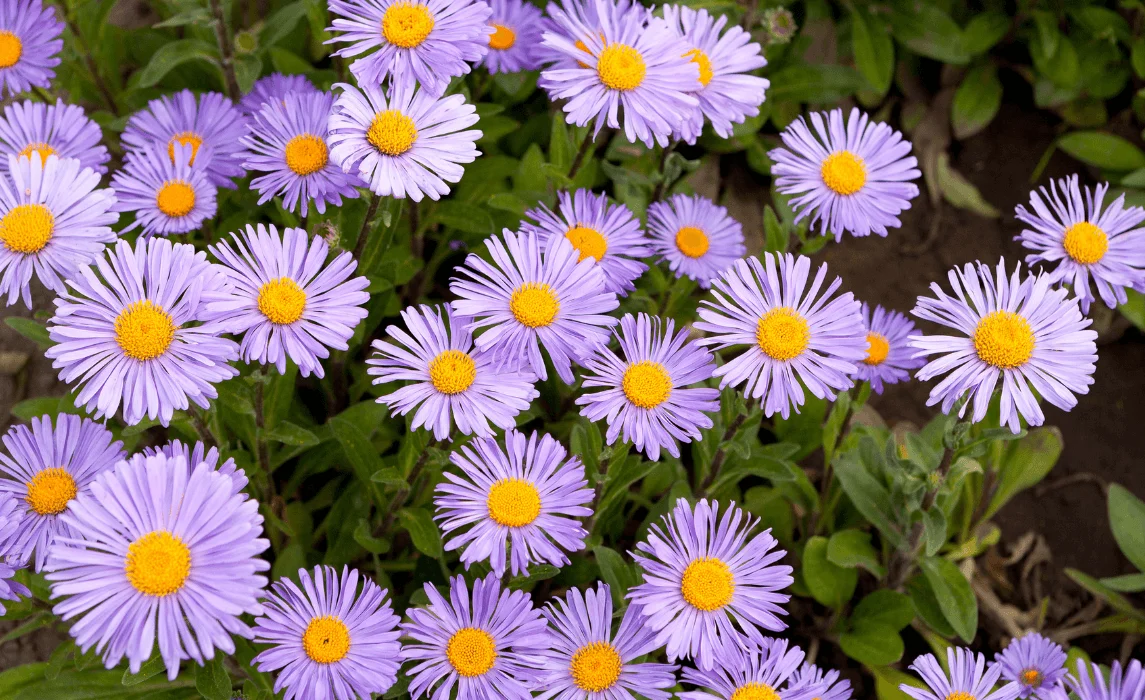
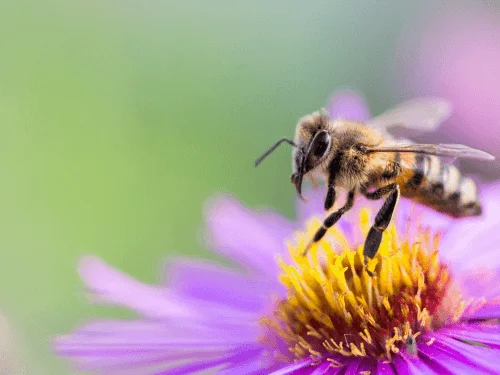
Aster is one of the best plants for feeding bees late in the season, when most other flowers have already finished blooming. Its daisy-shaped flowers give bumble bees and native bees a crucial food source right before winter. Asters grow one to four feet tall depending on the variety, with narrow green leaves and clusters of small, star-shaped blooms in purple, blue, pink, or white with bright yellow centers. They thrive in full sun to partial shade and moist, well-drained soil. Asters are a great choice for gardeners who want to extend their bee garden's season and give local bee populations a boost heading into fall.
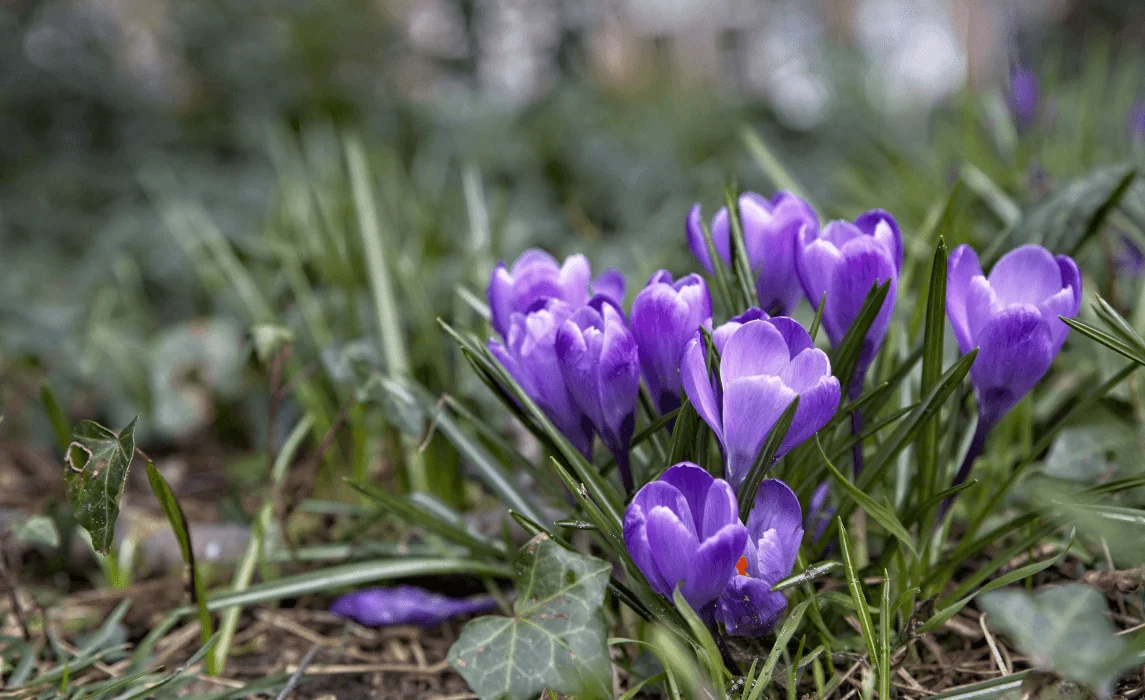
Crocus is a small spring bulb that plays a big role in a bee-friendly garden by blooming before almost anything else, offering an early food source when bees first emerge from winter. Its cup-shaped flowers open in sunlight and close at night, protecting the pollen inside. Crocus grows just three to six inches tall, with thin grass-like leaves and blooms in purple, yellow, or white, often with delicate striping. It thrives in well-drained soil and full sun to light shade, and the bulbs are planted in fall for a spring show. Crocus suits gardeners with limited space, since bulbs can be tucked into lawns, borders, or containers.
Soil: Well-drained soil
Water: Light watering, more during active growth
Light: Full sun to light shade
Humidity: Tolerates normal humidity
Fertilizer: Bulb fertilizer at planting time
Temperature: Cool, 40 to 60°F during bloom
USDA Zone: 3 to 8
10. Milkweed
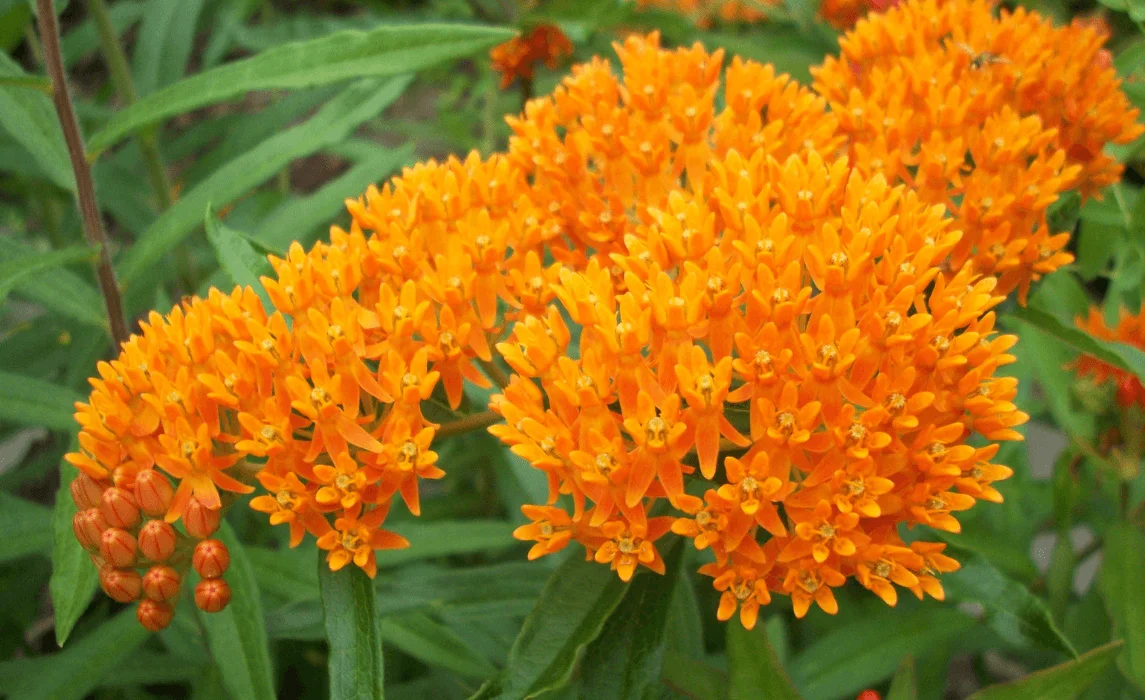
Milkweed is best known for monarch butterflies, but it is also a strong nectar source that helps attract bees, particularly bumble bees and honeybees, during mid to late summer. Its clusters of small, star-shaped flowers sit atop tall stems, offering an easy target for many kinds of bees at once. Milkweed grows two to four feet tall, with broad, pointed green leaves and rounded flower clusters in pink, orange, or white depending on the species. It thrives in full sun and average to dry soil, and once established it needs very little care. Milkweed is a great fit for gardeners who want to support bees and butterflies together, and it works well in a wildflower-style or naturalized garden bed.
Soil: Average, well-drained soil
Water: Low, drought-tolerant once established
Light: Full sun
Humidity: Tolerates dry and average humidity
Fertilizer: Rarely needed
Temperature: Warm, 65 to 85°F
USDA Zone: 3 to 9
Frequently Asked Questions:
What flowers attract the most bees to a garden?
Bees are generally drawn to flowers that are blue, purple, yellow, or white, and that offer easy access to nectar and pollen. Lavender, bee balm, sunflower, and coneflower are some of the most reliable plants that attract bees to a home garden.
Do I need to avoid pesticides in a bee-friendly garden?
Yes, whenever possible. Insecticide and pesticide products can harm adult bees and their larva, even in small amounts. Choosing natural pest control methods helps keep your garden safe for visiting bees.
Can a small home garden still support pollinators?
Absolutely. Even a few containers of zinnias, salvia, or crocus on a balcony can offer pollen and nectar for local bees. Bees will travel between small garden spaces, so every bit of habitat helps.
Do bees need more than just flowers?
Yes. Bees also need nesting sites and water. Ground-nesting bees need patches of bare soil, while a shallow bee bath gives bees a safe spot to drink, especially in hot weather.
Will planting a pollinator garden really help save the bees?
It genuinely can. As natural habitat shrinks, home gardens have become an important food source and shelter for bees, including many native bee species. A well-planned bee garden supports pollination for your own flowers and vegetables while helping the wider bee population.
What is the best USDA zone for growing a bee garden?
There is no single best zone. Most of the plants above grow well across USDA zones 4 through 9, and gardeners in colder or warmer zones can simply choose varieties suited to their climate, or grow warm-season bees favorites like sunflower and zinnia as annuals.
Related posts
Here are some articles you might be interested in.