Sarah Wilson started her gardening journey during the pandemic and had fallen in love with it ever since. Eager to connect with fellow garden enthusiasts, she wants to share the knowledge she's gained over the past three years.
Invasive Plants Q&A
What is the difference between a non-native plant and an invasive plant?
A non-native plant is any species growing outside its natural range, usually because people moved it. Most non-native species stay where they are planted. An invasive plant is a non-native plant species that spreads aggressively on its own, harms natural ecosystems, and causes economic or human health problems.
What key physical traits make an invasive plant easy to spot early on?
Watch for plants that leaf out earlier and hold leaves later than native species, grow unusually fast, form dense patches of a single species, or climb over other vegetation. Heavy seed production is another red flag.
What is the difference between an invasive species and a officially listed "noxious weed"?
Invasive species is an ecological label for organisms that spread and cause harm. A noxious weed is a legal designation set by a state or the U.S. Department of Agriculture, which can restrict selling or moving the plant. Many noxious weeds are invasive, but not every invasive is legally listed.
How do invasive plants harm local ecosystems, soil chemistry, and native wildlife?
They crowd out native plants that insects, birds, and mammals rely on, which lowers native biodiversity. Some, like garlic mustard, change soil chemistry and fungal networks, while others alter water flow or erosion. The combined impact of invasive species can endanger rare plants and animals and is a factor in the decline of many endangered species.
Can invasive plants cause structural damage to private property or lower land values?
Yes. Knotweed rhizomes can push through foundations, drains, and pavement, while English ivy and kudzu add weight that brings trees down onto roofs and fences. A heavy infestation can shrink usable land, raise removal costs, and in some markets complicate home sales.
Are any common invasive plant species toxic or hazardous to humans and pets?
Several are. Wild parsnip and giant hogweed sap can cause severe burns in sunlight. English ivy leaves and berries can upset the stomachs of people and pets, and buckthorn berries are a strong laxative. Dense shrub thickets like Japanese barberry also hold humid air that favors deer ticks.
How do invasive plant seeds accidentally hitchhike into new areas?
Plant seeds ride along in mud on boots, tires, and mowers, in contaminated mulch, fill dirt, hay, and birdseed, and on boat trailers. Birds eat fruit and drop seeds elsewhere, and floods carry fragments downstream. Cleaning gear between sites slows the spread of invasive plants.
What is the safest and most effective way to remove invasive plants on your property?
Identify the plant, then match the method. Hand pulling works for seedlings and garlic mustard, repeated cutting weakens vines, and herbicide on cut stems handles woody shrubs. Good plant control takes protective gear, careful label reading, and several years of follow-up, since managing invasive species always involves resprouts.
Why is standard yard-waste composting unsafe for invasive plant materials?
Home compost piles rarely get hot enough to kill seeds, roots, or stem fragments. Knotweed rhizomes, honeysuckle stems, and seed heads can survive and sprout wherever the finished compost goes, aiding the spread of invasive weeds into your garden.
How should pulled or cut invasive plants be properly disposed of?
Bag seed heads and flowering plants in heavy black plastic and leave them in the sun for a few weeks before sending them to the landfill. Dry woody stems on a tarp away from bare soil. Some counties also run special collections for invasives.
What native plant alternatives should be used to reseed areas after invasive removal?
Pick native alternatives suited to your region and site. In the Southeast, coral honeysuckle or crossvine can replace Japanese honeysuckle, Christmas fern or wild ginger work as shade groundcover, and serviceberry or redbud can stand in for Callery pear. The North Carolina Native Plant Society offers guidance on native plant species for local gardens.
Where and how can citizens report sightings of high-priority invasive species?
Use EDDMapS, a free app and website that sends early detection reports to land managers, or contact your county Cooperative Extension office or state department of agriculture. In North Carolina, the NC Invasive Plant Council shares reporting resources. Include a clear photo, the exact location, and the date to support a rapid response.
Pond Plants Q&A
How many plants does a pond need?
Plants do well in a pond when 50 to 70 percent of the surface is covered by floating and marginal growth. More cover means less sunlight for algae.
Will plants keep my pond free of algae?
They help, but they are not a guarantee. Plants help keep the water clear by taking up excess nutrients in the water and shading the surface, yet fish waste and leaves keep adding more. Pair plants with filtration and regular cleaning for a clean pond.
Can I grow plants with koi?
Yes, but koi uproot and eat soft growth. Use pots topped with gravel, choose tougher plants and treat hornwort or anacharis as a renewable snack.
Should I worry about invasive plants?
Yes. Water hyacinth, water lettuce and some forms of anacharis are invasive in warm regions. Check state rules, never release extras into a lake or storm drain.
Where can I buy pond plants?
Local nurseries and water garden specialists carry hardy stock. If you browse pond plants products or buy online, choose sellers that ship in season, label the species and guarantee live arrival.
Winter Plants Q&A
How do I protect plants from cold winter damage?
Mulch roots with 2 to 3 inches of shredded bark, water well before the ground freezes and cover tender plants with frost cloth before a hard freeze. Choosing plants that thrive in your USDA zone is the best protection, since healthy plants survive winter far better.
Can winter plants grow in pots?
Yes. Pansies, kale and heath all grow well in containers. Use pots with drainage holes and fresh potting mix. Containers freeze faster than soil, so check which plants are suitable for one zone colder than yours.
When should I plant for winter color?
Plant shrubs, perennials and bulbs in fall so roots settle before the ground freezes. You can buy plants from winter sales at a garden center, but check the zone first.
What do plants need to look their best?
Most plants need good drainage, shelter from drying wind and the right light. Pick a selection of plants that bloom at different times, and keep watering during dry spells, so you can embrace the beauty of winter all season.
A pond without plants is just a hole full of water, and it usually turns green within a month. Sunlight and excess nutrients are all alga needs to take over, and bare water supplies both. Aquatic pond plants fix the problem while adding color. Many pond owners learn that late, so any experienced pond guy will tell you to plant first and buy gadgets later.
Plants help in several ways. Plants release oxygen, absorb excess nutrients from the water, shade the surface and help improve water quality by providing shelter for fish. Keeping your pond planted means less algae growth, a healthy pond and less filtration. Plants play a bigger role in a new pond than any pump, because a flowering pond with balanced cover builds a stable pond ecosystem in a single season.
Below are 10 of the best pond plants for a small pond, mixing floating plant choices, marginal plants and submerged plants. When adding plants to a water garden, aim for one from each group: something on the surface, something that grows under it and something for the pond edge. Each entry covers the background, appearance, where the plant grows best and who should grow it, followed by a quick care sheet. When you browse pond plants products or buy online, use this list as your shopping filter.
10 Best Pond Plants
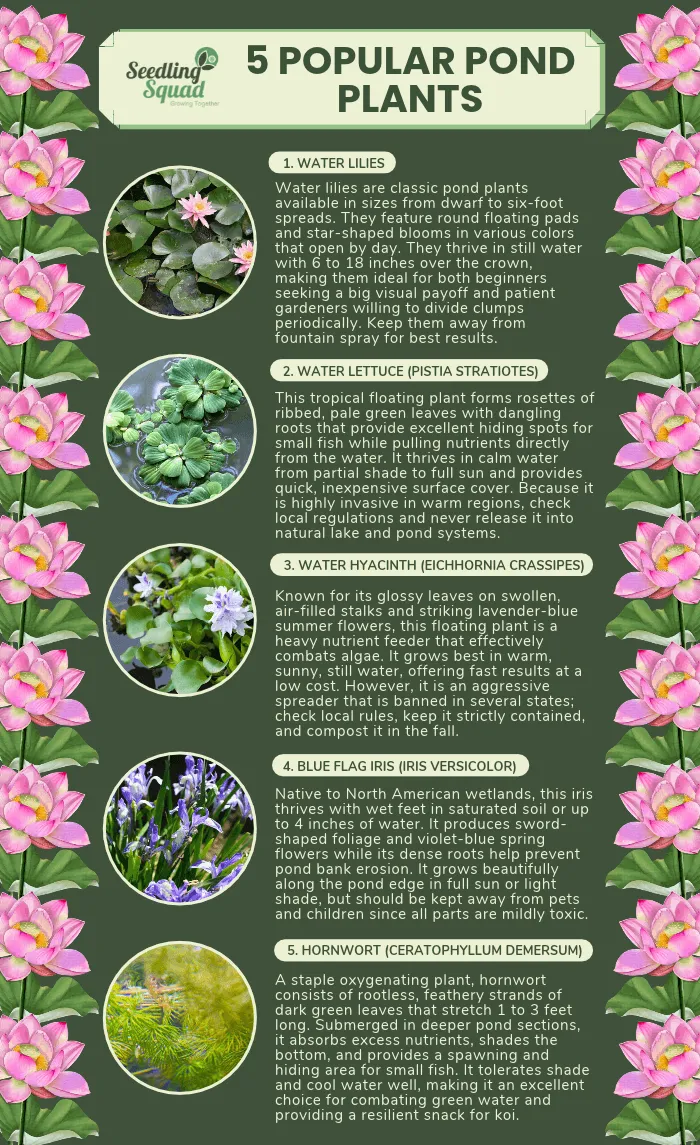
1. Water Lilies
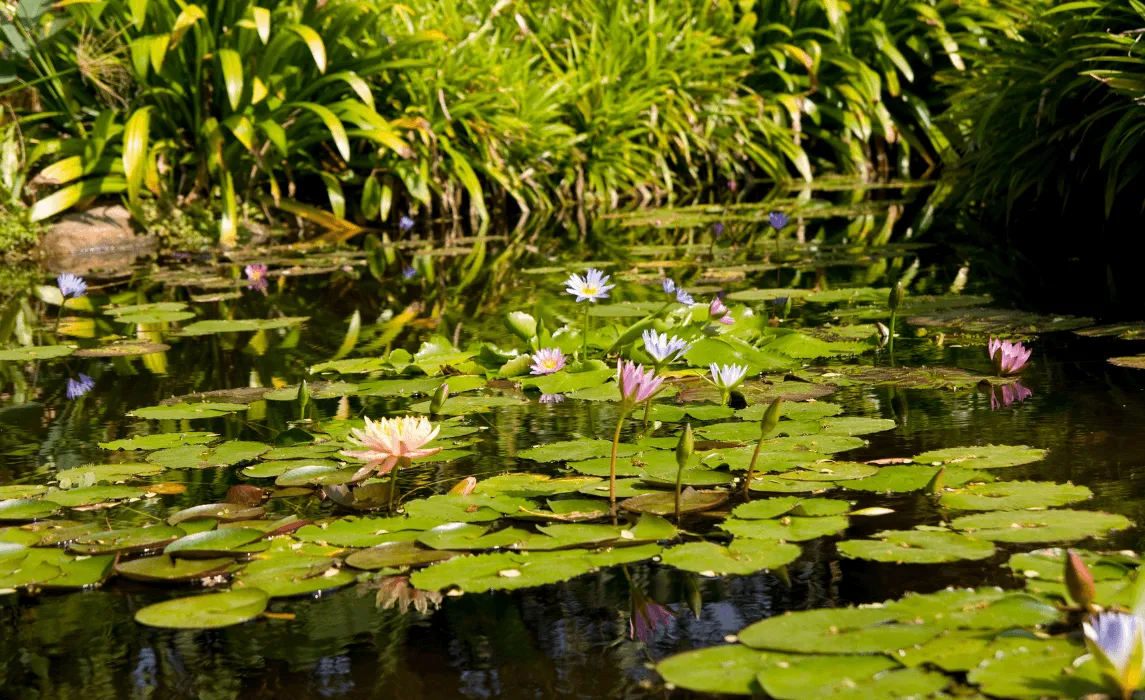
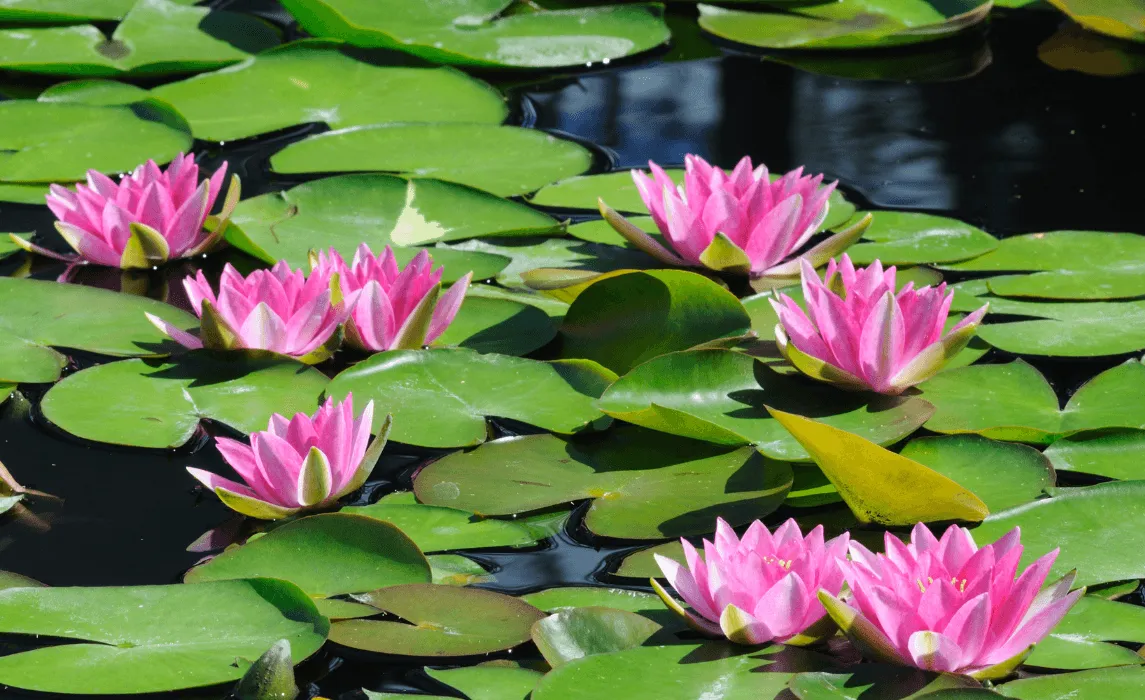
Water lilies have decorated ponds since ancient Egypt, and they are still the classic plant in many water gardens. Hardy types such as the dwarf Nymphaea 'Pygmaea Helvola' send up round floating pads 4 to 8 inches wide, along with star shaped blooms in yellow, pink, red or white that open by day and last about three days. A full size lily can cover six feet of surface, so choose a dwarf for a small pond. Water lilies grow best in still water with 6 to 18 inches over the crown, so keep them away from fountain spray. They suit first time pond owners who want one plant with a big payoff, and patient gardeners who don't mind dividing a crowded clump every few years.
Soil: Heavy loam or aquatic planting mix in a pot, topped with gravel
Water: Still water, 6 to 18 inches over the crown
Light: Full sun, at least 6 hours
Humidity: Average, not a concern outdoors
Fertilizer: Aquatic fertilizer tablets pushed into the soil every 4 to 6 weeks in the growing season
Temperature: 70 to 85°F is ideal, hardy types survive winter if the roots don't freeze solid
USDA Zone: 4 to 10
Costa Farms 12" Peace Lily Live Plants in 5" Self-Watering Pot
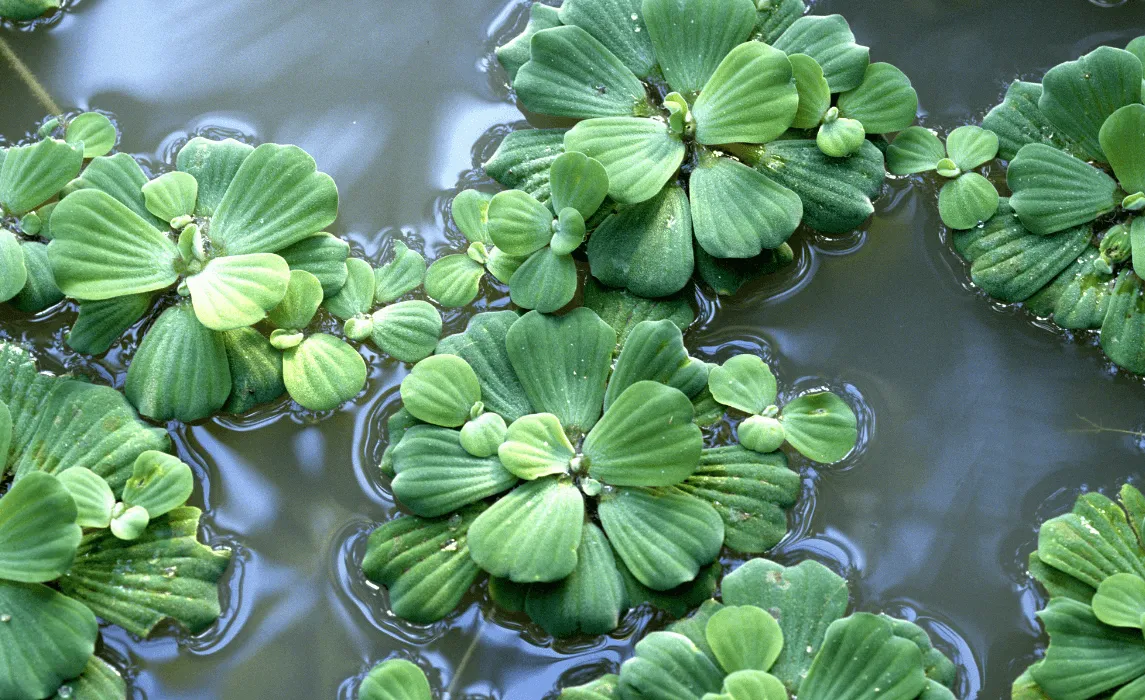
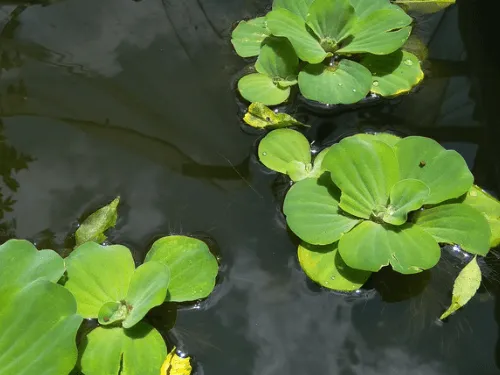
Water lettuce is a tropical floating plant found in warm waters around the world, and it has long been a favorite water feature filler. It forms rosettes of soft, ribbed, pale green leaves 2 to 6 inches wide that look like loose heads of lettuce, with long feathery roots trailing below and tiny flowers hidden in the center. This easy to grow plant does well in calm water with partial shade to full sun and plenty of humidity. The dangling roots give small fish and aquatic insects a place to hide, and they pull nutrients straight out of the water column. It is invasive in warm regions such as Florida and Texas, so check local rules and never dump it into a lake and pond system. Recommended for beginners and koi pond keepers who want cheap surface cover that shades the water fast.
Soil: None, it floats
Water: Calm, still surface, away from waterfalls
Light: Partial shade to full sun
Humidity: High
Fertilizer: Rarely needed, use a liquid iron supplement if leaves turn pale
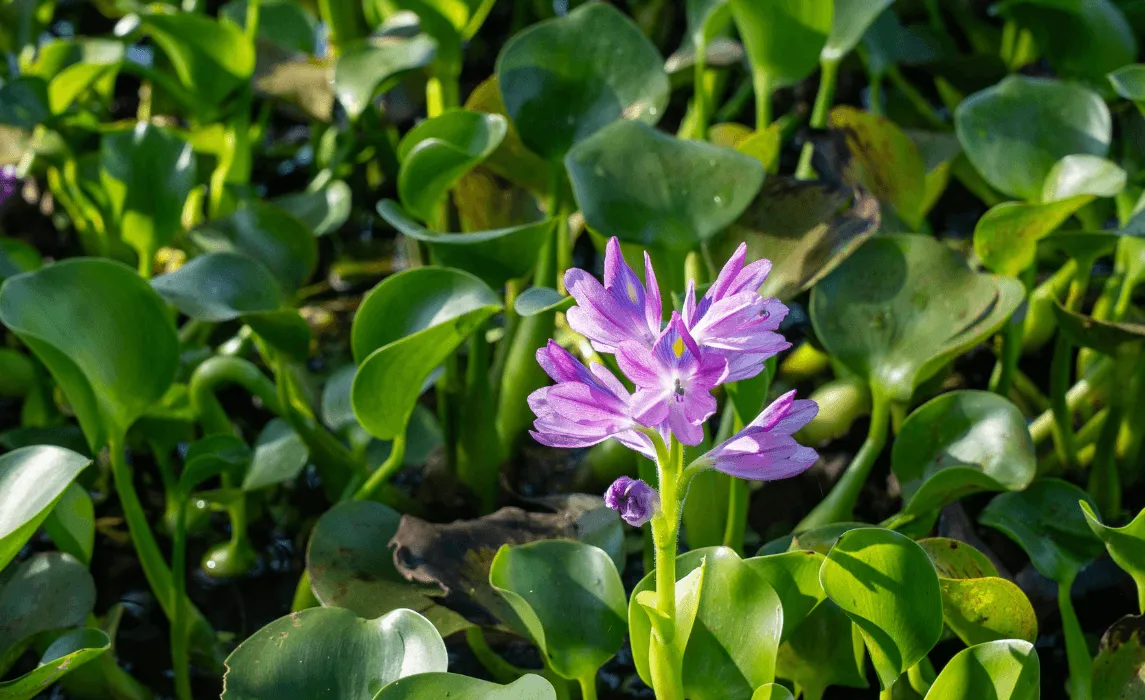
Water hyacinth comes from the Amazon basin and has spread so widely that it is called one of the world's worst aquatic weeds. In cooler places it is a popular summer annual for a floating pond. Glossy, rounded leaves sit on swollen, air filled stalks that keep the plant afloat, and dark feathery roots hang below. Lavender blue flower spikes with a yellow eye bloom in summer. It grows best in warm, sunny, still water and feeds hard on nutrients, which makes it a strong tool against algae. Where it survives winter it escapes and is banned in several states, so check local rules before buying. Recommended for gardeners who want fast results at low cost and will keep it contained, then compost it in fall.
Soil: None, it floats
Water: Still and calm
Light: Full sun, 6 or more hours
Humidity: Moderate to high
Fertilizer: Usually none, the plant feeds on pond water
Temperature: 70 to 95°F, damaged by frost
USDA Zone: 9 to 11, grown as an annual elsewhere
Breck's Royal Hyacinth Mixture Plant Bulbs – 25 Count
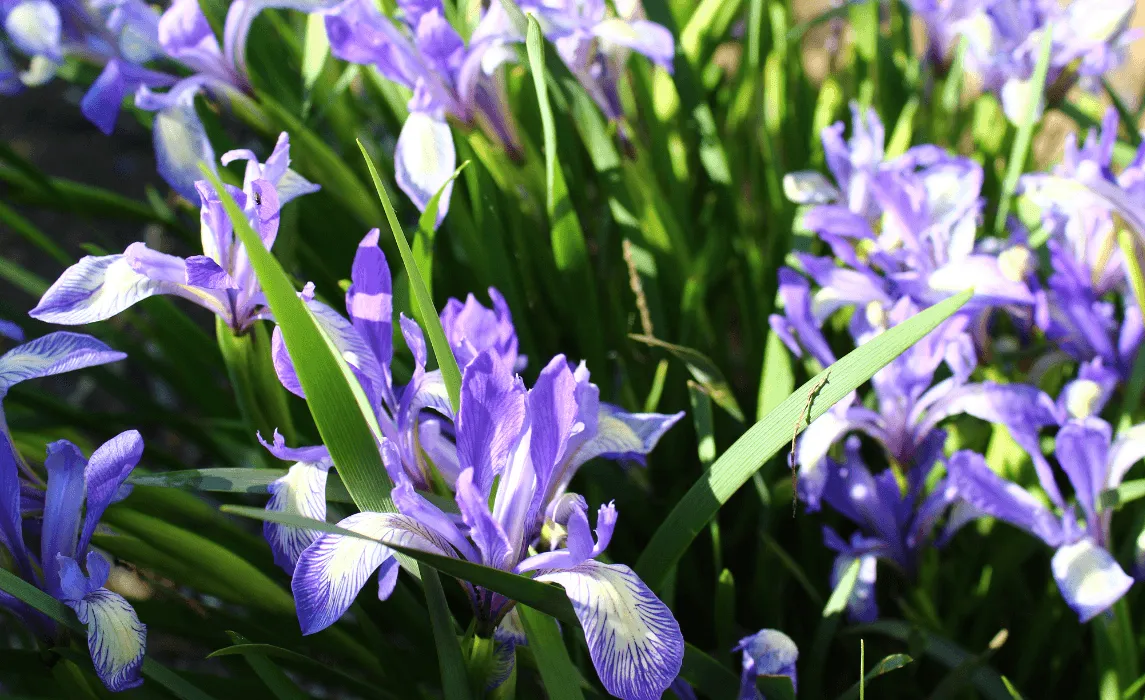
Blue flag iris is native to eastern North American wetlands and is one of the few iris that actually wants wet feet. Sword shaped blue green foliage rises 2 to 3 feet, and violet blue flowers with yellow and white veining open from late spring into early summer. It thrives along the pond edge in saturated soil or up to 4 inches of water, in full sun or light shade, and the dense roots help prevent erosion around your pond banks. It also earns a spot in container water gardens. Plant it in a pot of heavy soil and divide it every few years. Recommended for native plant lovers and wildlife gardeners, but keep it away from curious pets and kids, since all parts are mildly toxic.
Soil: Heavy loam or clay based mix, slightly acidic is fine
Water: Wet soil to 4 inches over the crown
Light: Full sun to part shade
Humidity: Average
Fertilizer: One aquatic fertilizer tablet in spring
Temperature: Tolerates cold well, grows best from 60 to 80°F
USDA Zone: 3 to 9
Everwilde Farms 15 Southern Blue Flag Iris Native Wildflower Seeds
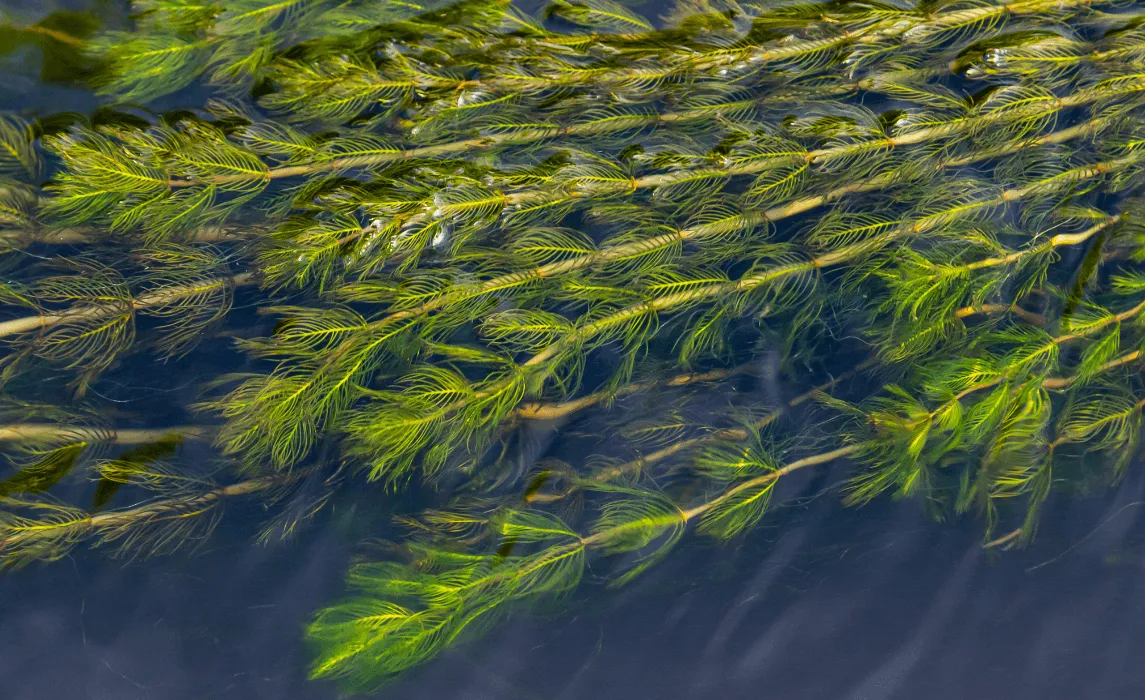
Hornwort grows on every continent except Antarctica and is a staple among oxygenating plants. It has no true roots, only stiff, feathery whorls of dark green leaves along strands that stretch from 1 to 3 feet. Submerge it in the deeper sections of the pond, either floating loose or weighted down, and it will take nutrients from the water, shade the bottom and give small fish a place to hide and spawn. It tolerates shade and cool water, though in summer heat it can shed needles that need netting out. Recommended for anyone fighting green water, especially first time owners and koi keepers who need a plant the fish can nibble without wiping it out.
Soil: None needed
Water: Fully submerged, 1 to 10 feet deep
Light: Shade to full sun
Humidity: Not applicable
Fertilizer: None, it feeds directly in the water
Temperature: 50 to 80°F
USDA Zone: 4 to 10
Microsorum Java Fern and Hornwort Easy Low-Light Aquarium Plants
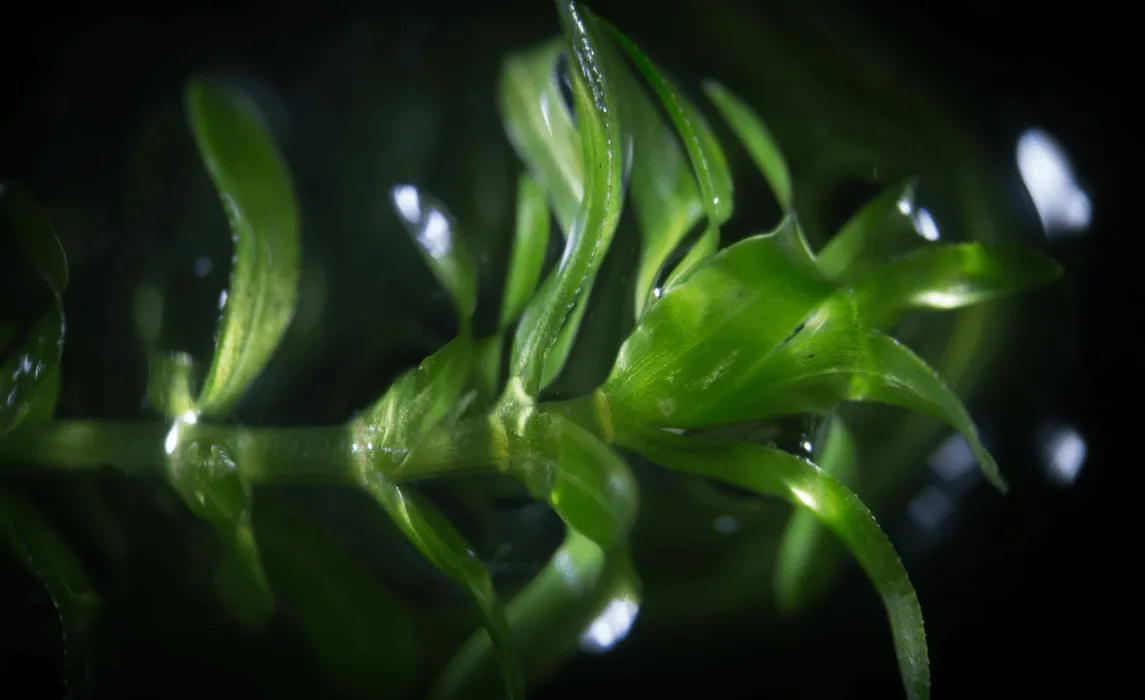
Anacharis, sold as elodea or Brazilian waterweed, has been used for decades to oxygenate the water in ponds and aquariums. Long stems carry whorls of small, bright green leaves. This submerged plant grows best in 1 to 3 feet of cool water with plenty of light, planted as weighted bunches or left to float. It grows quickly, pulling excess nutrients from the water and helping keep the water crystal clear. Some forms are invasive plants in warm regions and banned in certain states, so confirm before you buy. Recommended for gardeners with a koi pond or lots of fish who want one of the plants that make water clear fast and don't mind thinning it every few weeks.
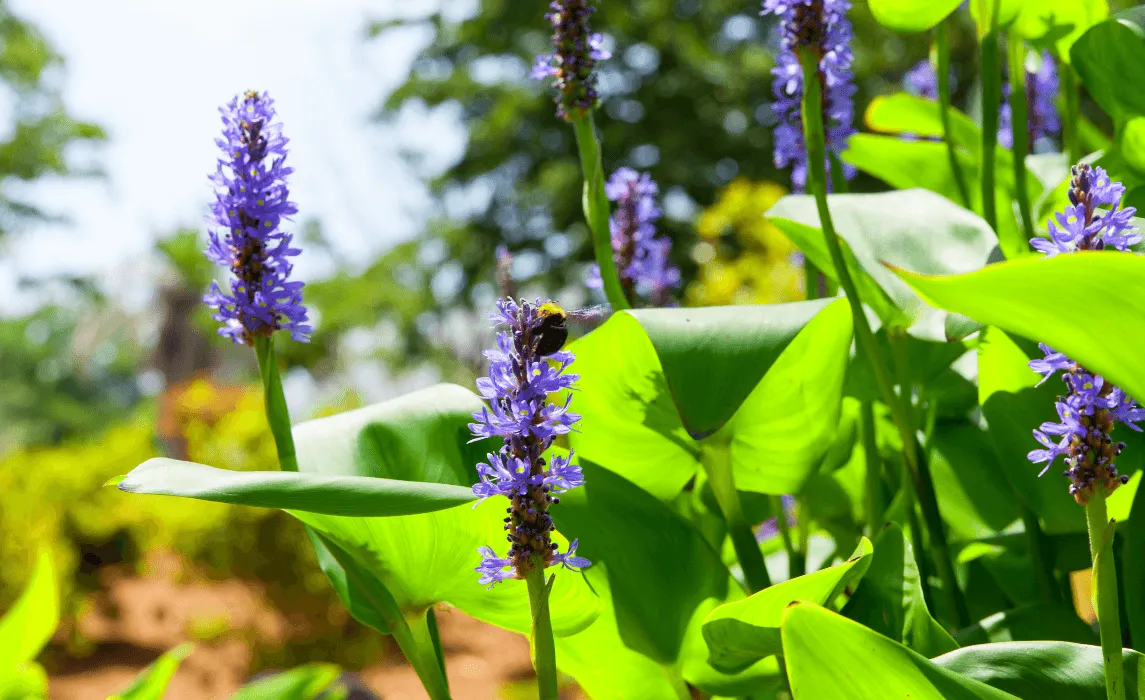
Pickerel rush is native to eastern North America and one of the most dependable marginal plants for pond margins. Glossy, heart shaped leaves grow 2 to 4 feet tall, and spikes of violet blue flowers bloom from midsummer into fall, drawing bees and dragonflies. It thrives in 1 to 6 inches of shallow water in full sun to part shade, and the dense clump gives fish and amphibians cover along the edge. Use a pot to stop it spreading and repot every couple of years. Recommended for gardeners who want a bold bloom without much work, and for anyone building a wildlife friendly pond.
Soil: Heavy loam or clay based aquatic mix
Water: 1 to 6 inches over the crown
Light: Full sun to part shade
Humidity: Average
Fertilizer: One aquatic tablet each month in the growing season
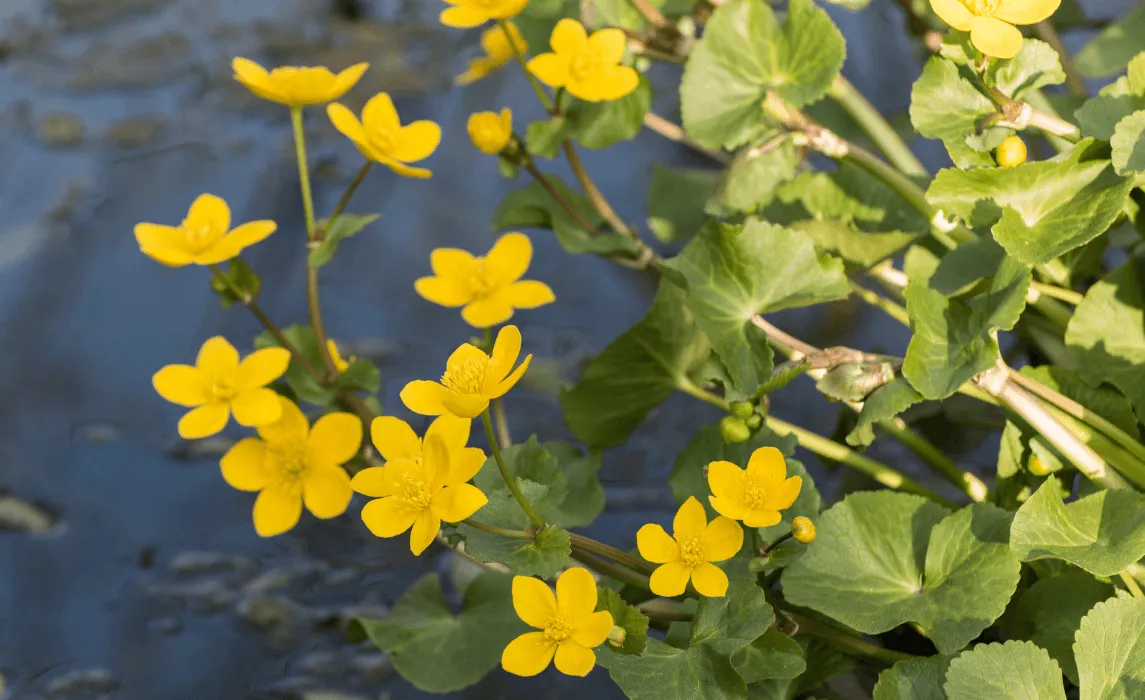
Marsh marigold grows in cool wetlands across the Northern Hemisphere and is one of the first plants to bloom each spring. Rounded, glossy dark green leaves form a mound about a foot tall, topped with buttercup yellow flowers 1 to 2 inches wide. It likes saturated soil or up to 3 inches of water, with morning sun and afternoon shade, and the plants may go dormant in summer heat. It helps shaded ponds look alive when little else is. Recommended for gardeners in cooler climates who want early color and don't mind a plant that rests by July. All parts are mildly toxic if eaten.
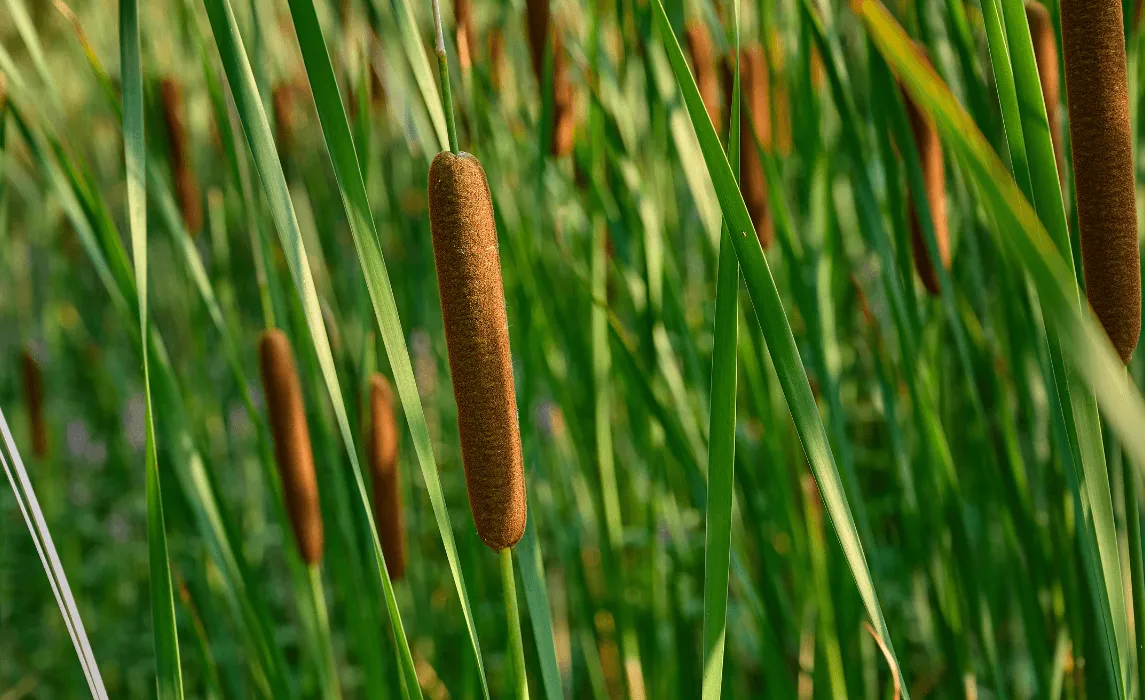
Dwarf cattail is a miniature relative of the common cattail, which spreads like a weed. Narrow, grass like leaves reach about 1 to 2 feet, and round, chocolate brown seed heads about an inch long appear in summer. It does well in 2 to 6 inches of water in a pot at the pond edge, in full sun. The tight clump adds height, softens liner edges and helps prevent erosion without taking over. Plant it in a container anyway, because roots still run. Recommended for owners of a small pond with a liner who need texture and structure.
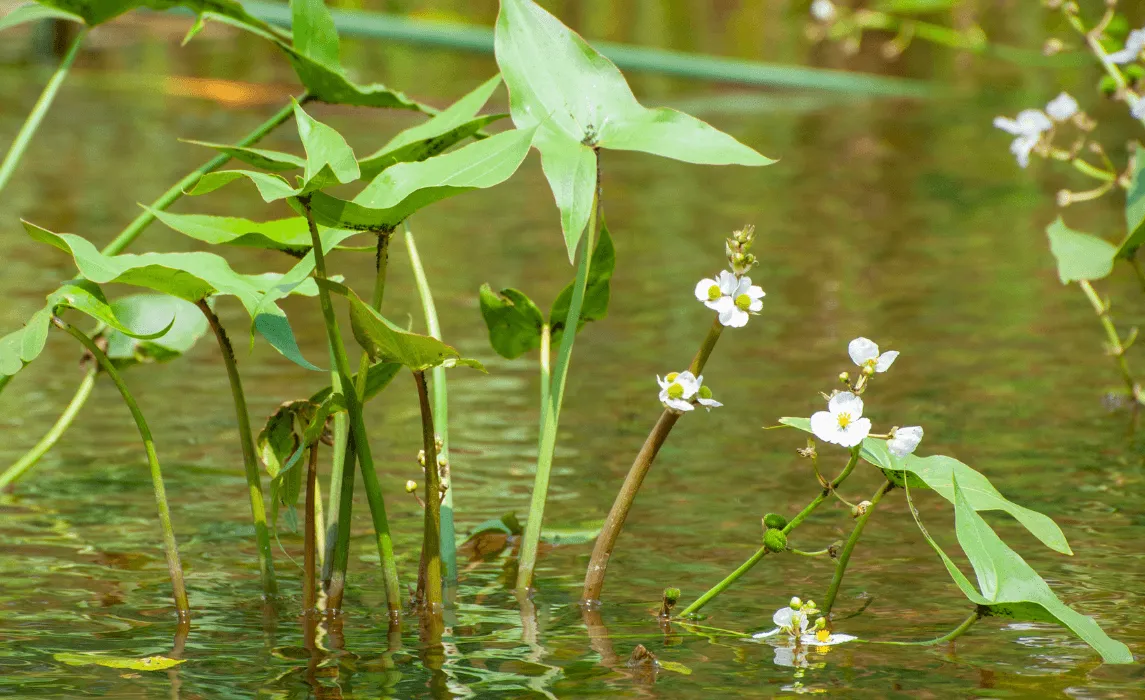
Arrowhead, also called duck potato, is native across the Americas, and its starchy tubers have fed people and waterfowl for centuries. Arrow shaped leaves 6 to 12 inches long stand 1 to 4 feet above the water, and white three petaled flowers with yellow centers open in whorls from summer to fall. It grows best in 2 to 6 inches of shallow water in sun to part shade and spreads by runners, so keep it potted. Its roots hold soil and absorb nutrients. Recommended for beginners and wildlife gardeners. Koi owners should know the fish may dig up the tubers, so cover pots with gravel.
Soil: Heavy loam or clay based mix
Water: 2 to 6 inches over the crown
Light: Full sun to part shade
Humidity: Average
Fertilizer: One aquatic tablet every 4 to 6 weeks in the growing season
Plants do well in a pond when 50 to 70 percent of the surface is covered by floating and marginal growth. More cover means less sunlight for algae.
Will plants keep my pond free of algae?
They help, but they are not a guarantee. Plants help keep the water clear by taking up excess nutrients in the water and shading the surface, yet fish waste and leaves keep adding more. Pair plants with filtration and regular cleaning for a clean pond.
Can I grow plants with koi?
Yes, but koi uproot and eat soft growth. Use pots topped with gravel, choose tougher plants and treat hornwort or anacharis as a renewable snack.
Should I worry about invasive plants?
Yes. Water hyacinth, water lettuce and some forms of anacharis are invasive in warm regions. Check state rules, never release extras into a lake or storm drain.
Where can I buy pond plants?
Local nurseries and water garden specialists carry hardy stock. If you browse pond plants products or buy online, choose sellers that ship in season, label the species and guarantee live arrival.
Related posts
Here are some articles you might be interested in.